Why Relationship-First Beats Conversion-First on LinkedIn — And What to Do About It
On LinkedIn in 2026, your audience doesn’t trust your product before they trust the people behind it. The brands opening with conversions are the ones whose posts are being ignored.

Open LinkedIn on any given day and count the posts selling you something in the first sentence. Buy this. Try this. Book a demo. Get the guide. Click here to convert.
Now count the ones that make you stop scrolling. The difference is not subtle — and the gap is getting wider.
In 2026, LinkedIn is going through one of the biggest shifts in its ten-year history as a B2B platform. AI-generated content has saturated the feed.
Organic reach is dropping for posts that feel templated. And the brands still optimising for conversions in the first line of every post are quietly losing the ones they could have won if they had built the relationship first.
You are running the wrong playbook if your LinkedIn strategy is still asking “how do I get leads from this?” before asking “how do I give my audience a reason to care?”
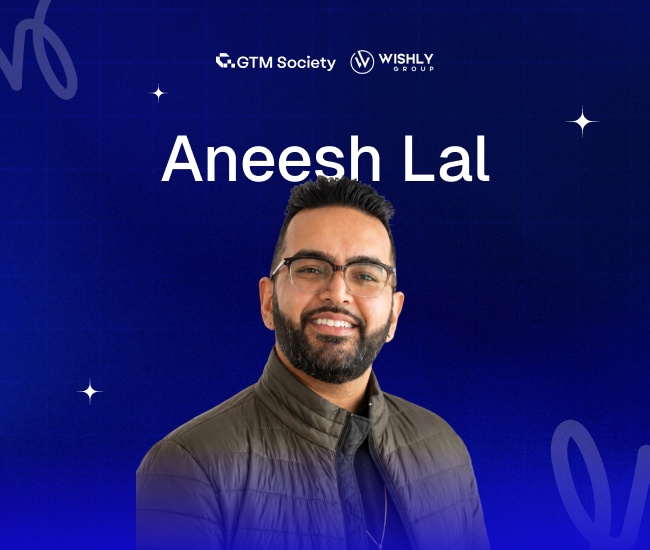
Meet Aneesh Lal, Wishly Group: the operator who watches 50+ LinkedIn accounts every day
Aneesh Lal runs Wishly Group, a LinkedIn influencer agency that wraps some of the loudest sales, marketing, and RevOps voices on the platform.
His team sees performance data across dozens of accounts every single day — which means they have one of the clearest views anywhere of what content is working on LinkedIn right now, and what isn’t.
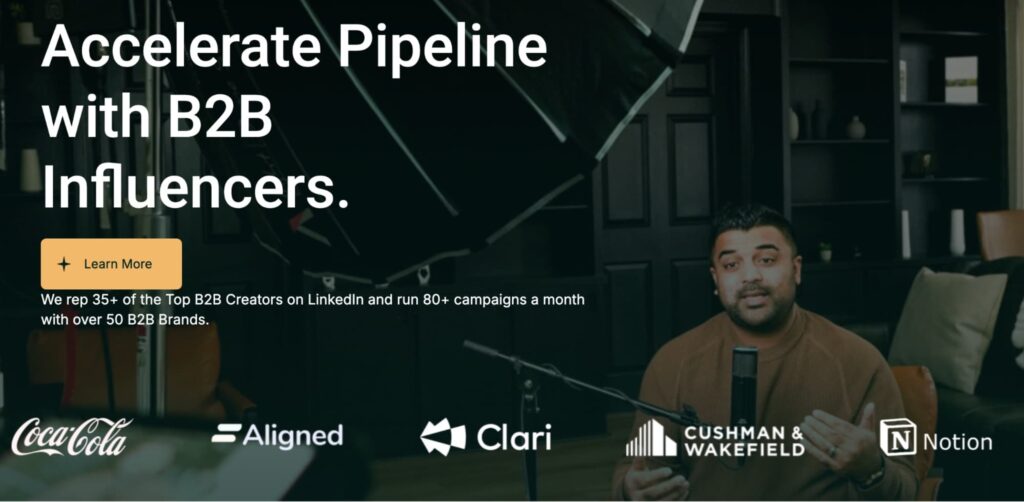
He is an operator sitting at the intersection of a lot of accounts, which makes his pattern recognition unusually high-fidelity.

We run a LinkedIn influencer agency. We wrap some of the sales, marketing, and RevOps voices on LinkedIn. So we’re seeing the forefront of technology, creator economy, and the whole LinkedIn landscape switching out every single day.
His thesis in 2026: the B2B SaaS brands still leading with product are losing the platform to the brands leading with people. The companies that figure this out before the end of 2026 will own the next chapter. The ones that don’t will be posting into a void.
The argument — why LinkedIn is rewarding relationships over conversions
Aneesh’s framework is built on one observation that is easy to miss if you are not running a lot of accounts at once. Every piece of content on LinkedIn now competes with a flood of AI-generated posts that look, at first glance, like they came from a human. The feed is full of them. Your audience has seen hundreds this week alone.
When a reader cannot tell at a glance whether a post is written by a person or a machine, they default to skepticism. Their attention is cheaper than it has ever been, and their trust is more expensive than it has ever been.
The only thing that earns trust back is visible humanness: a specific anecdote, an opinion with a cost, a mistake admitted out loud, a detail that an AI would not have added because it would not have known.
Relationship-first content is the default that wins in a feed where everything else looks generic.
People can tell the difference between AI and human content now. And when they can’t tell, they assume it’s AI and skip it. The only posts getting read are the ones where the human fingerprint is obvious.
If your content strategy is to push conversion messaging in every post, you are rewarding the worst signal in the feed: the one that tells your audience you are talking at them. LinkedIn’s algorithm is picking this up. Human readers are picking this up even faster.
The test — what AI vs human content looks like in the feed right now
There is a test you can run on your own content in about ten seconds. Take any recent post from your company page or founder profile. Strip out the company name. Strip out the product. Show it to someone outside your industry and ask: does this sound like a human wrote this, or does this sound like a template?
If the answer is “template,” you are producing content that is being ignored. That is the worst outcome on LinkedIn, because the algorithm reads low engagement as “don’t show this to anyone else,” and the cost compounds post by post.
Aneesh’s team runs this filter across every account they manage:
- Specificity: Does the post contain a detail only this person could have written? A client objection from last Tuesday, a number from an internal test, a moment from a call.
- Opinion: Is there a position someone could push back on?
- Voice: Does it sound like the author when they talk, or like someone studying how the author talks?
Posts that clear all three travel. Posts that clear none get buried regardless of how much paid amplification goes behind them. That pattern holds consistently across the 50+ accounts their team manages, so — not a theory, but what they see in the data every week.
The playbook — five moves to shift from conversion-first to relationship-first
If the problem is clear, the fix needs to be specific. Here is the way Aneesh’s team thinks about rebuilding a LinkedIn strategy around relationships.
Put founders and operators in front of the brand
LinkedIn is a personal network. Posts from individuals outperform posts from company pages by a wide margin, and that gap is growing in 2026. If your content strategy is still concentrating output on the company page, you are fighting the platform. Move your best voices out front and accept that the company page is a secondary channel.
Lead with a story, not a stat
Every post that opens with “87% of marketers say…” has been written ten thousand times already. Posts that open with “we lost a $60K deal last Tuesday and here’s what I learned” do not compete with the stat posts. They live in a different category in the reader’s mind.
Earn the right to reach out
Aneesh’s team sees this play out in outbound too — founders and AEs who post consistently before running a sequence get meaningfully better reply rates than those who don’t.
The content does pre-qualification work the sequence can’t do on its own. Four posts that give something away, one that makes an ask. That ratio holds whether you’re posting or pitching.
Reply in your own voice
Aneesh is direct about this: every comment reply from the author is a second piece of content. Every reply that sounds like it was drafted by an assistant is a missed one.
Aneesh’s team flags ghostwritten comment sections as one of the fastest ways to undo the trust the original post built. The comment section is where readers decide whether the person behind the content is real.
Build a bench of real voices
If your LinkedIn strategy depends on one founder profile posting daily, you are one sabbatical away from a dead channel. Brands winning on LinkedIn in 2026 have three to six visible people posting consistently. The load is distributed, the content is varied, and the audience gets to know a cast, not a single character or profile.
The common mistake — treating relationship-first as “softer” content
The most common misread of the relationship-first thesis is that it means softer content. This is the opposite of what Aneesh’s team sees working.
The posts that build relationships on LinkedIn tend to be sharper than the conversion-first ones. They take clearer positions. They disagree with other operators by name. They name specific dollar amounts, specific mistakes, specific products. They are not polite. They are also not pitches — and that is the distinction that matters.
Relationship-first doesn’t mean soft. It means you’re willing to say something your audience can quote. Pitches get scrolled. Opinions with teeth get shared.
If your brand is hesitant to take positions on LinkedIn because it might alienate a fraction of your audience, your brand is choosing invisibility over relationship. That was a defensible trade-off in 2020. In 2026, with AI-generated content flooding the feed, invisibility is a losing position.
What this means for your 2026 LinkedIn strategy
Aneesh’s framing for the audit is simple:
For every post you’ve shipped in the last thirty days, ask: would this post exist if it weren’t for your product? If the answer is no — if the post only exists to push a conversion — it’s producing content the feed’s immune system is already trained to reject.
The fix is to post from a different starting point. You can start from:
- The human asking the question
- The specific moment where the insight happened
- Or from an opinion you are willing to defend in the comments
The brands that sit with that question honestly and rebuild their LinkedIn output around it will own the next chapter of the platform. The brands that skip the question will keep producing content that technically meets its publishing cadence and practically meets no one.Aneesh and the operators running these accounts are in the GTM Society. Join the conversation.
Join the GTM Society. The room where GTM actually gets built. Founders, SDRs, and operators. No noise. Just systems.