How Hans Dekker Turned His LinkedIn Profile Into ClayMBA’s Inbound Engine —Without Paid Ads

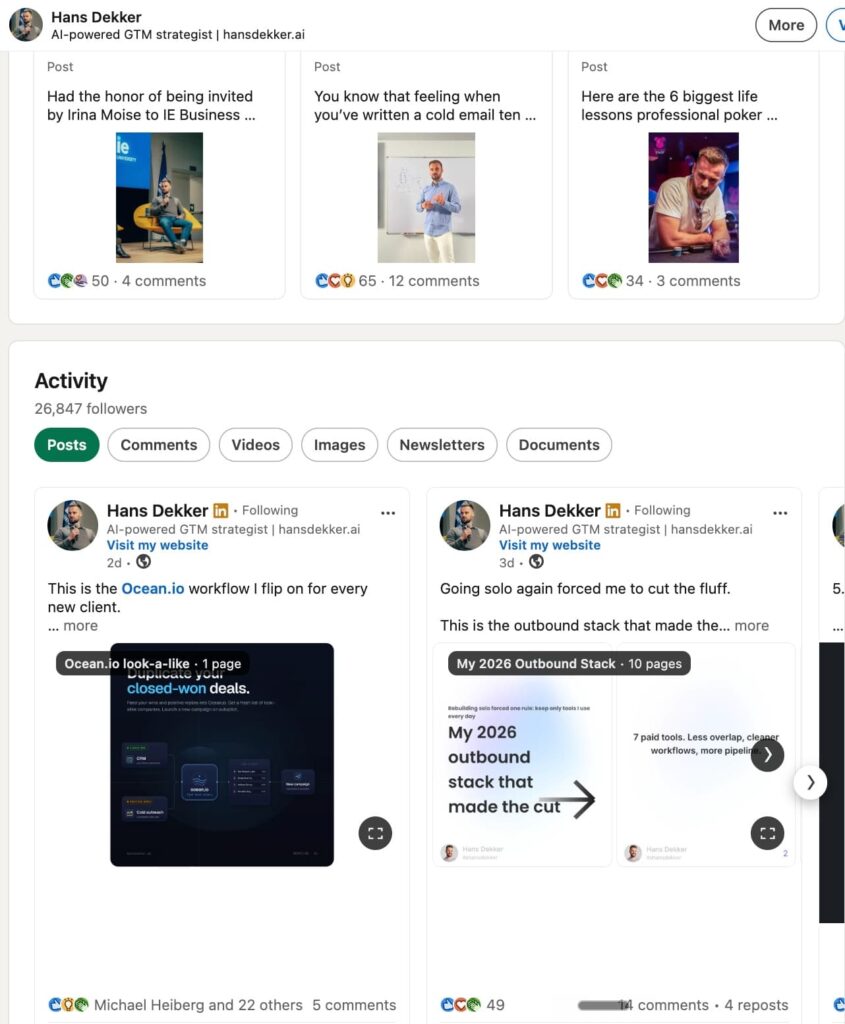
Hans Dekker built ClayMBA’s inbound engine on a single asset. His LinkedIn profile. The whole apparatus around it is one founder, one phone, and a habit of posting daily. The ads, content teams, and cold outbound machines most companies depend on are absent here. ClayMBA grows on profile views and inbox messages, and that is the entire strategy.
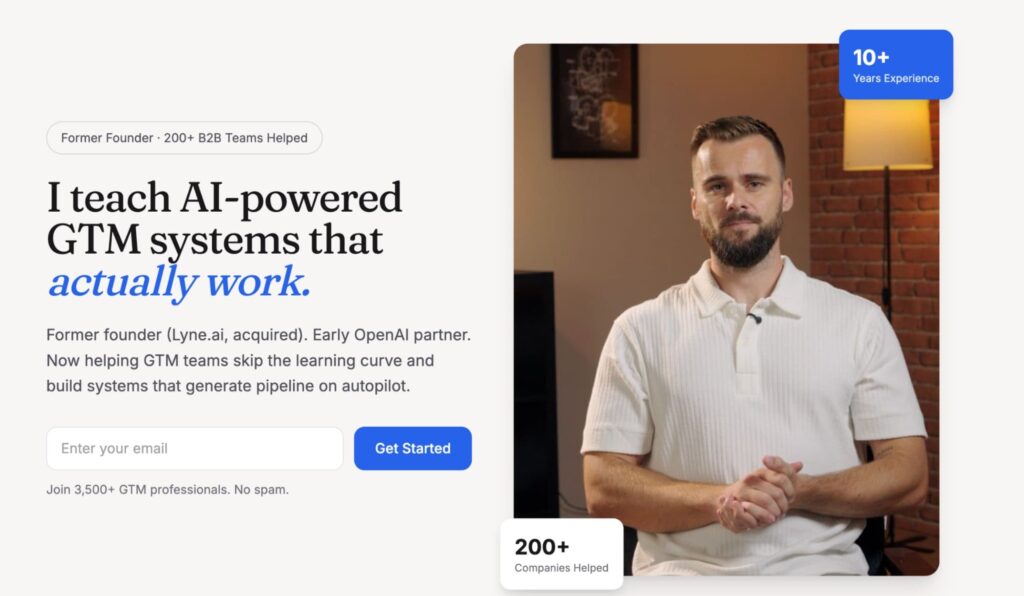
People find it. They click through. They read enough of the bio to know whether ClayMBA is for them. Then they show up in his inbox already pre-sold, asking how to work together.
Sitting at the NOBU Hotel in Barcelona during the SaaStock Founder Retreat in March, Hans walked through how his profile became the channel and the deliberately unpolished content strategy he uses to drive people to it.

We get a lot of people, they visit my profile, they get into my inbox, they ask us, okay, how can we work together. From a business development point of view, it’s great — we get more business, and that’s always good.
ClayMBA sits at the intersection of two of the most active categories in GTM right now.
- Clay has become central to how modern outbound teams build prospect lists and run signal-based outreach.
- LinkedIn automation is the surface where most of that outreach lands.
ClayMBA’s job is to teach the operators learning that stack how to use it.
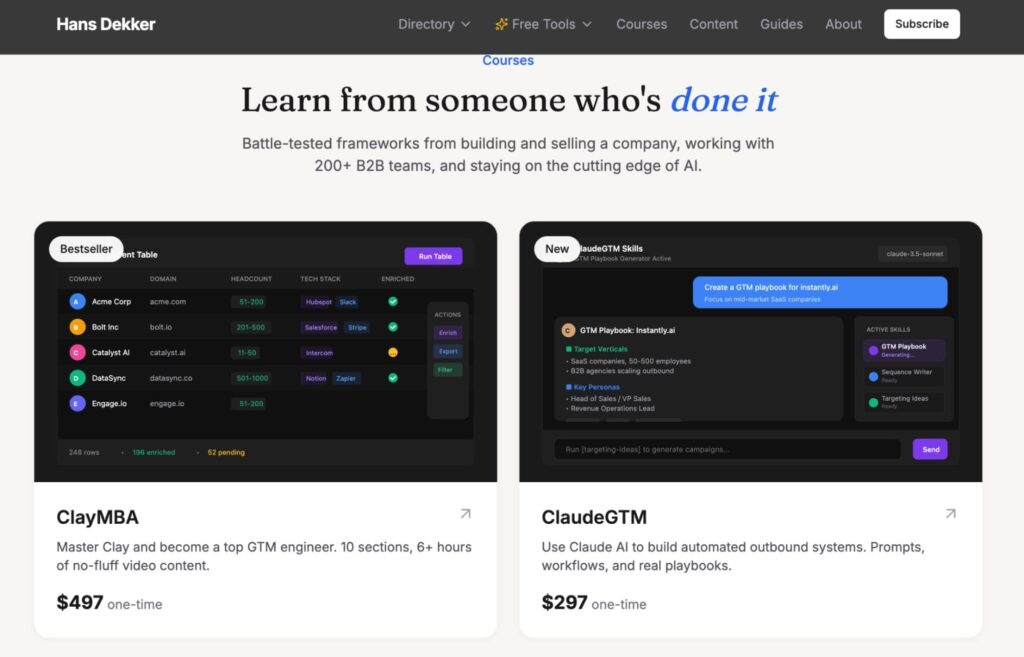
Hans markets ClayMBA the way the product itself teaches people to market: through a strong LinkedIn presence that produces inbound demand without an explicit ask. The founder using his own product to grow it doubles as proof of concept.
One LinkedIn profile with two business outcomes
Hans’s LinkedIn presence delivers two things most founders chase separately. Both come from the same source
First, inbound business.
ClayMBA’s pipeline is largely people who already follow Hans, already understand what ClayMBA does, and are messaging him to ask how to start. The sales conversation is shorter because the education has already happened.
Second, inbound talent.
We’re able to attract better talent because my LinkedIn profile is taking off. It really helps us attract the right people, and improve the company and the personal brand.
Hans treats his LinkedIn profile as a recruiting asset — something most founders never consider. The people he wants to hire are the people who already follow him for the same reasons the customers do.
They’ve seen his work. They have a view on whether they want to work near it. The cost-per-quality-hire drops sharply when the candidate pool is already inside the audience.
Why the company brand follows the founder brand
For a small team building inside an active community, the founder’s profile carries the company. ClayMBA’s official LinkedIn presence matters less than Hans’s personal one, and the inbound flows accordingly. Most early-stage founders try to bypass this by investing in a polished company page and a structured content calendar.
Hans flipped it. His personal profile is the asset. Company branding shows up downstream. Followers attached to a real person — someone talking about real work — track that person across companies. Followers attached to a corporate logo evaporate the moment marketing budget runs out.
Don’t think too much — why raw video beat the polished version
Hans’s content rule fits in one sentence:
For me personally, it’s about not thinking too much. People really enjoy seeing your raw thoughts, so that you’re really able to build that connection. What worked really well for me at the start was just creating videos and people really interacted with that. They loved it.
The medium matters as much as the rule. Direct-to-camera video creates a connection that text posts rarely do.
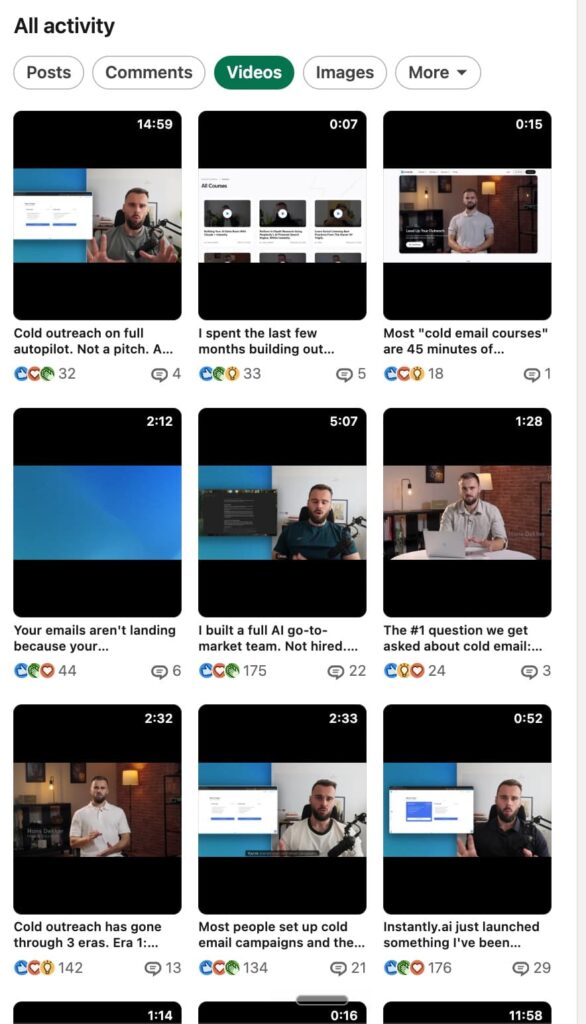
You hear the voice, see the expression, and read the personality. A raw video looks like a person speaking, which is the entire point of LinkedIn as a relationship channel.
The temptation, especially for founders selling a premium product, is to over-produce:
- Add the b-roll.
- Get the lighting right.
- Cut the takes together.
Hans’s bet was that production value would work against the goal. Polish reads as effort to perform. Rough reads as effort to communicate. The audience can tell this difference.
From raw thoughts to shared vision
Hans’s content has evolved. The earliest videos were closer to journal entries: unscripted, unfiltered, experimental. More recent posts are more deliberate without being more produced.
“Now it’s just sharing my thoughts, sharing our vision, and then the right people, they will find it and it will resonate with them.”
That sentence is doing more work than it looks like. The maturation of a founder profile happens in two stages.
First, post enough to learn which version of your voice the audience responds to. Then, once you know, put more vision into each post and less experimentation.
The activation energy problem and how to solve it
The reason most founders don’t have a Hans-style profile is straightforward. Everyone understands the playbook. What stops them is the first thirty days of posting. Most people quit before the compounding effect starts.
Hans’s response to that fear is direct: “The only way you get over fear is to actually do it.”
He also offered an exercise for anyone hesitating to start:
Think about people that you know on LinkedIn — you can think of someone, right? But you can’t really think of what they posted exactly. People are not really gonna remember every single word, every single thing that you say. They’re gonna remember you.
People worry their posts will be critiqued line by line. In practice, readers forget the content within a week and remember the consistency for months. Anyone who posts daily for ninety days will sit in the audience’s memory as someone who posts about X. That memory is the asset. The individual posts are the cost of building it.
Hans Dekker built ClayMBA’s inbound engine the way most founders are told not to build one — by posting raw, unpolished thoughts and letting his profile do the closing work. The playbook is uncomfortable enough that most people skip it. Hans built ClayMBA in the gap their skipping leaves open.If you want to speak to founders like Hans directly, join the GTM Society, where the operators building inbound engines without paid spend share what works.
Join the GTM Society. The room where GTM actually gets built. Founders, SDRs, and operators. No noise. Just systems.