How Wes Bush Coined Product-Led Growth — and Helped 400+ SaaS Companies Generate $1B in Revenue
SaaS GrowthThe frameworks that built your business will plateau every few years. The founders who keep growing are the ones who keep rewriting their own playbook, including the one that made them famous.
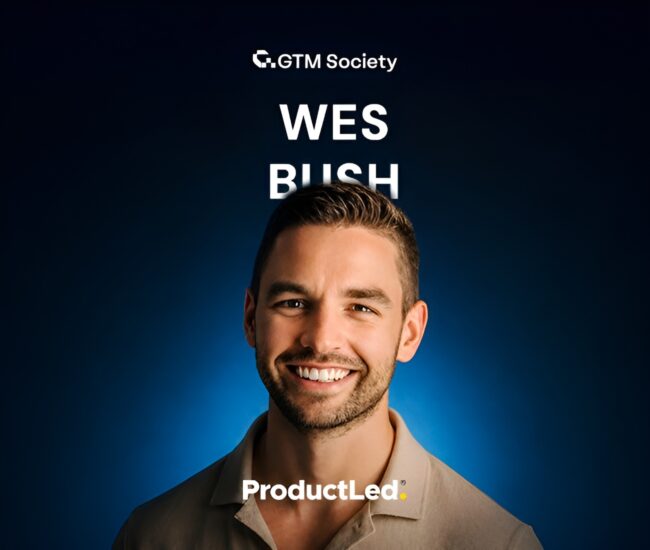

COVID wiped out Wes Bush’s entire business model in a week. Everything at ProductLed was built around in-person workshops — the consultancy that had helped hundreds of SaaS companies implement product-led growth, gone overnight. Most founders would call that a survival story but Wes frames it differently.

I feel like every three or four years you have to reinvent your business or else it will just plateau. And that’s the beauty of it, I think.
He treats reinvention as a scheduled event — something that should happen on a regular cycle, crisis or not. That framing runs through the book, the ProductLed consultancy, and the AI-era reinvention he’s in the middle of now.
The $300K whitepaper question — how Wes discovered product-led growth
In 2016, Wes was at Vidyard and helped launch a free Chrome extension that went from zero to 100,000 users in under twelve months. That was the moment the traditional SaaS sales playbook stopped making sense to him. The question that started it all: “Why did I just blow $300K promoting a whitepaper?”

He wrote the book on product-led growth— literally. Product-Led Growth: How to Build a Product That Sells Itself has been read by over 500,000 people and turned PLG from a buzzword into something teams could implement. He coined the term. He built the framework. Then he built a consultancy around it.
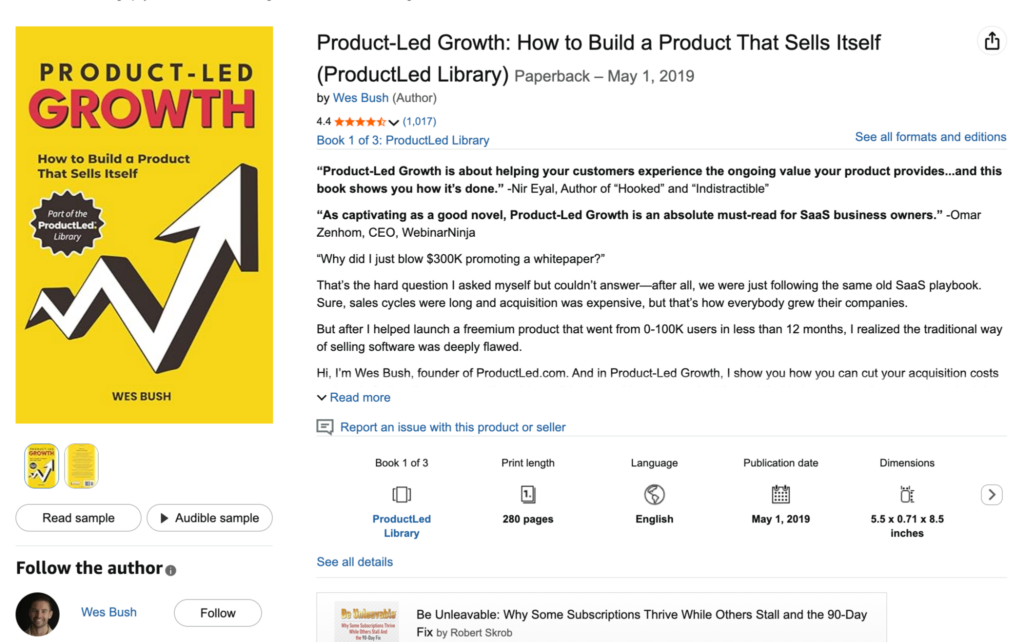
Through ProductLed, he’s helped over 400 SaaS companies generate more than $1 billion in collective self-serve revenue.
But along the way, he discovered something that reshaped the entire business: 80% of successful PLG implementations came from founder-led engagements — even though founders made up only 20% of his clients. Product professionals kept treating PLG as a product team experiment. Founders understood it required transforming the entire organisation.
That 80/20 split points to something Wes is direct about: PLG only works when three conditions are true.
- Users can experience value without hand-holding
- The product is simple enough to adopt without extensive onboarding
- There’s a natural path from free to paid.
If any of these are missing, a free trial won’t save you. What founders understand, and product managers often don’t, is that fixing them touches pricing, onboarding, sales, and product simultaneously. No single team can own it.
“The 1 to 10 million companies are going to eat them up” — Wes on AI and the future of SaaS
Wes is bullish on what’s coming.
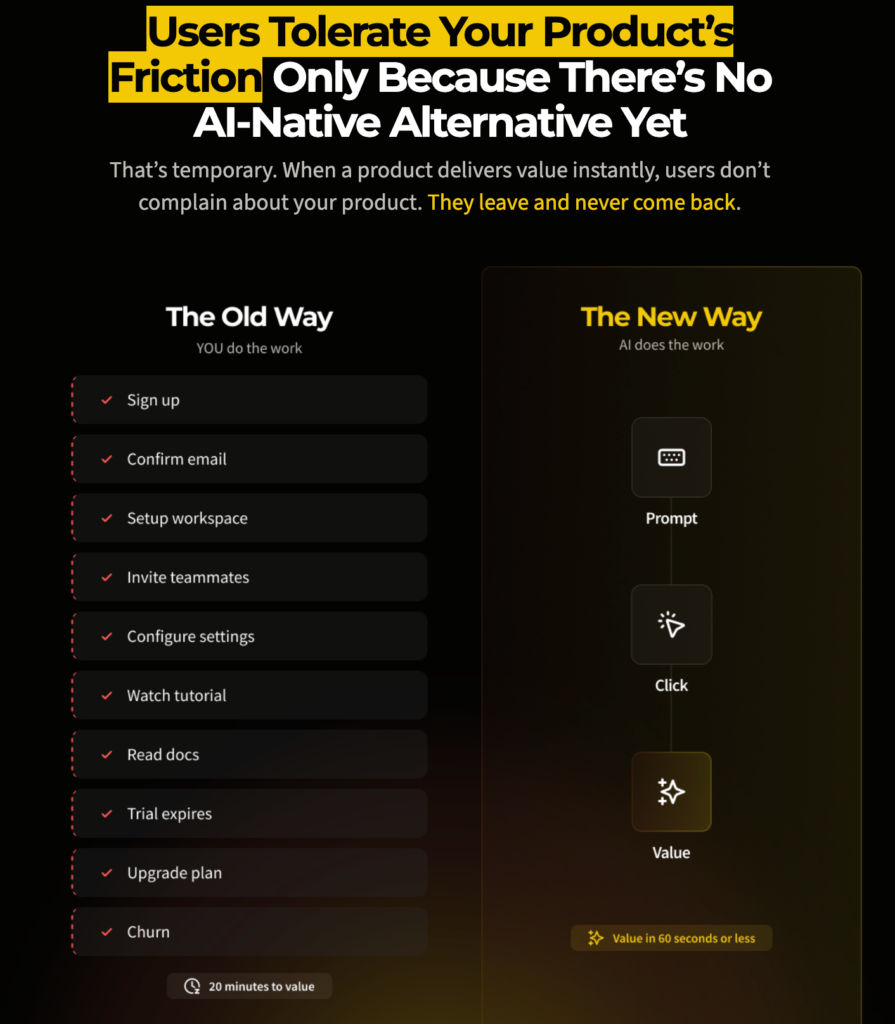
Right now for SaaS, I’m super excited because I think it’s just going to 10x. When you look at all the AI tools, it’s becoming way easier to build anything.
Then came the line that made the room pay attention: “Even the book I wrote last year, now I’m like, well, why isn’t that a SaaS? It’s software at the end of the day because people just want a fast solution where it’s done for you.”
That’s the founder of ProductLed looking at his own bestselling book and asking whether it should be a product instead. He’s willing to cannibalise his own work — and he’s already doing it.
The simplest marketing playbook in SaaS: daily posts, weekly newsletters, monthly workshops
Wes sees a market split coming. A wave of lean, AI-native SaaS companies in the $1-10M range will outpace larger competitors who refuse to adapt. “If they don’t adapt, the 1 to 10 million companies are definitely going to eat them up. They adopt AI way faster because it’s about efficiency right now.”
No complex funnels or fourteen-tool martech stack. Wes’s entire marketing strategy fits in one sentence: “A daily LinkedIn post, a weekly newsletter, and then we have a monthly workshop. All of them allow us to connect with people at a different level.”
For someone who wrote the book on letting the product sell itself, it’s telling that his own business grows through deeply human, relationship-driven content.
“You can’t escape the human aspects of scaling up”
Wes uses LinkedIn for relationship depth, not reach. “People run into me at conferences and they’re like, oh, Wes, I know you ran a marathon. There’s so much more of a deeper connection with that relationship already just because I have been nurturing it through that LinkedIn post every single day.”
When you’re selling expertise, distribution and trust are the same thing. A daily LinkedIn post builds both simultaneously — the people who read it every day already trust you before you’ve ever spoken.
Consistency is half of it. Don’t worry about five likes or ten likes. Just keep doing it because you are going to get better and better at it. Over time, what you’re compounding is the goodwill that you build with everyone who you’ve helped along the way.
What GTM leaders can steal from Wes’s playbook
Look at everything you’ve created — books, courses, templates, processes — and ask whether AI could turn it into a product. If the answer is yes, someone will build it. Better if it’s you. Wes puts it simply: ‘Why isn’t that a SaaS?'” Wes is already asking this of his own bestselling book and this is the reframe every founder needs to ask themselves.
Wes built the playbook that helped 400+ companies generate $1B in revenue, and he’s still rewriting it every three to four years. His LinkedIn philosophy captures the whole ethos: “You just don’t know who you’re impacting. It’s just giving back too.”
If you want to speak to GTM leaders like Wes directly, join the GTM Society — Cut to: where the founders behind the frameworks share what they’re actually doing right now.
Join the GTM Society. The room where GTM actually gets built. Founders, SDRs, and operators. No noise. Just systems.