How Sergio Apollo Saw AI Coming for Sales — And Built Better Match Ahead of It
SaaS GrowthIf you can see a wave coming for your own industry, the useful move is to stop fighting it and start building the next thing. The founders who survive commoditisation are the ones who call it on themselves first.

For three years, Sergio Apollo ran Ignite Flow — a sales automation agency that used Expandi to drive outbound for clients, and for his own company. His team ran the same playbook they sold to customers: automated LinkedIn touchpoints, data-driven list building, top-of-funnel sequencing. It was working well. But then, somewhere between quarters, he noticed something about the tools he was running his business on.
They were getting better. Much better. Faster than the humans operating them.

It became very evident to me that SDRs, BDRs, they were in dire trouble and that function of a business was becoming more commoditized.
That realization made Sergio curious about what comes next. The more common reaction is to double down:
- Run the existing business harder
- Layer AI on top
- Protect the revenue already flowing
Sergio went the other way.
From head of outbound to founder — the background that made the call obvious
Sergio’s path through sales was not the standard one.
Before Ignite Flow, he was Head of Outbound at SCOPE Recruiting, embedded in the recruitment side of the hiring process. He then spent three years running sales automation for founders and agencies from Ignite Flow, watching from the inside as the tooling layer improved quarter over quarter.
He had a seat most people don’t — he could see what Clay, Apollo, and Instantly were doing to data scraping, and how Expandi and the LinkedIn automation category were impacting the initial-touch layer.
He ran campaigns where machine output was clearly outperforming human reps on volume, and often matching them on quality for the top-of-funnel portion of the process.

When you have that view, one conclusion becomes very hard to avoid: the part of the GTM process that was defensible as human work a few years ago is no longer the part of the process that makes or breaks a deal.
The defensibility has moved up the funnel. Everything below a certain threshold is going to be automated — whether the humans doing that work are ready for it or not.
The decision — stop selling the old motion, go build the next one
Sergio’s pivot carried a real cost.
Ignite Flow was a live business with a playbook, clients, and pipeline. He moved before the market forced his hand.
“As we kept consulting our clients, we were like, okay, this makes no sense to continue doing something that’s becoming very commoditized. So I decided to take the leap and here we are at Better Match.” — Sergio Apollo, Better Match
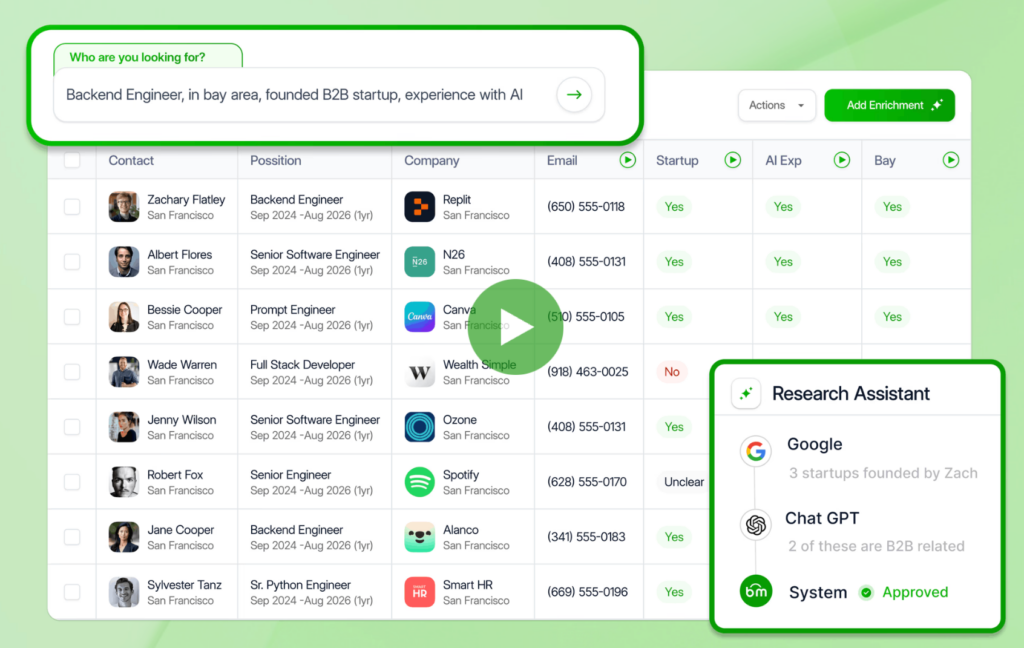
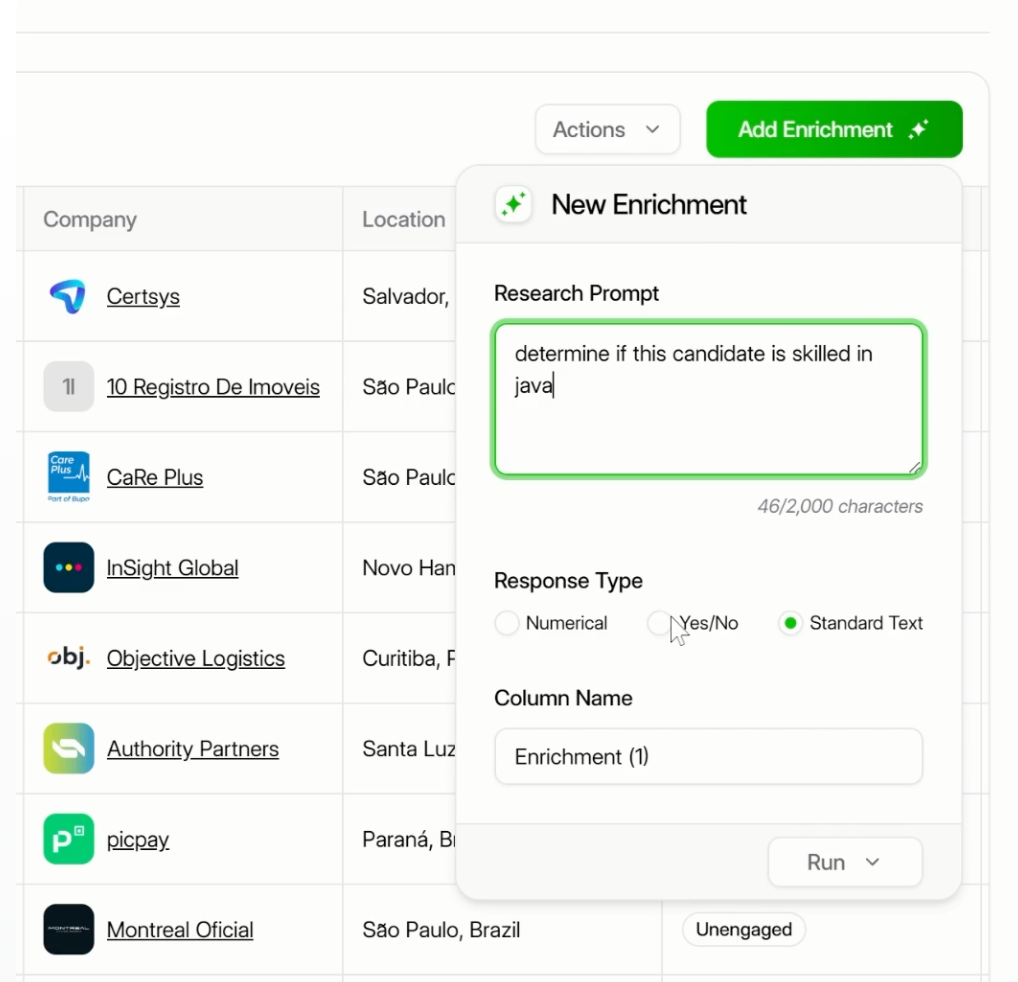
Better Match is an AI hiring co-pilot. Instead of automating the top of the sales funnel, it is automating the top of the recruitment funnel — the sourcing, screening, and qualification work that sits between posting a role and deciding who to interview.
Sergio’s reasoning: if the tools are coming for SDR work, they are absolutely coming for sourcer and recruiter coordinator work too. And his three years of running Ignite Flow gave him a very clear sense of what a well-built automation layer looks like in a real buyer’s workflow.
The pivot carried a real cost. Ignite Flow was a live business with a playbook, clients, and pipeline. Walking away from that to start over inside a category he had never served before is the kind of move most founders do not make until their hand is forced. Sergio made it before the market made him.
What Expandi taught him about building a product people actually use
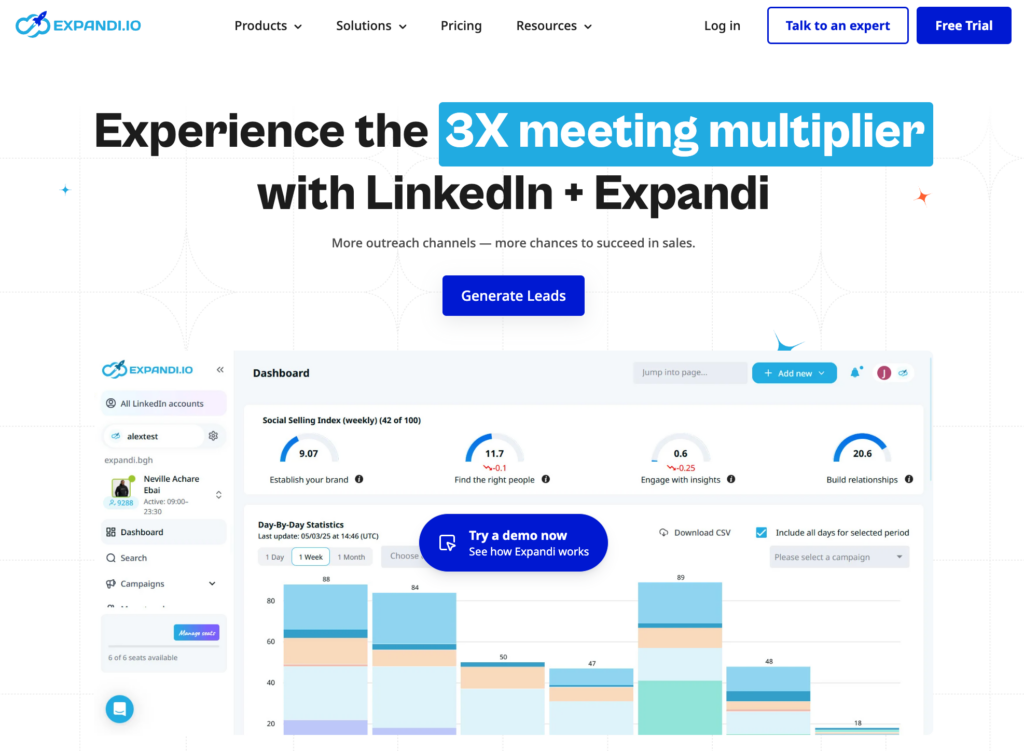
One of the more quietly important details in Sergio’s story is how long he has been a customer of the tooling that shaped his thesis. He has been using Expandi for three years — first at Ignite Flow, now at Better Match for outbound on the Better Match side of the business.
That is a long time to stay on one tool in a category that has seen a lot of churn.
“It’s what we’ve been using. We’ve been with Expandi for around three years now. It’s a great tool.” — Sergio Apollo, Better Match
The lesson he pulls out of that is broader than Expandi specifically. It is about what loyal usage looks like when the alternative is easy switching. In a category with dozens of options and aggressive discounting, the tools that hold customers for three years are the ones that became part of the operator’s daily workflow, not the ones with the best landing pages.
He is applying the same philosophy to Better Match. The goal is to build something a hiring manager opens every day because the work is already queued up inside it. Impressive demos are a distraction from that.
The thesis behind Better Match — AI compresses hiring
Sergio is careful when he talks about what AI does inside the recruitment process. The pitch is that AI compresses the parts of the job that are high-volume and low-judgement, so the human hours can move to the parts that actually require judgement.
Sourcing a qualified shortlist from a thousand profiles is a volume problem. Deciding which of the final five people should get the offer is a judgement problem. The first problem is going to an AI co-pilot. The second problem is staying with the human. That is the shape of the product he is building.
That framing matters because it is how he is positioning Better Match inside companies that are nervous about AI in hiring. He is selling leverage for the people who are already doing the work.
Building in Austin — the talent density that made the move easier
Better Match is based in Austin, Texas, which is not an accident. Sergio has been building there long enough to have a network of operators, engineers, and founders who have shipped product in GTM-adjacent categories.
When he left Ignite Flow, his team did not have to be rebuilt from scratch. He had people around him who had seen the playbook before, both the sales automation playbook and the hiring automation playbook he was about to run.
He is still a lean team — fifteen people — which is deliberate. He has seen enough overhired early-stage companies to know that the wrong thing to do with early traction is to go add headcount for its own sake. The team is sized to the problem, not to the round.
The lesson for other founders — call commoditisation on yourself
There is a specific founder skill that Sergio’s pivot illustrates, and it is rarer than it should be. It is the ability to look at your own business and say: this is becoming commoditied, and if I do not move now, the market is going to move me in twelve months.
Many founders cannot do this.
The numbers are working, the team is employed, the customers are paying, and everything inside the business tells you to keep going. The signal that you should pivot usually comes from outside the P&L, from the tools you use, the conversations you have with buyers, the way the category is starting to price.
Sergio caught the signal because he was running the same stack his clients were running. He felt the quality curve move firsthand and could do the maths on where the category was heading before the category got there. That’s a specific kind of proximity, and it’s what made the call legible to him when it wasn’t yet obvious to others.
The GTM Society is where founders navigating these transitions talk through what they’re seeing. Join the conversation today!
Join the GTM Society. The room where GTM actually gets built. Founders, SDRs, and operators. No noise. Just systems.