How Rahul Lakhaney Is Betting Everything on Data With Enrich Labs — and Why He Thinks the Rest of SaaS Got the Moat Wrong
SaaS Growth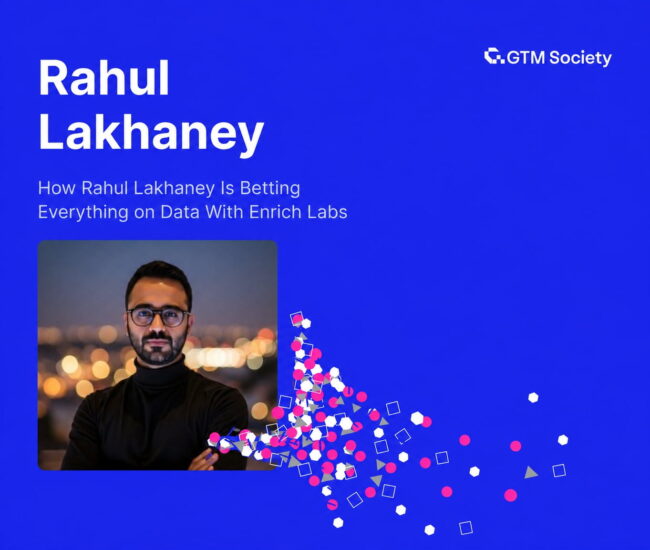

Rahul Lakhaney is staking the entirety of Enrich Labs on a single conviction about where SaaS is going — and where most of the category is about to get caught flat-footed.
The technology layer is collapsing as a moat. AI tooling has cut the time and cost of building software by an order of magnitude. The lead time between an idea and a shipped product has compressed from months to days. In a market where anyone can build anything, the question Rahul keeps asking is what is left to defend.
His answer is data.
Real-time, verified, structured data on people and companies — delivered via simple APIs to the data orchestration platforms and AI agent builders running modern GTM.
That is what Enrich Labs ships. And it is the only category Rahul thinks survives the next two years intact.

Product or technology isn’t going to be anyone’s moat in the future. Everyone will be building a lot of software. We’re going very heavy on the data part. That is something that you cannot do through AI. That is going to become our moat.
Enrich Labs sits at the intersection of two of the fastest-growing categories in GTM right now.
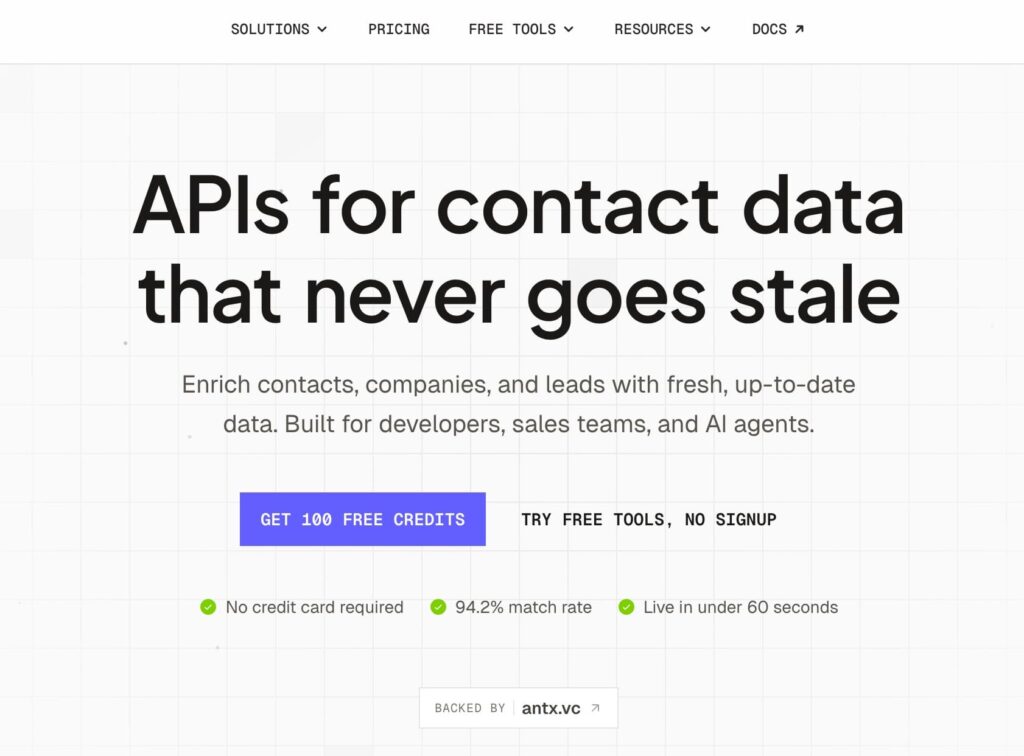
The data orchestration platforms — Clay being the visible example — depend on a layer of accurate, fresh, queryable data underneath them. The AI agent builders, the next wave behind orchestration, depend on it even more, because an agent that acts on stale data is an agent that takes the wrong action.
Rahul is positioning Enrich Labs as the infrastructure layer below both.
The customers are the platforms the end users buy. The bet is structural — whoever owns the most reliable real-time data layer becomes a dependency for the rest of the space, and dependencies are durable in a way that products are not.
Why data outlasts the AI commoditisation wave
The commoditisation prediction Rahul is acting on is the same one a lot of founders are quietly thinking but few are willing to build a company around.
AI lets anyone build a competent version of any common software category in weeks. Internal tools, mid-market CRMs, niche workflow apps — categories that used to take a team a year to ship now take a small team a month.
The output is usually good enough to count as a viable alternative to the existing player.
AI handles summarising and structuring data just fine. The harder problem is generating the underlying truth:
- Who works where.
- What their title is right now.
- What the company size is this quarter.
- Whether the contact is still at that company at all.
That truth has to come from somewhere outside the AI stack.
Everyone will be building a lot of software, not necessarily scalable ones, but a lot of software making is becoming very easy now. So what we’re doing is we’re going very heavy on the data part. We’re just focused on one thing, which is data.
The strategic clarity here is what separates Enrich Labs from most early-stage data plays. Focus is monomaniacal. Product is one thing — high-quality real-time data — sold to the people building the platforms.
Why infrastructure beats application in this moment
Application-layer companies in an AI-flooded market spend their time fighting on features, while infrastructure-layer companies spend their time being depended on.
The competitive dynamics, pricing power, and exit dynamics that flow from those two positions look entirely different. Rahul’s bet is that the AI-era category map looks more like AWS-vs-thousands-of-apps than CRM-vs-CRM.
A LinkedIn-first acquisition model with no cold email in sight
The other thing that makes Rahul’s company unusual is how Enrich Labs gets its customers. He sells data infrastructure to platforms — a customer profile most people would assume requires a long enterprise sales cycle. The first touch happens on LinkedIn instead.
Majority of the customers we have, they all come in through LinkedIn — not necessarily through cold emails. We do a lot of lead magnet stuff. LinkedIn plays a huge role. We get a lot of customers from there.
The mechanism is signal-based.
Rahul’s team watches who engages with content — both their own posts and competitor posts. Engagement is the qualifying signal: someone who comments on a Clay post or an enrichment-related thread has just told the room that the topic is relevant to them right now. That person is qualified in a way no firmographic filter could deliver.
Competitor engagement as a targeting layer
The competitor angle is where the play gets sharper. Rahul’s team treats engagement on competitor content the same way they treat engagement on their own.
A lot of the content that we post, or content posted by our competitors — we look at the people who engage with that content, qualify those people, and then use automation on LinkedIn to reach out to them. Expandiof course is our go-to platform for doing that.
Audio notes as the closing layer
The final move is the one most founders skip. After the automated connection, Rahul’s team sends a personal audio note.
We reach out to them with the audio notes that we shoot personally. That is how we get a lot of customer conversions through the platform and on LinkedIn. A lot of people, they don’t expect them coming in.
In a feed full of templated DMs and AI-generated openers, a thirty-second voice message reads as a deliberate human signal.
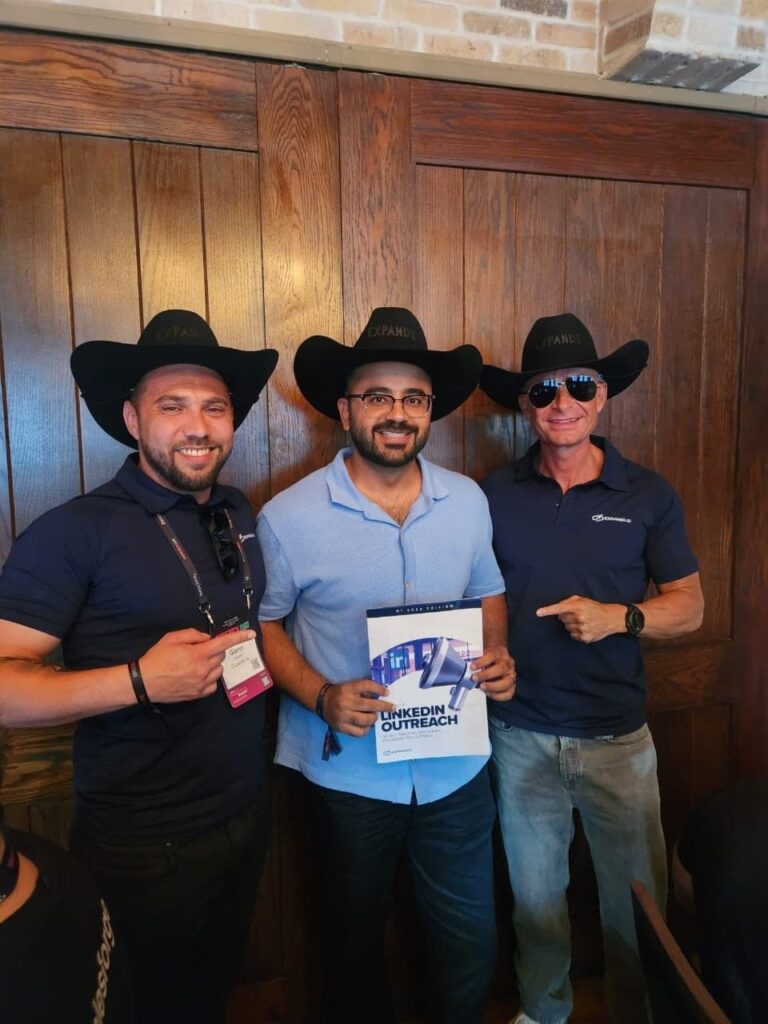
For a company whose entire thesis is that human-curated data beats AI-generated approximations, sending a voice message to start the relationship is consistent with the product. The medium is the message.
One thing, done obsessively
Most founders building in the AI era are hedging — adding AI features to existing products, building agent layers on top of legacy platforms, diversifying because the right answer isn’t clear yet.
Rahul’s bet runs the other direction.
“We’re just focused on one thing, which is data. And that is how we are going to win in the market.”
Monomaniacal focus is unusual in early-stage companies and almost always correlates with the ones that build durable moats. The bet has to be specific enough to be wrong. Enrich Labs’ bet is specific enough. If data is the moat in the AI era, the company owns one of the most important categories that will be invisible to most observers until it is too late to enter.
Rahul Lakhaney is building the layer underneath the AI wave instead of riding on top of it — a patient thesis executed with monomaniacal focus. The signal that he is right comes from the sharpest GTM operators in the space already treating Enrich Labs as infrastructure.If you want to speak to founders like Rahul directly, join the GTM Society — where the operators building the infrastructure of AI-powered GTM share what they’re building before the rest of the market notices the category exists.
Join the GTM Society. The room where GTM actually gets built. Founders, SDRs, and operators. No noise. Just systems.