LinkedIn Post Inspector: How to Fix Link Previews (2026)

You share a URL on LinkedIn and out comes the old image, a stale headline, a missing description, or a gray box. LinkedIn Post Inspector shows the preview LinkedIn has stored and requests a fresh fetch of the page.
I’ve ghostwritten LinkedIn content for years, and I check every link before it goes into a post or outreach sequence.
Key Takeaways
- LinkedIn Post Inspector is a free LinkedIn tool that previews a public URL and reports the metadata behind the card.
- Re-inspecting a URL asks LinkedIn to fetch it again. The new preview applies to future shares, and existing posts keep their old cards.
- As of October 28, 2026, the Post Inspector page opens publicly, but clicking Inspect when signed out redirects you to LinkedIn’s sign-in page.
- Once a link post draws engagement, Expandi Signals can add those engagers to a relevant follow-up campaign after you review the audience and message.
LinkedIn Post Inspector: How to Fix Link Previews (2026)


What is LinkedIn Post Inspector?
LinkedIn Post Inspector is LinkedIn’s free URL debugging tool that shows how a public page should appear when shared and identifies the metadata LinkedIn could read. Submitting the URL requests an updated copy.
Use it for public pages LinkedIn can fetch without a password, as it helps you find the source of a broken preview and refreshes LinkedIn’s stored version after you fix the page.
Fast answer: To refresh a LinkedIn link preview, re-inspect the URL and use it in a new post. LinkedIn says the corrected card doesn’t replace the preview on a post that’s already live.
How LinkedIn Post Inspector works
Post Inspector shows the metadata LinkedIn has stored for a URL and asks its extraction service to visit the page again. LinkedIn’s engineering explanation describes the process in 4 steps.
- LinkedIn receives the URL and requests the page. The first check is whether the server returns a usable HTTP response.
- The extraction service reads possible metadata values, including Open Graph or oEmbed data where the page provides it.
- LinkedIn checks each possible metadata value against its display rules and selects the best fit for each field.
- Post Inspector shows the preview LinkedIn selected and any warning that explains why another value was rejected. A successful re-inspection updates the stored preview for later shares.
If LinkedIn can’t load the page, there’s no metadata to rank. Duplicate or changing tags can also produce different results between inspections.
How to use LinkedIn Post Inspector to fix a broken preview
Sign in to LinkedIn and inspect the complete URL. Then compare the rendered card with the metadata on your page.
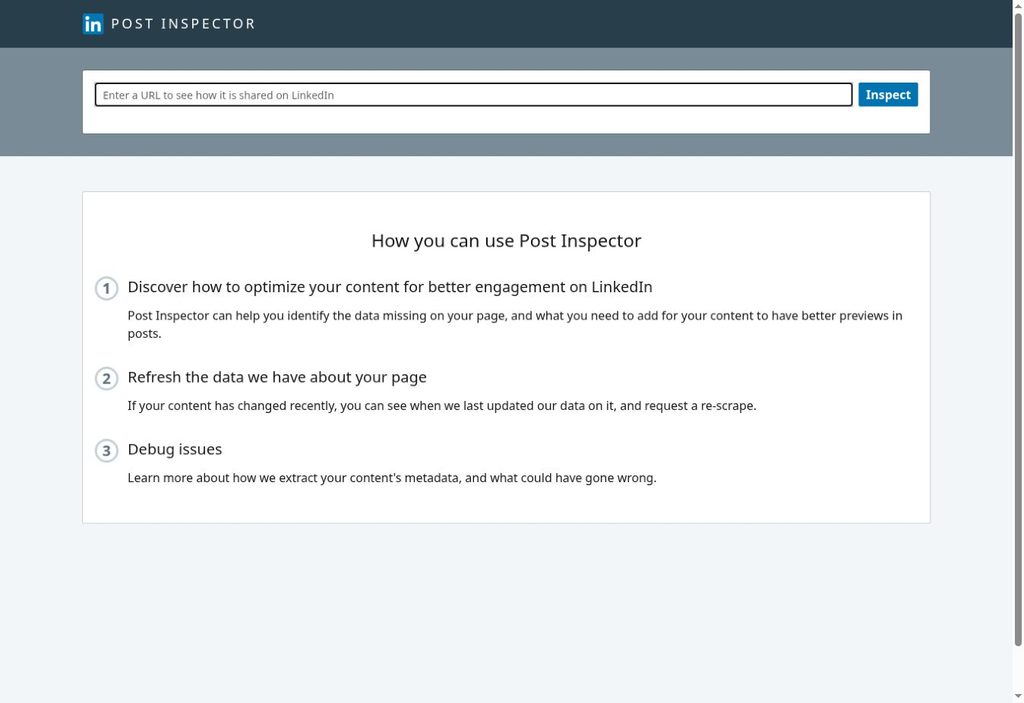
- Open linkedin.com/post-inspector and sign in when prompted. In our October 28, 2026 check, the landing page loaded without an account, but clicking Inspect redirected to LinkedIn’s sign-in page.
- Paste the full URL, including https://. Use the exact UTM-tagged version if that’s the link your team will publish or send.
- Click Inspect. LinkedIn requests the page and displays the preview it can build from the response.
- Check the preview card and the URL information. Compare the chosen title and image with the source tags on your page.
- Fix the source page and clear any site or CDN cache. Inspect the same URL again, then re-share the corrected link in a new post.
If the card now matches the page, the refresh worked. Otherwise, use the error guide below to check the page response and metadata.
What LinkedIn Post Inspector checks
Post Inspector checks the preview LinkedIn can render and the page data used to build it. Review these fields before you publish:
- The selected preview image and any image-dimension warning.
- The title and description shown on the card.
- The fetched URL, canonical URL, redirect path, and last-scraped time.
- The Open Graph or oEmbed values LinkedIn found.
- The date LinkedIn last retrieved the page.
- Any warning (ingestion feedback) explaining why LinkedIn rejected another metadata value.
How to refresh a LinkedIn link preview
Re-inspect the URL and confirm the corrected card. Share the link in a new post. If you searched for “clear LinkedIn cache,” the result is the same for future shares: LinkedIn retrieves the page again and stores the updated metadata.
LinkedIn Help states that the update applies only to new posts. A published post keeps the preview it had when it went live, so deleting your browser cache or reloading the composer can’t repair that card.
LinkedIn doesn’t publish a fixed Post Inspector cache duration. After changing the page, re-inspect the URL. If the corrected metadata still doesn’t appear, LinkedIn’s troubleshooting guidance says updated tags may take up to 48 hours to appear.
The LinkedIn Open Graph tags a preview needs
LinkedIn Open Graph tags tell the platform which headline and image belong on the card, along with the description and canonical URL. LinkedIn’s website-sharing guidance requires these 4 tags.
<meta property=”og:title” content=”Your page headline”>
<meta property=”og:image” content=”https://example.com/preview-image.jpg”>
<meta property=”og:description” content=”A short description of the page.”>
<meta property=”og:url” content=”https://example.com/page/”>
Set one value for each property. Duplicate SEO plugins, server-side experiments, cached templates, and client-side metadata can give LinkedIn several candidates or no usable value in the first HTML response.
LinkedIn preview image size requirements
Use LinkedIn’s published dimensions so the card can render at full width. The image must also be available to LinkedIn without a login or blocked request.
| Check | LinkedIn guidance |
|---|---|
| Minimum dimensions | 1200 x 627 pixels |
| Recommended aspect ratio | 1.91:1 |
| Maximum file size | 5 MB |
| Thumbnail threshold | Images under 401 pixels wide display as thumbnails |
| Image URL | Public, absolute URL that LinkedIn can fetch |
Post Inspector can’t rewrite these tags. Make the change in your CMS or page template. Purge the site cache if needed, then inspect the URL again.
LinkedIn Post Inspector not working? Common errors and fixes
A failed inspection usually points to access or metadata. An old response can create the same error. Start your investigation with the exact wording shown in Post Inspector.
LinkedIn Post Inspector internal connector error
An internal connector error usually means that LinkedIn couldn’t complete the fetch or read a usable page response. Open the URL in a private browser window first, then ask your developer or host to confirm that it returns HTTP 200 to a public request and isn’t blocking LinkedIn’s crawler.
Check the direct chain and TLS certificate as well. A firewall rule, CDN bot filter, redirect loop, or server error can interrupt the fetch before Post Inspector reaches the Open Graph tags.
Bandwidth limit exceeded
LinkedIn doesn’t publicly share a Post Inspector quota or recovery time for this error. If you see “Bandwidth limit exceeded,” stop repeated requests and try again later. If the error persists, save the URL and time before contacting LinkedIn support.
No preview or no image found
A blank card means LinkedIn couldn’t build a usable preview from the response.
Confirm that the page is public and the image uses an absolute HTTPS URL. Check the file against LinkedIn’s size requirements, then open the image URL directly to catch an access error.
If the title appears but the image doesn’t, focus on og:image and the image response. If the entire card is empty, start with page access and the HTTP status.
Stale preview content
Stale metadata can come from LinkedIn’s stored copy, your CDN, the origin cache, or a page that serves changing tags.
View the first HTML response and make sure it contains one consistent set of Open Graph values. Purge the page cache, then re-inspect the URL and use it in a new post.
Troubleshooting summary
| What you see | Likely cause | What to check |
|---|---|---|
| Internal connector error | LinkedIn received no usable page response | HTTP status, firewall or CDN rules, TLS, and redirects |
| Bandwidth limit exceeded | Temporary inspection limit or service response | Stop repeated requests, wait, retry once, and record the result |
| No preview | The page is inaccessible or metadata can’t be extracted | Public access, first HTML response, Open Graph tags, and server status |
| No image found | The image tag is missing or the image can’t be fetched | og:image URL, dimensions, file size, and image response |
| Old title or image | Stored or conflicting metadata | Site or CDN cache, duplicate tags, re-inspection, and a new post |
What LinkedIn Post Inspector can’t do
Post Inspector diagnoses LinkedIn’s copy of a URL preview. It leaves the page itself and any published post unchanged. It can’t:
- Edit Open Graph tags or website code.
- Bypass an access block such as a login or firewall rule.
- Replace the card on a post that is already live.
- Guarantee clicks, reactions, replies, or feed reach.
- Refresh Facebook or X because each platform stores its own card data.
Post Inspector vs. other link debuggers
“LinkedIn debugger” and “LinkedIn Open Graph debugger” are common names for Post Inspector. Other networks maintain separate caches, so a refresh on one platform doesn’t update another.
| Platform | Where to check | What it updates |
|---|---|---|
| LinkedIn Post Inspector | LinkedIn link previews | |
| Meta Sharing Debugger | Facebook sharing previews | |
| X | Draft-post preview and X card markup | X card rendering |
For Facebook, use the Meta Sharing Debugger. For X, check the card in the post composer and troubleshoot the page’s X card tags separately.
A pre-share checklist for posts and outreach links
Check each production URL once before it enters a post library or outreach campaign. Repeat the check whenever its metadata or redirect path changes.
- Inspect the exact destination URL, including UTM parameters used by the campaign.
- Confirm the full-width image appears and matches the current page.
- Read the title and description as a prospect would see them.
- Check the fetched URL and canonical URL for an unintended redirect.
- Record the inspection date next to the approved link in your content or campaign sheet.
Run the same check before adding a URL to a LinkedIn message automation sequence, since LinkedIn can display cached link previews in messages too. Then choose an asset that fits the prospect’s current B2B buyer journey stage.
Socialinsider’s 2026 benchmark page reports engagement by impressions for business Page posts. In its full-year 2025 data, link posts averaged 3.25%, compared with 5.30% for image posts. Its Q3 2026 figures fell to 2.50% and 4.70%, respectively.
These figures compare post formats on company Pages. They don’t show that moving a link to the first comment will improve an individual post.
After the preview, turn engagement into conversations
People who engage with a link post give you a timely reason to start a conversation. The reaction shows interest in the topic, though it doesn’t reveal buying intent by itself.
Expandi’s H2 2026 outreach report found that 38 accounts with at least 1,000 followers and 3 or more consistently engaged posts recorded a 30.5% connection acceptance rate. The platform range was 27% to 29%.
Do note that the sample is small, so the result should be read as directional. The study is observational and can’t show that posting caused the difference.
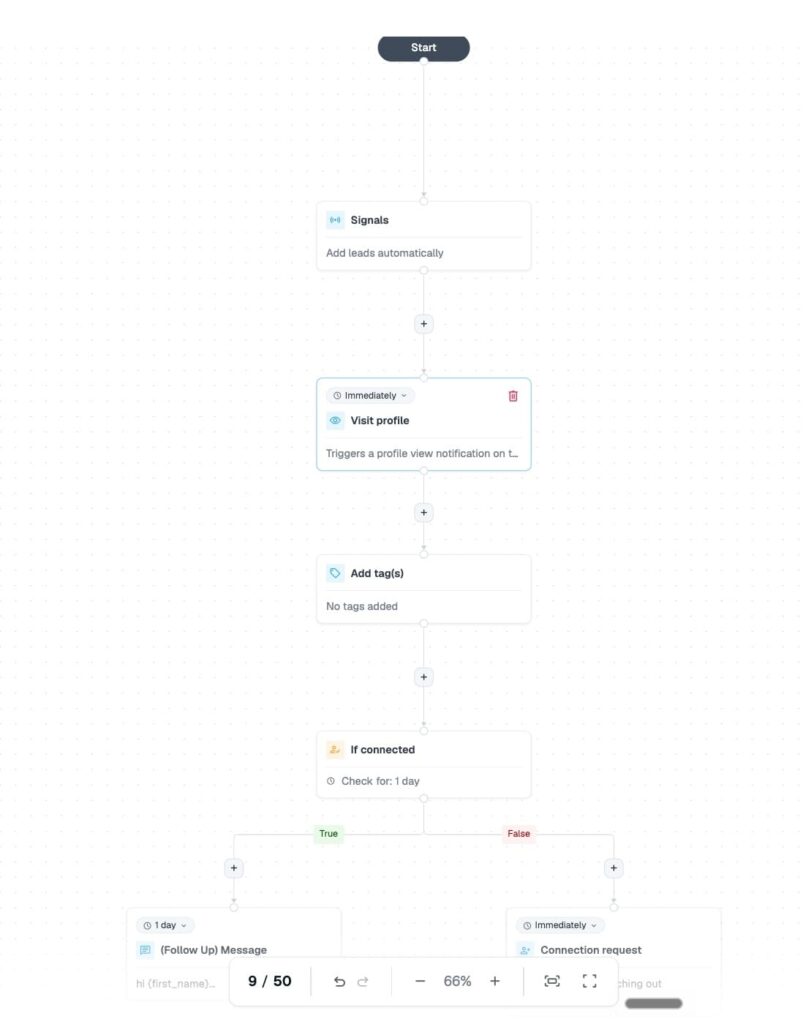
Use the post interaction as context. In Expandi Signals, add engagers from a chosen post and apply your ICP checks. Write a follow-up that refers to the topic they saw, then review the audience and copy before activation.
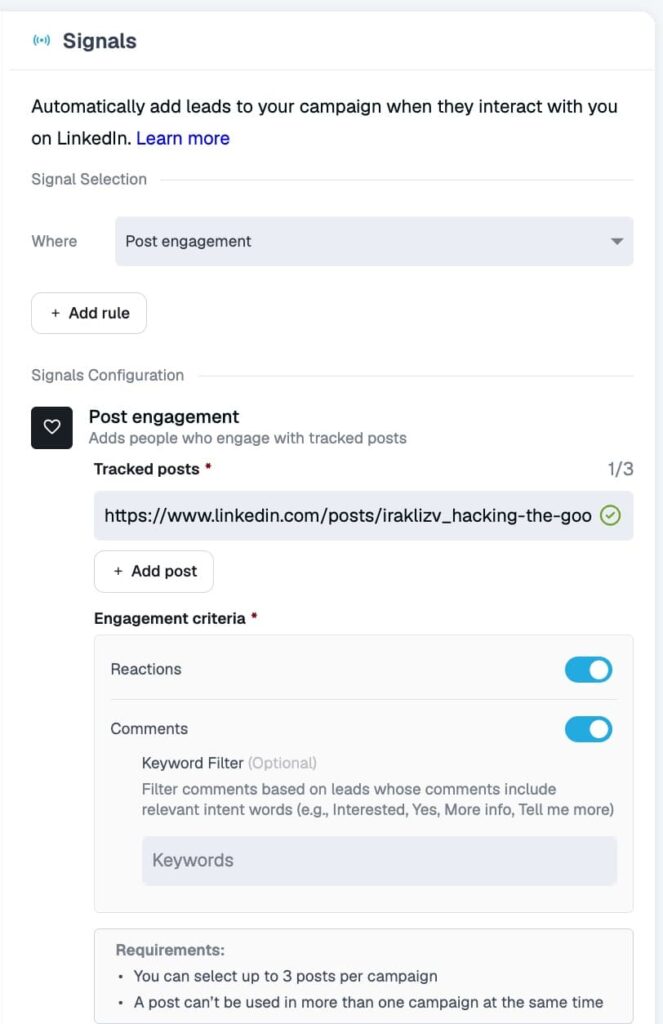
For setup instructions, use the Signals guide. The signal-based outreach guide helps you decide when an engagement gives you enough context to contact someone. Smart Campaigns then handles the follow-up you have approved. Our LinkedIn networking guide covers how to continue the relationship once you receive a response.
Once the preview is clean, use the post topic to open a relevant conversation.
Fix the preview before the link leaves your team
Run Post Inspector on the final URL and correct any metadata problem it exposes. Save a screenshot of the approved card with the campaign record, then re-inspect after future changes to its title, image, redirect, or UTM parameters.
That check protects every place the link appears on LinkedIn. Our LinkedIn marketing tools guide covers the next part of the workflow.
When you’re ready to build the follow-up campaign, start a free Expandi trial.
LinkedIn Post Inspector FAQs
Do you need a LinkedIn account to use Post Inspector?
Can you use Post Inspector on a LinkedIn post URL or company page?
Does Post Inspector work for links in LinkedIn messages and InMails?
Why does my LinkedIn link preview look different on mobile?
Should I put the link in the post or the first comment?
Is there a limit on how many URLs you can inspect?




You’ve made it all the way down here, take the final step