How to Build a Winning B2B Sales Strategy: Proven Frameworks + Examples


As a B2B business owner, relying on the spray-and-pray technique is a sure way to stall your pipeline growth. Hoping that someone converts not only wastes your time and resources, but also leaves you burned out and fails to generate qualified opportunities.
So, what’s the way out? Build a winning B2B sales strategy. Having a structured plan that outlines how to identify, engage, and convert potential leads is key to guiding your team’s efforts and to using your resources efficiently. As a result, you build more relationships with prospects and have sustainable growth. But how do you create this structured plan?
That’s why you have this guide. Here, you’ll learn a step-by-step process on how to build a winning B2B sales strategy. You’ll also learn the proven frameworks and examples to achieve this plan. Let’s get started.
What’s a B2B Sales Strategy?
A business-to-business (B2B) sales strategy is a structured plan that companies use to identify, engage, and convert other businesses into paying customers. Yes, its core focus is on different companies, not individual customers like B2C. You deal with multiple stakeholders, a complex decision-making process, and a longer sales cycle.
A strong B2B digital sales strategy aligns a business’s needs with its offerings (products or services) through tactics such as value selling and relationship building. That said, a B2B sales strategy doesn’t work in isolation. Its key components include:
- Understanding your target audience to identify and address their specific needs and pain points,
- A strong value proposition and differentiation that clearly communicate your product’s unique benefits, and
- Relationship building to create more trust, enhance credibility, and improve loyalty.
Overall, a strong B2B sales strategy provides a clear roadmap for navigating the complex buying process, building lasting relationships, and driving sustainable business growth.
Why Do You Need a B2B Sales Strategy?
As sales leaders, you need a B2B sales strategy to anticipate issues that could prevent you from hitting your sales target and achieving your business goals. Besides, here are some other benefits of having a B2B sales strategy:
- Pipeline growth
With a B2B sales strategy, your sales team doesn’t have to shoot the dart in the dark by engaging in some random outreach activity. Instead, they leverage data-driven insights to identify your prospect’s current stage in the sales funnel and how to move them faster with the right messaging. This grows your pipeline with predictable opportunities that advance business growth.
- Improved customer relationship
When you fail to network or build relationships with prospects, your pipeline gradually dies. And nobody wants this. However, having a B2B sales strategy helps you to identify and address your prospects’ specific needs early, improving customer interactions. This makes them feel more valued and transforms mere sales pitches into strategic, long-term partnerships for your business.
- Increased revenue
As you fuel your pipeline with qualified leads, address their needs, and nurture them through the sales cycle, you’re likely to build rapport that could translate into real business opportunities. The result? More leads and increased revenue. However, this doesn’t happen overnight. You need consistent efforts to interact with prospects and convert them into paying customers.
Types of B2B Sales Strategies
B2B strategies fall into two main types: inbound and outbound sales. In this section, we’ll take a deeper look at the details.
1. Inbound sales strategy
An inbound sales strategy is a low-cost, scalable way to generate leads. The goal here is to attract customers to your brand, rather than going to them. You create helpful, relevant content such as blogs, ebooks, and videos to address their needs and solve their problems. As a result, you earn their trust and eventually convert them into paying opportunities.
2. Outbound sales strategy
An outbound lead generation strategy is more proactive. You initiate direct contact with businesses, even with those you don’t know. Through methods like cold emailing and cold calling, you identify prospects, engage them to capture their interest, and fill the pipeline. This helps to generate qualified leads faster and drive sales opportunities.
12 Ways to Build a Winning B2B Sales Strategy from Scratch
Thinking of how to build a winning B2B sales strategy from scratch? Let’s help with the dilemma. In this article, you will learn the 12 ways to create a winning B2B SaaS sales strategy.
1. Set measurable goals
Before you start curating with strategy, ask yourself first. What do I intend to achieve? Do I want to generate new leads? Drive more revenue? For instance, you could increase annual revenue by 20% or acquire 30 new customers by the next quarter.
Setting measurable sales targets provides direction for implementing your sales strategy and keeps your sales reps motivated. Besides, it helps you determine the plan to use and align it with your overall business objectives.
2. Understand your target audience

Who exactly is buying what you’re selling? To answer this question, you must define your ideal customer profile (ICP). Your ICP is the perfect description of those who benefit most from your products or services. Identify the key characteristics of your prospects, including their pain points, interests, location, and behavior.
This helps in understanding who your target audience is and how to reach them effectively. Without it, you’d randomly send generic messages to the wrong people, wasting your time and effort. Also, conduct research into the target market to gain insights into your ideal buyers and overall market trends.
3. Align sales and marketing efforts
When your sales and marketing team isn’t on the same page, guess what happens? Friction, chaos, and missed sales opportunities. As a business owner, you don’t want. So, what do you do?
Create a B2B sales and marketing strategy that aligns their efforts. This helps them make your customer journey smoother. For instance, if the marketing team attracts and nurtures leads, the sales team can receive qualified leads.
This keeps both teams on the same page, enabling them to target the same goal (e.g., increased revenue), use the same communication system (e.g., regular meetings and customer feedback), and collaborate. When the team works together in harmony, your business succeeds in the long run.
4. Use data-driven insights to find the right prospects
If you’re still targeting leads randomly, chances are you’re leaving money on the table. The only way out of this is high-quality data. It gives you insights into who to target and who to ignore, especially if they won’t convert into paying customers.
So, how do you do it? The answer is simple — use a B2B sales prospecting tool like Expandi to find qualified leads.
How Expandi helps to find the right prospects
Expandi is a leading LinkedIn automation tool that helps you find and target the right leads at the right time. Our proprietary algorithm integrates with LinkedIn to automate your lead generation efforts, so you don’t waste time dealing with leads manually.
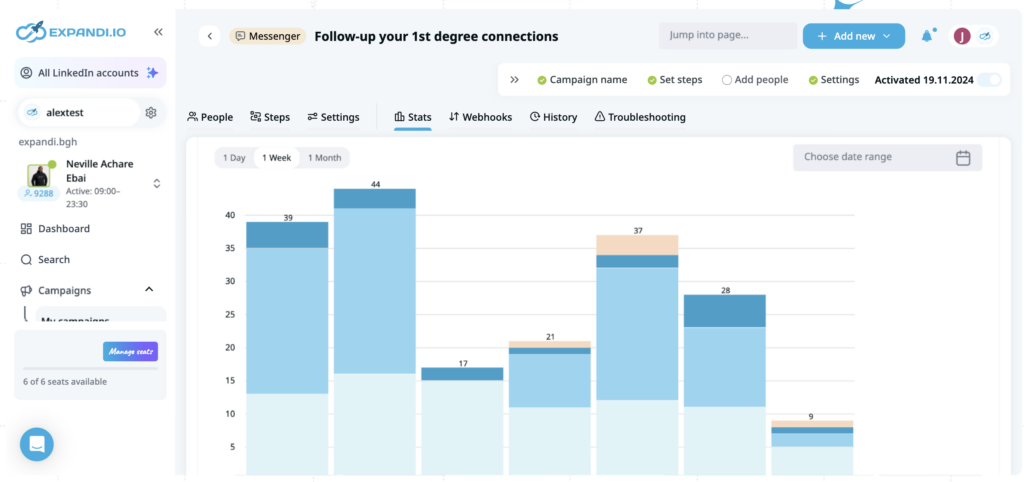
Additionally, we utilize random delays between your actions to mimic human behavior and help prevent your LinkedIn account from being restricted or banned.
5. Personalize your outreach at scale
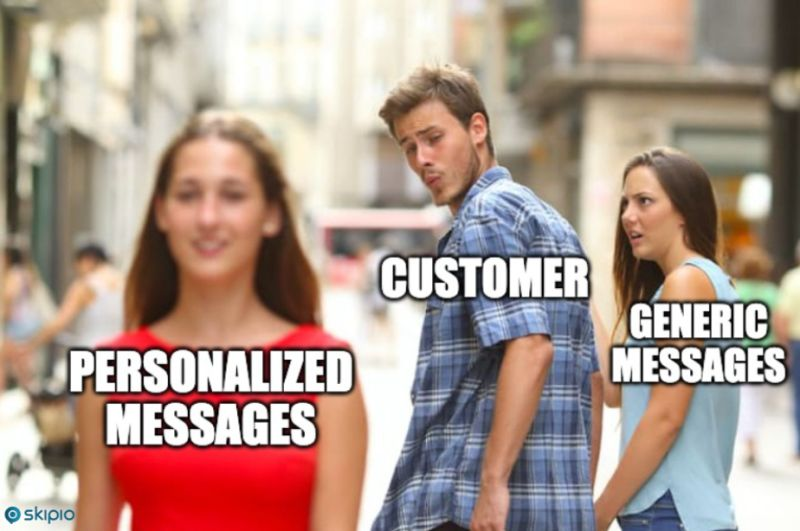
Generic messages won’t work to catch your prospect’s attention or get replies from them. This means it’s time to stop using it. Instead, personalize your messages. Go beyond the first name and mention something relevant to your prospects.
For instance, you can address their pain points or reference shared interests (e.g., industry trends, LinkedIn news, or company updates). Research revealed that campaigns with advanced personalization achieved reply rates up to 18%, which is double the average for generic templates. In short, personalizing your messages increases the chances of getting a reply from your prospects.
6. Opt for multi-channel prospecting
Relying on a single channel limits your activities to that channel. This explains why you need to use multiple channels for prospecting. Combine your email campaigns with other channels, such as phone calls and social media platforms (LinkedIn, WhatsApp, X (Twitter)), to expand your reach to a diverse audience.
A McKinsey study found that B2B companies have an average of 10 distinct channels, enabling customers to move between them without losing context or repeating information. The result? Lower cost, increased customer satisfaction and loyalty, and a faster growth rate.
7. Try social selling on LinkedIn
If your sales team isn’t on LinkedIn, you’re at a loss. We don’t just say this; the stat backs it up: 62% of B2B marketers report that LinkedIn generates 2x more leads than other social channels.
This makes LinkedIn social selling a treasure trove for B2B professionals, including key decision-makers and referral sources. The best sales reps understand that it’s more than a platform for seeking jobs. It’s where you engage and build relationships with potential buyers.
For instance, post thoughtful LinkedIn content to position yourself as an expert and improve your authority on the platform. You can also like, comment, repost, and share their LinkedIn posts to start sales conversations and build relationships. However, that’s not all. You have to gain trust, which leads us to the next point.
8. Don’t forget to nurture your leads
B2B buyers don’t buy immediately; a report shows the average sales cycle lasts 6 months. This makes lead nurturing essential in your B2B SaaS sales strategy. Once you engage with a prospect and start to build relationships with them, don’t give up immediately. Instead, stay in touch with them regularly through:
- Initial emails and follow-ups
- Staying consistent on LinkedIn and interacting with their posts
- Relevant content such as case studies and industry reports.
Staying in regular touch with your prospects will keep your brand top of mind. So, when they’re ready to purchase, they’ll remember you first.
9. Focus on the benefits, not features
Your product’s features are great, no doubt about that. But why should your buyers need them? How can they solve your buyer’s problem? No matter how great your product is, your prospects don’t care until it helps to solve their problems.
That’s why you focus on the benefits, not just the features. Benefits highlight the value your products serve, prompting your prospects to buy from you. Go through your customers’ data or feedback to identify their pain points.
Then share relevant content that highlights your product’s benefits. For instance, you can share case studies or video testimonials to increase trust. Overall, focusing on your product’s benefits highlights your prospect’s needs and increases the chances of buying from you.
10. Use the right sales tools
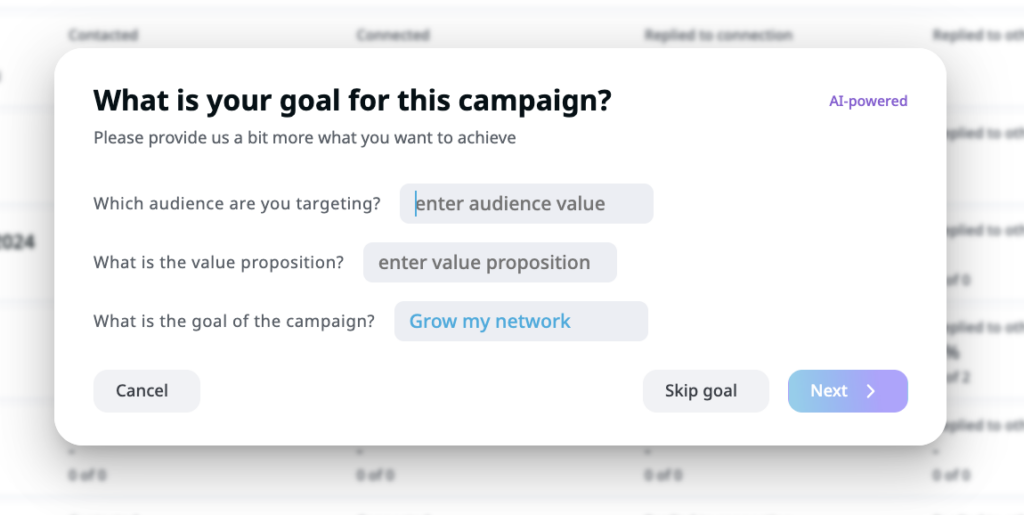
Your sales team can’t do all these tasks manually. They need the right AI sales tools to automate and speed up their efforts. Use dedicated varieties of tools such as:
- Sales prospecting tools like Expandi to find and target high-quality leads
- Data enrichment tools to find your leads’ valid email addresses and other relevant information
- Sales engagement tools to manage your outreach and follow up on your prospects
- A CRM to store your leads’ data
Without the right sales tools, your sales team would waste time and get exhausted. However, a successful B2B SaaS sales strategy doesn’t focus solely on the tool. You need the right people to use them to their full potential.
11. Continuously train your sales team

Your sales team is the powerhouse behind your strategy. That’s why you need a B2B sales enablement strategy to help your team acquire the right skills for building relationships and closing deals. A B2B sales enablement strategy is a structured plan that equips your team with the right resources and training to engage buyers in a long sales cycle.
These resources include:
- Sales playbooks, persona-based framework, pitch decks, and battlecards to help teams at different sales funnel stages.
- Role-playing exercises, sales techniques such as objection handling, coaching simulations, and continuous sales training to build the right skills and confidence.
As you continuously train your team, they acquire the right skills to communicate confidently with prospects. Better skills result in building stronger relationships and ultimately, higher closing deals.
12. Track and optimize your performance
You can’t improve what you don’t measure. Track key sales metrics such as reply rates, sales cycle length, average deal size, and conversion rates. This helps you to identify what’s working and the areas that need improvement.
Also, run an A/B test on the elements in your campaigns to determine which performs better. You can test:
- The subject line,
- Opening hooks
- Style and tone of the message, and
- CTA in your messages to figure out what works for your audience.
Finally, request feedback from your sales reps and customers through surveys and questionnaires to refine your strategies accordingly.
Implementing B2B Sales Strategies: Proven Frameworks + Examples
In a saturated business environment, implementing a successful sales strategy with proven frameworks and real-world examples gives you a competitive edge that drives business growth. In this section, we will look at a few frameworks and their real-world B2B sales strategy examples to boost your sales efforts.
1. Strategic selling
Developed by Robert Miller and Stephen Heiman, strategic selling is a buyer-focused framework designed to help businesses navigate the complex B2B sales cycle with scalable, data-driven insights.
Its core strength goes beyond a product and its features. Instead, it focuses on understanding the customer’s needs and building long-term relationships with multiple decision-makers.In other words, you identify the different decision-makers you’re prospecting at a company and their influence on the sales process.
Real-world example of strategic selling
IBM performed a global sales transformation, modernizing how its teams sell across 170 countries. They realized their teams spent much time on internal systems rather than engaging customers. So, IBM partnered with Salesforce to implement a centralized, cloud-based CRM platform called IBM Sales Cloud.
The goal was to simplify sales processes, centralize customer insights, and establish a consistent global sales workflow. With this, IBM shifted from operational complexities to a more strategic, customer-focused selling model.
What IBM did
- Unified multiple disconnected CRM tools into a global sales system, giving all teams access to centralized information.
- Standardized the sales process in different business units across countries to prevent inaccurate data and reduce inefficiency.
- Provided real-time visibility into accounts and pipeline growth, allowing teams to prioritize high-value opportunities.
Result
The transformation has onboarded about 30k+ sellers from all business units to reduce administrative burden and help teams close deals faster.
2. SPIN selling
Introduced by Neil Rackham in 1988, the SPIN selling is another framework designed to help sales professionals understand customer needs, address their pain points, and offer tailored solutions. The acronym stands for Situation, Problem, Implication, and Need-payoff. Here’s a closer look at what they mean.
| SPIN Components | Meaning | Question examples |
| Situation | Gather information to understand the customer’s situation or needs | What CRM are you currently using? |
| Problem | Clarify the customer’s pain points or frustrations. | Does your CRM easily integrate with other tools you use? |
| Implication | Discuss the effects or consequences of the problem. | If integration keeps failing, what impact does it have on your team’s productivity and overall customer experience? |
| Need-Payoff | Offer your products or services as the solution by demonstrating their value and how they solve the problem. | How much would it help your revenue goals if your team no longer loses leads or time due to failed integrations? |
Real-world example of SPIN selling
Scientifica, a scientific instrumentation provider, adopted the SPIN selling methodology to improve customer conversations and drive revenue growth. Rather than relying on product pitches, its sales professionals were trained to ask the SPIN questions on clients’ operations and sustainability goals.
What they did
- Trained cross-functional teams on how to ask SPIN questions
- Shifted focus from product features to business impact
- Linked customer challenges to sustainability outcomes.
Results
Scientifca’s conversion rates have improved from 10% to 23%.
3. Account-based selling
Account-based selling is a strategic approach to B2B sales where sales teams focus their efforts on high-value accounts. The goal is to treat each account as a one and offer tailored solutions to address its specific needs. This helps to build stronger relationships with potential customers.
Real-world example of account-based selling
Valpak, a direct marketing company, used account-based solutions to transform its sales efforts. By adopting the “market of one” approach, the company personalized outreach to high-value accounts. They tailored each message to address the specific needs of the target accounts.
What they did
- Leveraged Salesforce CRM to identify and prioritize high-value accounts.
- Used personalized messaging to address each account’s challenges.
- Aligned sales and marketing teams’ efforts to provide unified experiences across major touchpoints.
Result
Valpak saw increased sales and a higher return on investment (ROI) from its personalized approach.
4. Value-based selling
Value-based is a customer-centric approach that focuses on the potential value your products or services can provide. Rather than focusing on the product’s features, it concentrates on how your product is the ideal solution and how it can solve the customer’s problems. This helps to build trust, deepen relationships, and drive sustainable growth.
Real-world example of value-based selling
DoorDash, a leading on-demand delivery product, needed a better way to manage and scale its email marketing and lead engagement efforts. Before HubSpot, they relied on manual HTML forms, manual databases, and improper segmentation, which slowed and made personalized outreach ineffective.
However, they adopted HubSpot to automate workflow and turn raw insights into actionable outreach. This value-based selling approach positioned HubSpot not only as a tool but as the solution to reduce time and improve customer engagement.
What they did
- Adopted HubSpot’s CRM and Marketing Hub to centralize leads’ data and marketing activities.
- Built an automated workflow to reduce about 80% of manual sending of emails.
- Segment audience to create tailored campaigns.
Result
DoorDash shortened the time to produce emails by 3 days after using HubSpot.
Mistakes to Avoid When Building Your B2B Sales Strategy
As you’re implementing your B2B sales strategy, here are some mistakes to avoid to achieve the desired growth.
1. Generic messaging over personalization
Sending a one-size-fits-all message to all your prospects (e.g., CEOs, Heads of Sales, VPs of Marketing) is a sure way to get ignored. Why? What applies to the CEO may not apply to the Head of Sales. To fix this, segment your leads and tailor your messaging to resonate with each segment.
2. Chasing quantity, not quality

Not every lead will convert. So, if you focus on acquiring more leads without focusing on how much impact they will have, you’re in for a long ride, wasting time and resources on people who are less likely to convert.
So rather than casting a wide net, focus on people who are more likely to convert – those with specific needs your product solves and who show real intent to buy. This helps you to prioritize your efforts and achieve better results.
3. Ignoring data-driven insights
Data is the oil of your sales engine. From prospecting to personalization, from multichannel engagement to workflow automation, you need data for every field. As you use data to find qualified leads, you also need to tailor messages.
Ignoring this crucial part will make you target randomly and fill the pipeline with unqualified opportunities. To avoid this issue, get your data from customers and store it in CRM. Use tools like Expandi to automate the process and achieve your goals.
5. Overpromising and underdelivering your products.
Avoid promising what your product or sales teams can’t fulfill. Rather than exaggerating capabilities or downplaying limitations, be honest about what your product/ team can offer. Exceed their expectations rather than falling short of their assumptions.
Conclusion
Implementing a successful B2B digital sales strategy requires continuous efforts. It’s not about having a single B2B sales strategy template and re-using it every time. That won’t work. Instead, continue to perform customer and market research and adapt the data-driven insights to meet the evolving needs of your potential customers.
Ready to adapt your customer’s data to personalize outreach at scale? We recommend Expandi. Our LinkedIn automation tool helps you to find your ideal buyers, personalize efforts, and position your business for long-term success in the B2B market. Sign up for a free trial today!
FAQs about a winning B2B sales strategy
A B2B sales strategy is a structured plan that companies use to identify, engage, and convert other businesses into paying customers. You deal with multiple stakeholders, a complex decision-making process, and a longer sales cycle.
A winning B2B sales strategy focuses on using data-driven insights to find your ideal buyers and personalizing outreach messages to address prospects’ needs. With Expandi’s lead generation features, sales teams can implement strategies that align with customers’ needs.
Some mistakes you should avoid in your B2B sales strategy include generic messages, chasing quantity over quality, ignoring data-driven insights, and overpromising and underdelivering on your products.





You’ve made it all the way down here, take the final step