How Leonard Eldic Ran 23 Events in 9 Months — and Built a B2B Community From Scratch
SaaS GrowthEvent-led growth compounds when you treat each event as a content engine and each attendee as a future host. The budget barrier is real; the audience barrier is smaller than people think if you are willing to show up in person 23 times in 9 months.
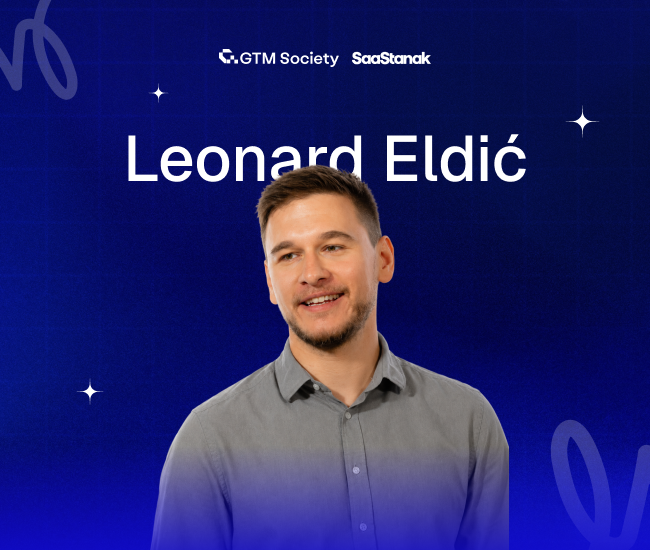

Four years ago, Leonard Eldic was working at Sharp Mobile and did not plan to start a conference.
Someone suggested a meetup at their office. He ran it. Someone else came to that meetup and offered their office for the next one. He ran that one too.
Within a few months, the meetups had become what he calls a travelling circus across Croatia, Serbia, Poland, Czech Republic, Bosnia, and anywhere a partner offered a room.
By late 2023, his email list was big enough to justify a conference. SaaStanak’s 2024 Zagreb event drew 300 people with sponsors that included Paddle, Captivate Talent, SaaS Group, and (by the time of this interview) Expandi.
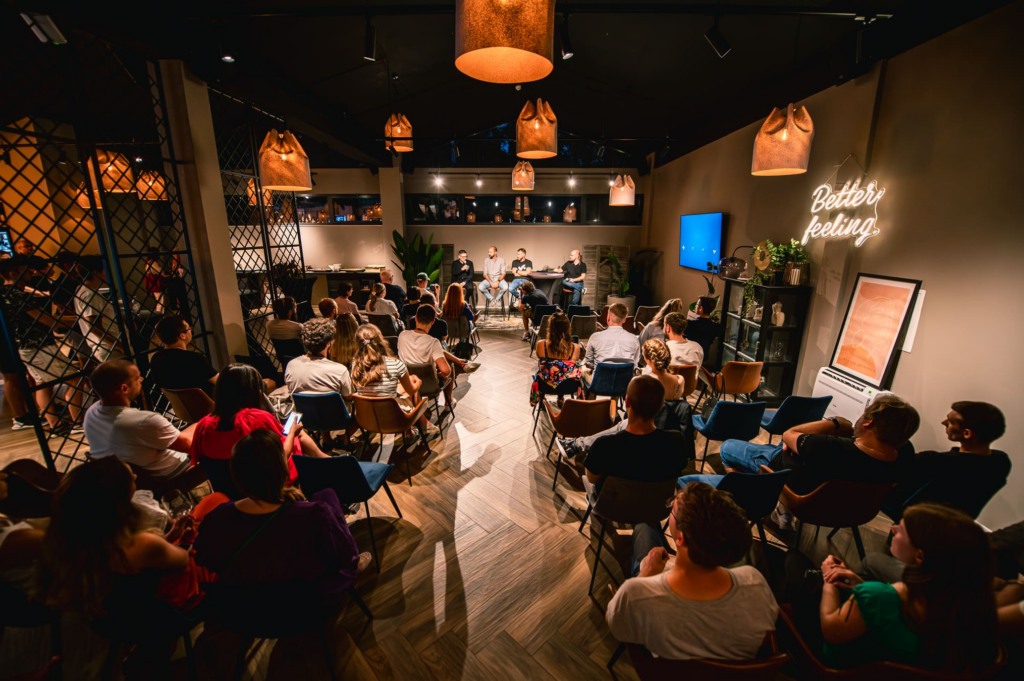
The Croatian coast event that hosts the community every year is a five-star-hotel conference designed to feel like a small dinner.

There was one person telling me, hey, you should do a meetup at my office. Then someone else came by and said, hey, you should do the next meetup at my office. So it became like a travelling circus.
The origin story matters because it sets the mental model.
Leonard did not start with a conference thesis and reverse-engineer a community. He started by showing up, said yes to the next room, and let the community self-assemble around the consistency.
Meet Leonard Eldic, founder of SaaStanak
SaaStanak is a boutique SaaS conference and community network covering Eastern Europe.
Leonard started it as a side project while working full-time at Sharp Mobile, and ran it alongside day jobs at Sharp Mobile and SaaS Group before it became the main thing.
He has manned enough conference booths in his operator life to know exactly what he does not want SaaStanak to feel like.
I’ve been a conference traveler myself. I worked for Sharp Mobile and SaaS Group, and I had to go to conferences. I manned the booth at conferences, so I know the experience very well.
The word that does the work in Leonard’s positioning is “boutique.” SaaStock and similar large conferences occupy one end of the market.
Regional meetups and local chapters occupy the other. Leonard saw space in the middle — a hand-picked, hotel-resident, high-signal-to-noise conference that felt like fifty people even when it was three hundred.
The 23-event playbook — what it looks like in practice
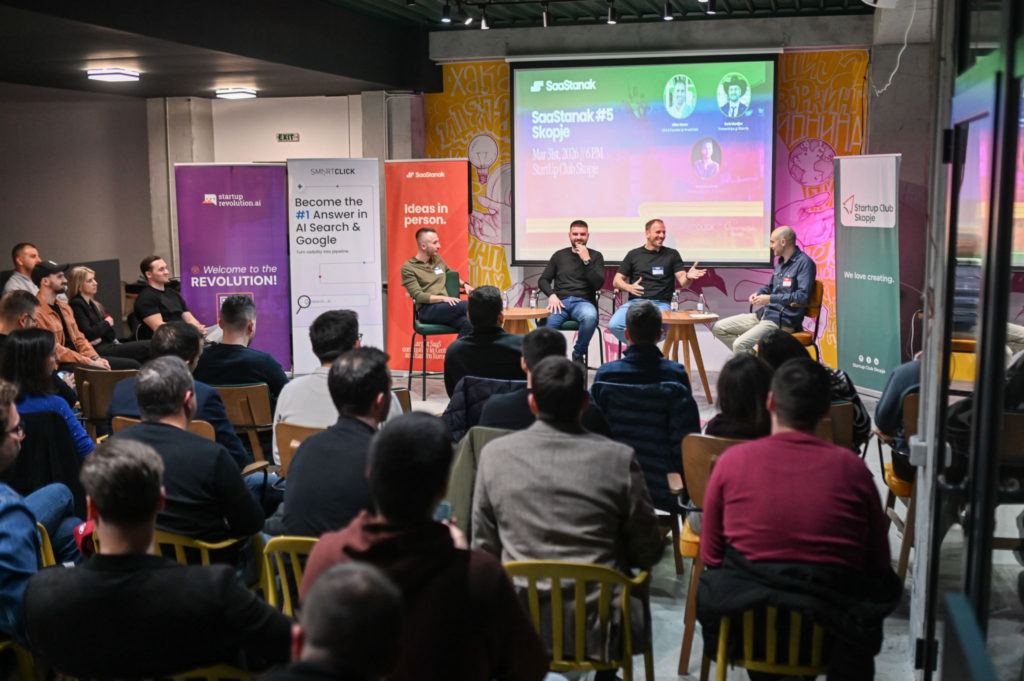
From September to May, Leonard ran 23 live events. Three a month, across five countries.
That cadence is the backbone of the SaaStanak motion, and it is the piece most event-led growth conversations skip. Nobody wants to talk about what showing up 23 times in 9 months does to a small team.
We did 23 live events from September to May. That’s three a month and it’s a slow process, but every live event produces a lot of content and keeps you on track.”
Two things in that line deserve attention:
The first is the word “slow.” Leonard is explicit that event-led growth compounds; it does not spike. Three events a month is the minimum viable cadence to keep the community warm enough that the annual flagship conference has momentum going into it.
Below that cadence, the next conference has to rebuild the relationship from scratch. At or above it, the conference inherits an audience that is already bought in.
The second thing is the content production. Every live event produces video, photos, speaker clips, attendee quotes, and LinkedIn posts from the people in the room.
That content is the connective tissue between events — SaaStanak’s LinkedIn page posts two to three times a day, and most of what feeds that cadence is the organic output from the three meetups the team ran that month.
The playbook in short: each event creates content that justifies the next event. Content creates promoters. Promoters create the next room. The cycle runs on its own once you have given it enough starting energy.
The differentiation — intentionally boutique by design
Leonard has been a conference attendee long enough to be clear about the pain he built SaaStanak to solve. Most conferences eat your time with logistics. You spend more hours travelling between venues, side events, and hotel rooms than you do talking to the people you came to meet. The networking time is short, fragmented, and often low-quality because everyone is tired and rushing to the next keynote.
My pain with conferences is that you usually spend more time traveling to the place and actually with logistics than with networking.
SaaStanak’s fix is architectural. Everybody stays in the same hotel. The venue, the side events, the dinners, the afterparty — all in one building, all within walking distance. Attendees keep their networking time concentrated in the same room as the people they came to meet. The conference runs at a size where every attendee has a reasonable shot at meeting every other attendee over three days.
That architecture is the reason SaaStanak’s attendees become promoters. The experience is specific enough to be memorable, and it is memorable enough to be worth posting about. The promotion is organic because the product is organic.
LinkedIn as the distribution layer
Every SaaStanak attendee becomes a distributor. They post photos from the event, they share clips, they tag speakers and sponsors, and they write retrospectives for weeks after the conference wraps.
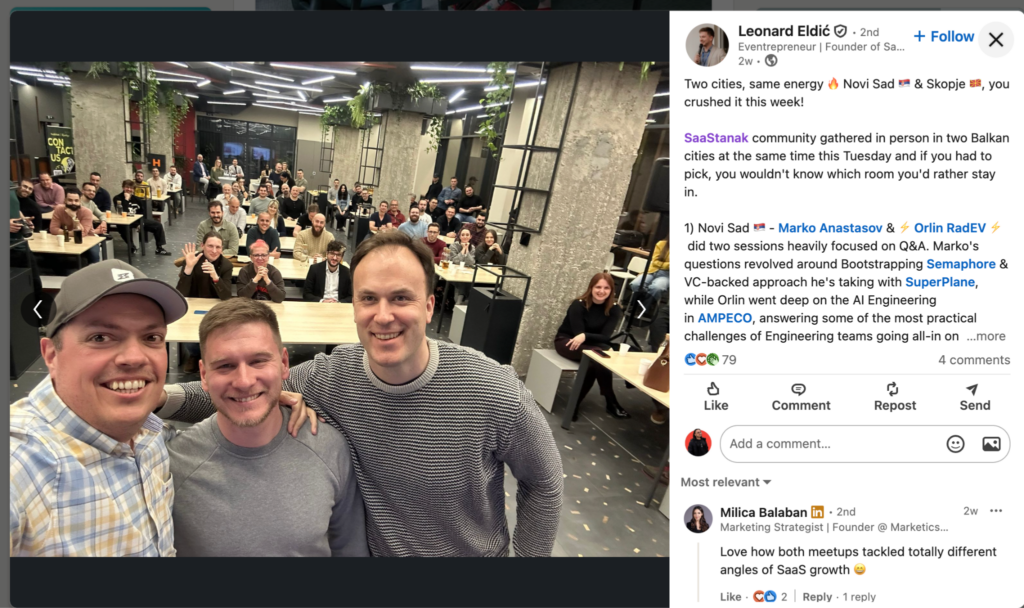
SaaStanak’s own LinkedIn page posts two to three times a day, and the attendee output multiplies that cadence by a factor that would cost a normal company six figures to produce through paid content.
Every live event produces a lot of content, which is good and keeps you on track.
The compounding effect is specific. Month one of the 23-event run produces some content from a small attendee base. Month six produces significantly more because the attendee base has grown and because former attendees keep posting about past events. Month nine is a continuous feed of organic content — Budapest one week, Belgrade the next, Bratislava after that — and the LinkedIn page looks like a travelling circus because it is one.
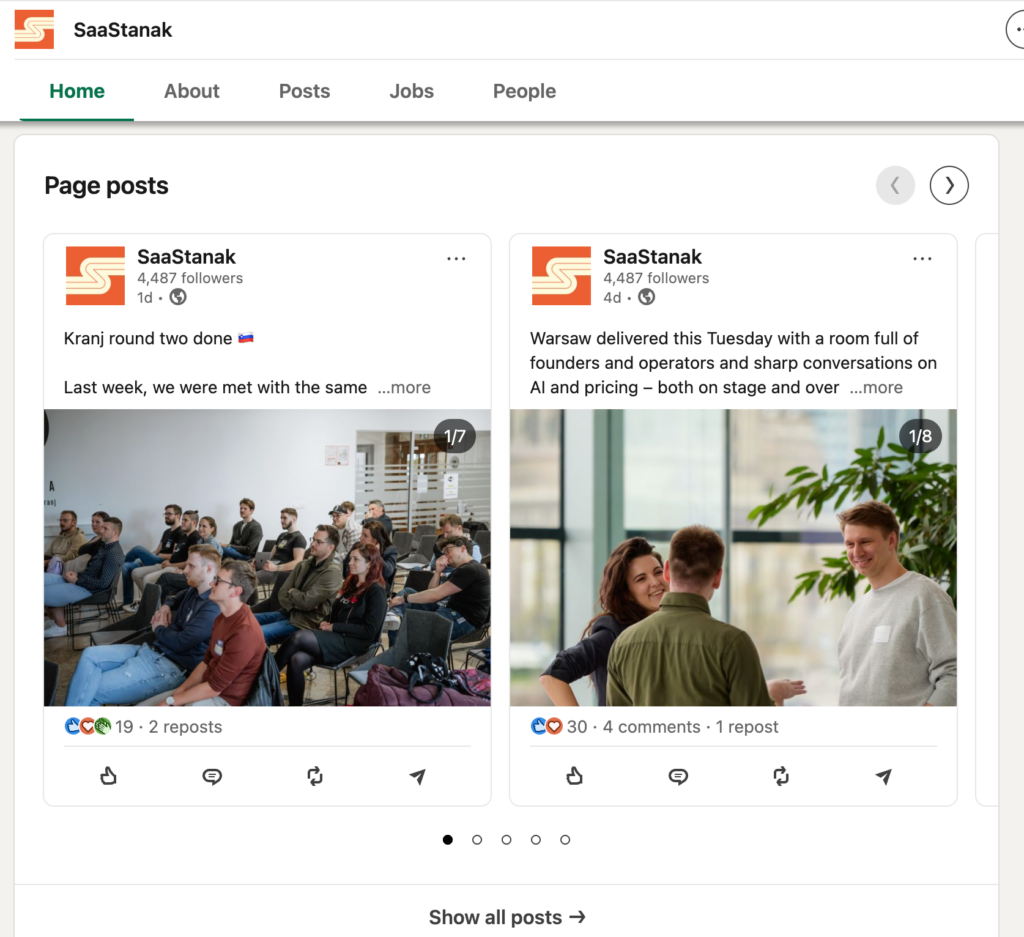
For a GTM team considering event-led growth, the implication is straightforward:
The LinkedIn page looks like a travelling circus because it is one. Three-a-month events can look like thirty to a prospect reading the feed, because the attendee content multiplies the organic output by a factor that would cost most companies six figures to replicate through paid.
The community scaling problem — manual, and that is by design
Leonard is candid that the community scales manually. Convincing someone from Czech Republic to fly to Croatia for a conference is a conversation. It works because SaaStanak has already connected that person to other attendees at a smaller event closer to home, so they arrive in Croatia with people they already know.
It’s a manual process, but it kind of scales also because these people become very good promoters of the events.
That’s the unpaid ambassador engine. Attendees who had a good experience bring the next layer, and each layer arrives warmer than the last because the social proof behind the invitation is stronger.
A team trying to automate this part of the motion loses the thing that makes it work, the direct human connection each ambassador has to the person they’re bringing in.
Each layer is warmer than the last because the social proof is stronger. A team trying to automate this part of the motion loses the thing that makes it work, which is the direct human connection each ambassador has to the person they bring.
The operational cost of that manual process is real. SaaStanak runs the 23 events because the team commits to being in the room, city by city, month after month. Nobody has found a way to shortcut it without degrading the product. Operators evaluating event-led growth should budget for that reality.
What you can steal from Leonard’s playbook
Three specific moves translate directly to any GTM team considering event-led growth as a channel.
- Start with a meetup, then build to a conference. The meetup has low overhead, fits inside an existing office or bar, and tells you whether your community actually wants to be in a room together. The conference is the natural downstream event once the email list is large enough to justify one. Leonard didn’t run SaaStanak’s first conference until late 2023, several years into the meetup cadence.
- Treat each event as a content engine from day one. Brief attendees on where to post, what to tag, and who to credit. Capture video, photos, and quotes from the event. The content you produce in the 48 hours after a meetup is what drives attendance at the next one: skip it and you forfeit the compounding effect.
- Build the ambassador layer intentionally. Identify the attendees who light up the room and give them a reason to bring the next cohort:
- Early access
- A hosting role
- A speaker slot
The manual work of nurturing those people is why SaaStanak got from meetups to a 300-person conference in three years with no paid advertising and no outbound team.Building something in a market people haven’t thought to look in yet — that’s the conversation Leonard’s story opens. The GTM Society is where founders running those experiments talk through what’s working. Join the conversation.
Join the GTM Society. The room where GTM actually gets built. Founders, SDRs, and operators. No noise. Just systems.