30 LinkedIn Features for Your Business You Should Use in 2026

Ask any B2B team if they’re sure that they’re using all relevant LinkedIn features.
Chances are, it’s Sales Navigator search for prospecting, connection requests and InMail for cold first touch, the DM inbox where conversations actually move, and a content cadence on the personal profile for inbound.
The other 25 split two ways — underused but worth running, and small polish moves that quietly compound on profile engagement and reply rates. Five more got retired between 2023 and 2026 and are worth knowing so you don’t build a playbook around them.
We looked at how the top operators on LinkedIn — founders, GTM leaders, and agency owners pulling inbound and running outbound at scale — actually use the platform. The 30 below are the ones that earn a slot in 2026. Keep reading to learn what these features do and how they fit into B2B workflows.
Key Takeaways
- There are five new LinkedIn features shipped in the last 12 months: Premium All-in-One for SMB, verified identity badges crossing 100M+ profiles, AI conversational search, AI Career Coach, and post-level analytics with follower growth.
- The 2026 LinkedIn stack splits cleanly into five workflows: profile and personal brand, content and audience growth, networking and outreach, business pages and analytics, and Premium hiring and discovery.
- LinkedIn DM reply rates average 10.3% versus cold email’s 5.1% across 70,130 campaigns we analyzed in our State of LinkedIn Outreach report. Which features you pick matters more than how many.
- For outreach at scale, Expandi layers signal-based campaign triggers and smart sequences (19 actions, 11 conditions) on top of these native features so reps stop manually firing follow-ups one by one.
30 LinkedIn Features for Your Business You Should Use in 2026

Which LinkedIn features got retired or replaced between 2023 and 2026
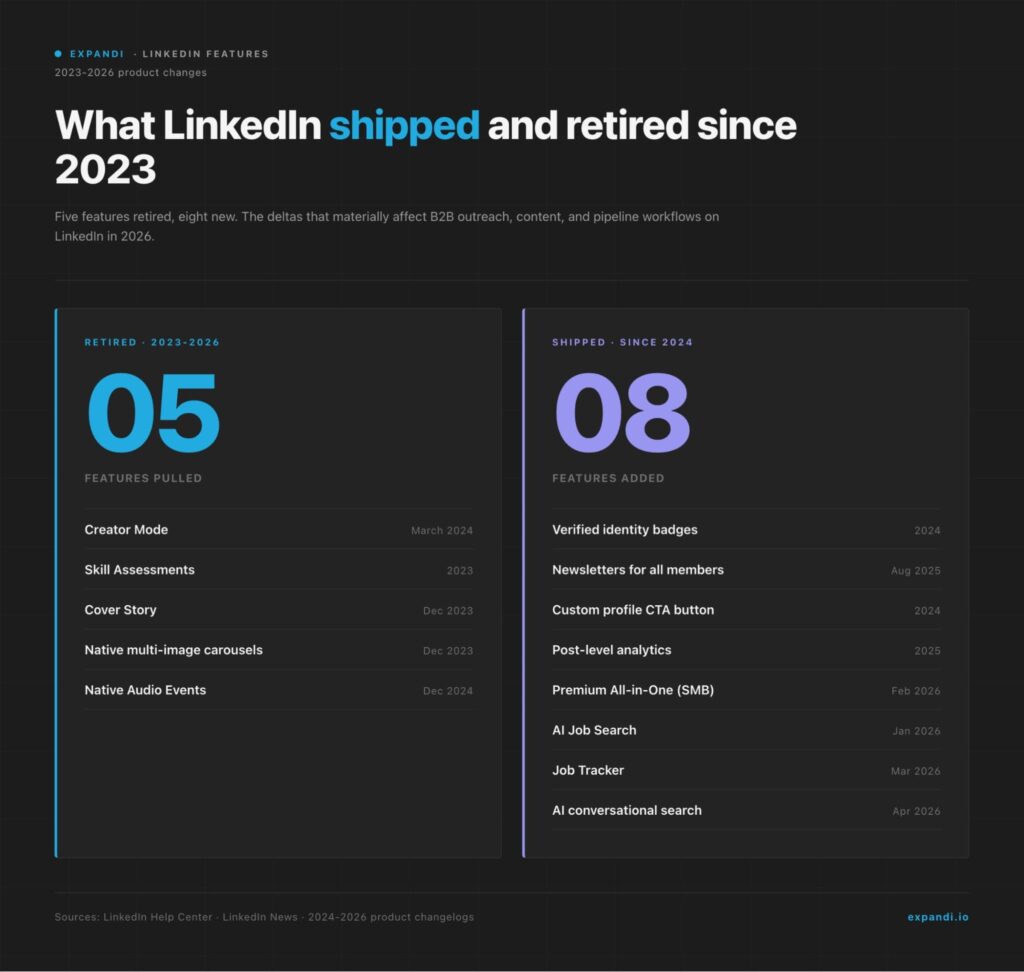
Five LinkedIn features were retired between 2023 and 2026.
- Creator Mode and Skill Assessments used to anchor ‘LinkedIn profile’ advice and no longer show up on the platform
- Cover Story and native multi-image carousel posts were retired on the same day in the December 2023 cleanup.
Each has a replacement or workaround worth knowing before you build a 2026 playbook around stale tactics.
Creator Mode was retired in March 2024. The capabilities behind it — Follow as primary button, post analytics, audience topics, Featured content — were folded into every profile, so anyone can use them now without flipping a setting.
Skill Assessments were discontinued in 2023, and LinkedIn removed all completed-assessment badges from member profiles in 2024. The replacement is contextual skill tagging — attaching skills to specific work experiences, projects, and credentials. We covered the practical workaround in our improve LinkedIn profile tips guide.
Cover Story (the 30-second video that auto-played on hover over your profile photo) and native multi-image carousel posts were both removed on December 14, 2023, citing low usage. There is no direct replacement for Cover Story; native carousels got absorbed into the PDF document post format, which is what people now call a “LinkedIn carousel.”
Native Audio Events were discontinued on December 2, 2024 and merged into LinkedIn Live. You can still host audio-only sessions, but you have to route them through LinkedIn Live with third-party tools.
Six LinkedIn features for profile and personal brand
These are what prospects see in the first 3 seconds of landing on your profile. A few of them (headline, verified badge, Featured section) materially affect whether a connection request or InMail gets a reply — the prospect is checking your profile to decide. The rest (custom URL, name pronunciation, custom CTA button) is polish that adds up but won’t change reply rates on its own. None of it costs more than 30 seconds to set.
1. Featured section
Pinned-content slot directly under your About section — up to five items: posts, articles, links, or uploaded files (PDFs, decks, images).
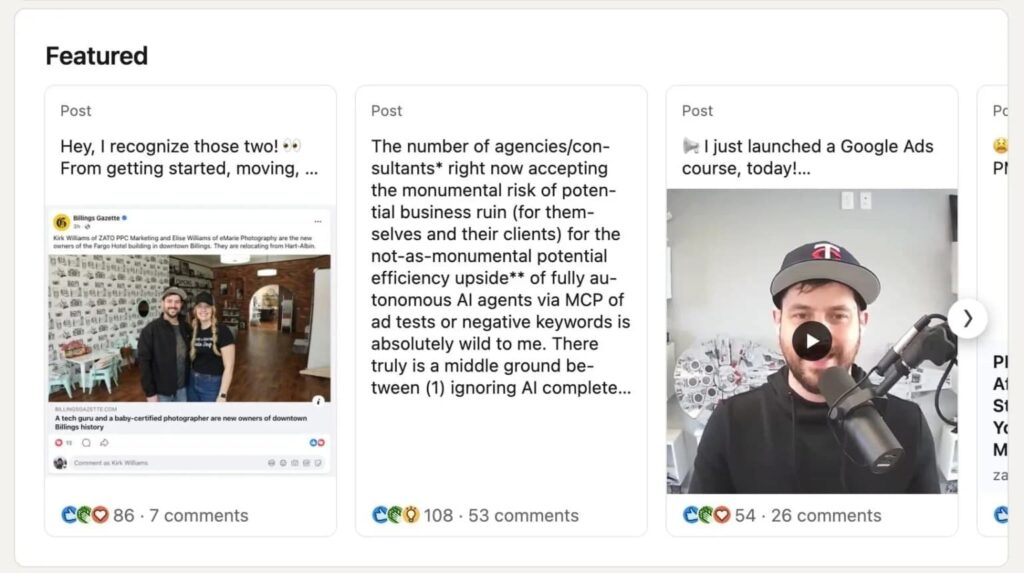
Why it matters for lead gen: this is the most visible space on your profile after your name and headline, and the only place where a prospect can self-serve on case studies, gated PDFs, or lead magnets without DMing you.
How to use it: lead with the asset that matches the campaign you are running this quarter — the first item shows in the desktop preview, the rest sit behind “Show more.” Refresh quarterly. Placement strategy in our add portfolio LinkedIn account guide.
2. Custom (vanity) URL
LinkedIn assigns a numeric profile URL by default. Replace it with a clean handle (linkedin.com/in/your-name) in 30 seconds via Settings > Public profile and URL.
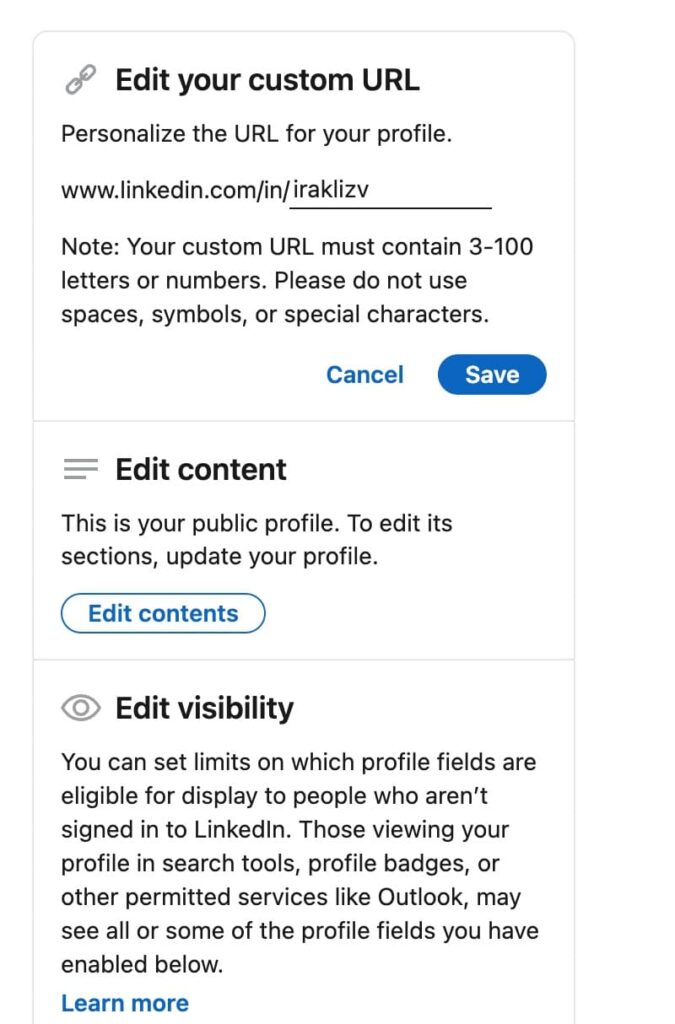
The point: your URL reads like a real handle in signatures, deck footers, and CRM records.
- Do: “https://www.linkedin.com/in/firstname-last-name/”.
- Don’t: “https://www.linkedin.com/in/firstnamelastname4504”.
3. Headline (220 characters)
The 220-character line directly under your name.
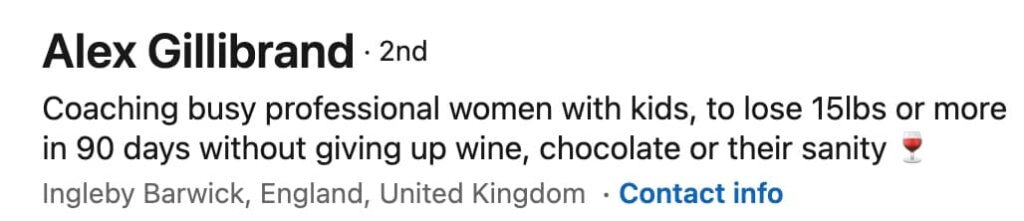
Why it matters for outreach: this is the line every prospect sees in connection request previews, InMail snippets, search results, and notifications — before they ever click your profile.
How to use it: write it as positioning — who you help, with what, with what proof. “Helping VPs of Sales hit quota — built outbound playbooks at 3 unicorns” beats “Account Executive at Acme Corp.” Edit from your profile > Edit intro.
4. Name pronunciation
A 10-second audio clip recorded in the mobile app that plays for anyone who taps the speaker icon next to your name on your profile (you can restrict it to 1st-degree connections only via the audience selector). Worth using if your name is regularly mispronounced — cuts a few seconds of awkward off the start of every first call.
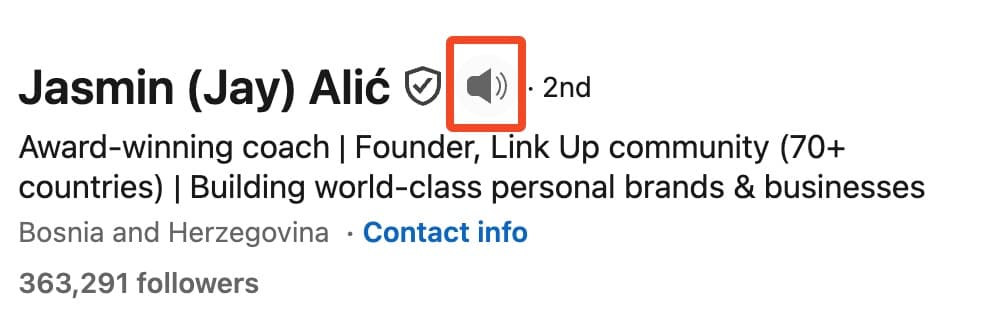
To add: open LinkedIn on mobile > tap your profile picture > View Profile > pencil icon next to your name > scroll to Name Pronunciation > hold the mic button to record > save. Recording is mobile-only — desktop cannot capture audio for this slot.
5. Verified identity badge
The blue checkmark next to verified members’ names. Free to add via one of three paths: government ID verification through CLEAR (U.S., Canada, Mexico) or NFC passport elsewhere, work-email verification of your employer, or educational verification through a LinkedIn Learning license.
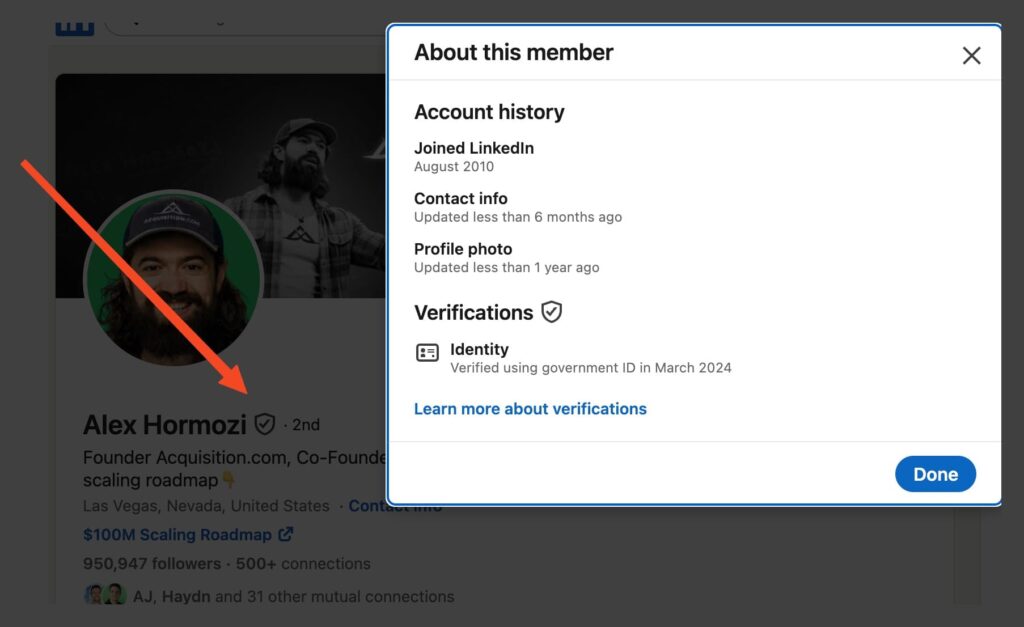
Why it matters for outreach: Verified members see more profile views and more engagement on their posts, and the checkmark appears next to your name in connection request previews and InMail snippets, which functions as a trust signal in the cold-touch moment.
How to use it: do the work-email verification first (fastest, just need an active work email); add ID verification if you want the strongest signal. Takes under 5 minutes.
6. Custom profile CTA button
Premium-only (Premium Business, Sales Navigator, or Recruiter Lite). A custom call-to-action button on your profile that follows into search results, posts, and messages.
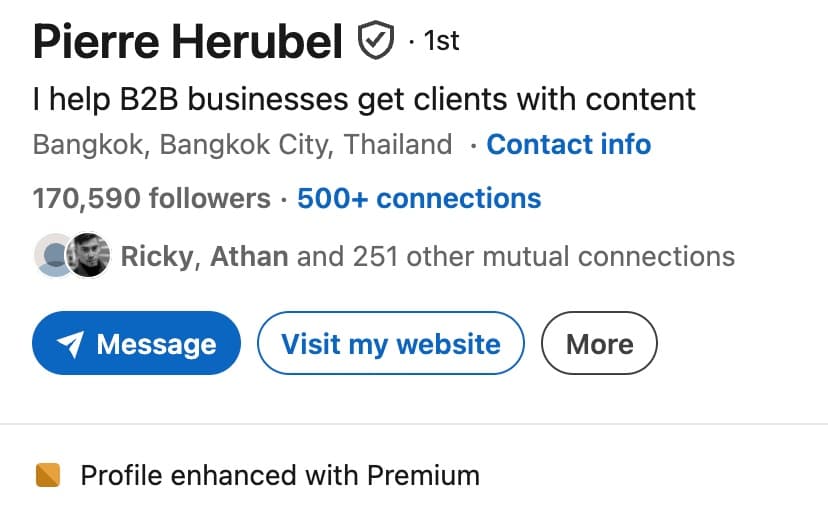
Variants include:
- Book an appointment.
- Visit my website.
- Visit portfolio.
- View my work.
Each one just lets you paste a URL behind a labeled button.
Six LinkedIn features for content and audience growth
These features cover what gets you reach. The 2026 mix is meaningfully different from 2023 — Publishing Platform is gone, newsletter eligibility expanded, document posts pulled ahead of plain text for impressions, post scheduling moved native, and LinkedIn Live is moving to scheduled-only streams starting June 22, 2026 (no more spontaneous broadcasts). The six below are what is shipping today.
1. LinkedIn Newsletters
LinkedIn Newsletters are a recurring long-form content format published from your profile or Company Page. Any LinkedIn member with 150+ connections or followers is eligible to be evaluated for newsletter access.
You can run up to five newsletters at a time. The growth surface is the email-plus-push notification — every subscriber gets pinged when a new edition publishes, which is harder to ignore than a regular feed post.
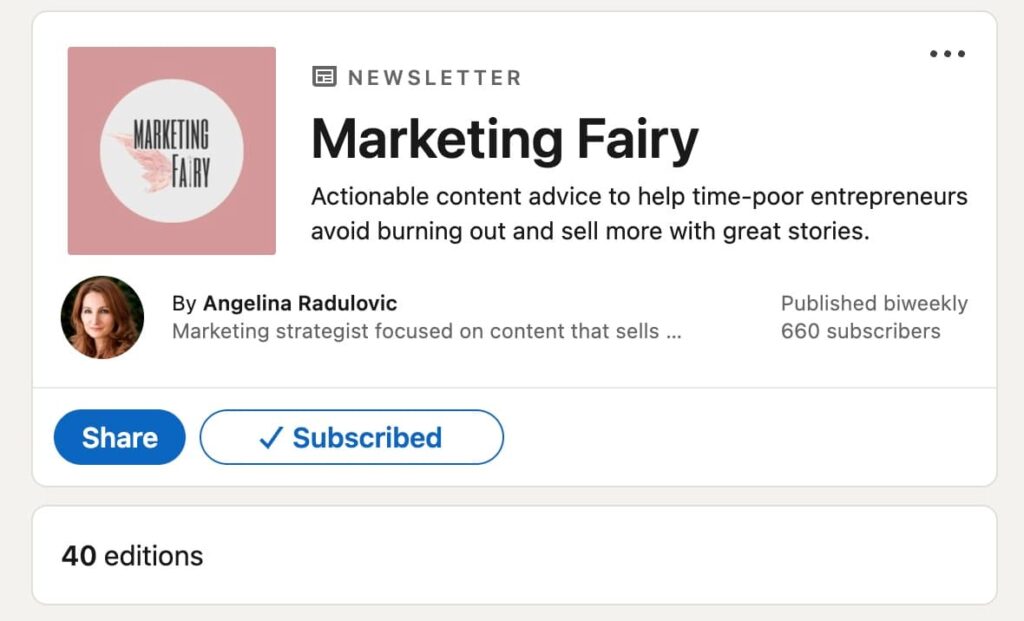
Why it matters for B2B: push notifications to subscribers consistently outperform organic post reach, and Newsletter analytics expose subscriber demographics by job title and seniority — so you can see whether you’re growing ICP audience or noise.
How to use it: pick one tight topic per newsletter, publish on a fixed cadence (biweekly works), promote each new edition with a regular post on publish day. One caveat: the list is LinkedIn-owned, not yours. You can’t export subscribers, port them to your CRM, or take them with you if your account gets restricted. Treat Newsletters as a rented audience on LinkedIn — your owned email marketing list stays the system of record.
2. Document posts (carousels)
Multi-page PDFs uploaded as feed posts, displayed as swipeable slides. This is what people now call a “LinkedIn carousel” — the swipeable format.
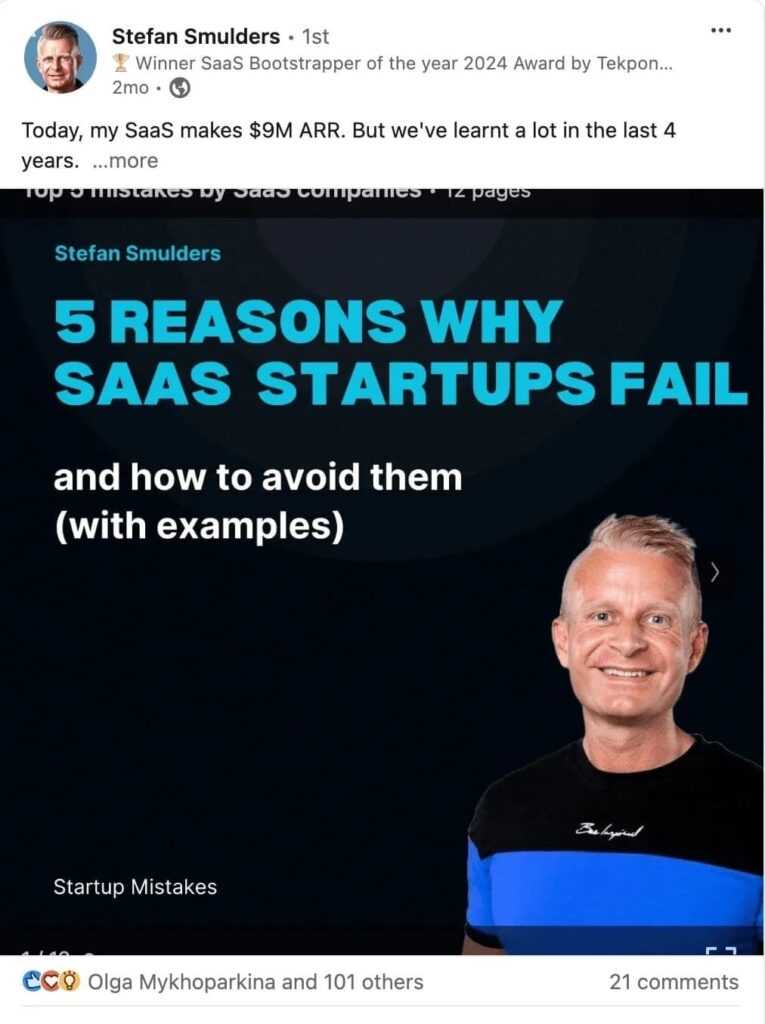
Why it matters for B2B: in Buffer’s analysis of 45M+ social posts, LinkedIn carousels hit a 21.77% median engagement rate — 196% more than video and 585% more than text-only posts, the highest of any format on any platform analyzed. Dwell time blows away every other format because readers stay to swipe.
How to use it: 5-10 slides max, design with a strong cover slide that earns swipe #2, last slide is a CTA (lead magnet, DM ask, comment prompt). Full walkthrough in our guide to LinkedIn carousels.
3. Native video posts
Video uploaded directly to the LinkedIn feed (not a YouTube embed).
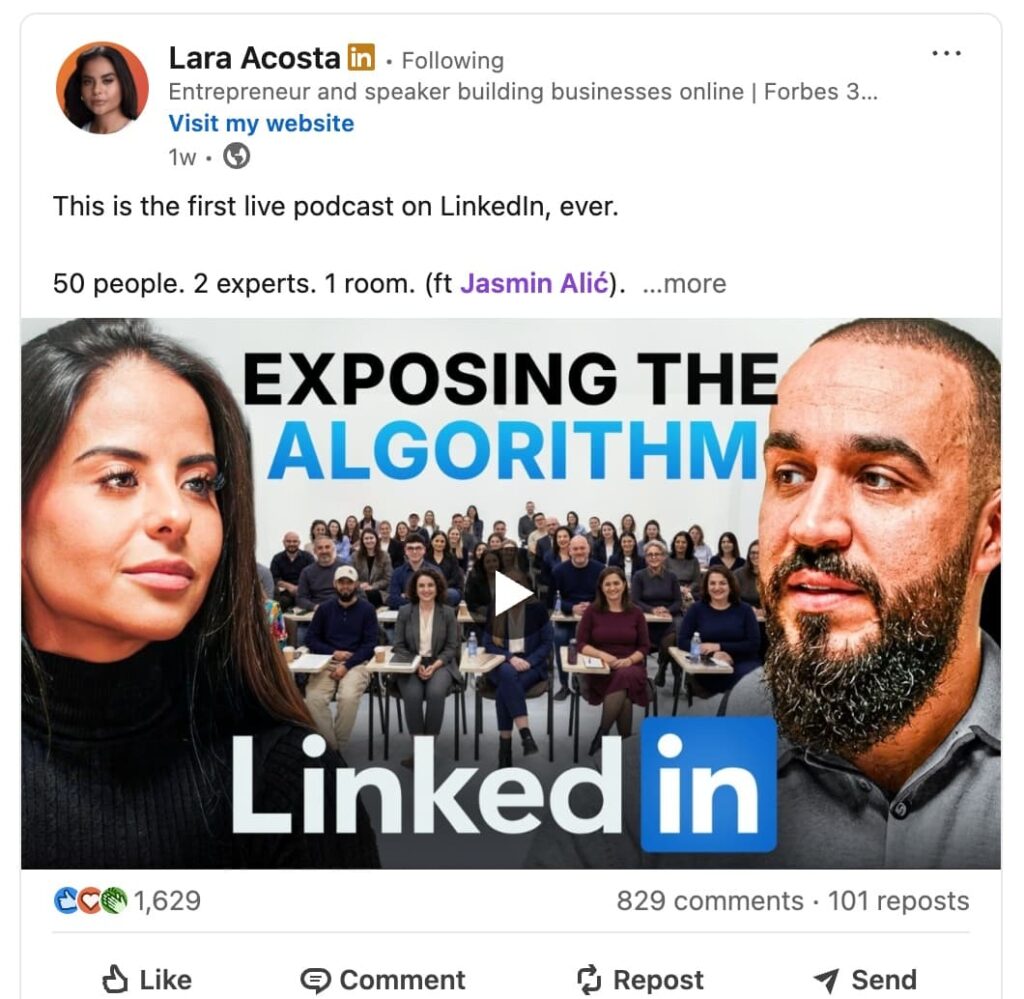
Why it matters for B2B: in Buffer’s 2026 engagement analysis, video pulls a 7.35% median engagement rate on LinkedIn — second only to carousels and well above image and text posts. LinkedIn has been pushing the format hard since 2024, with vertical short-form getting a particular algorithmic boost.
How to use it: 30-90 seconds, captions burnt in (feed autoplay is muted by default), one specific point per video. Founder-led short videos often punch above polished branded content on B2B feeds. Face-to-camera reads as more authentic than heavily-edited talking-head, especially in the cold-touch moment when a prospect is sizing you up.
4. Polls
Polls let you ask one question with 2-4 answer options and turn every voter into a tagged lead. Setup takes 30 seconds and every voter shows up in your post analytics.
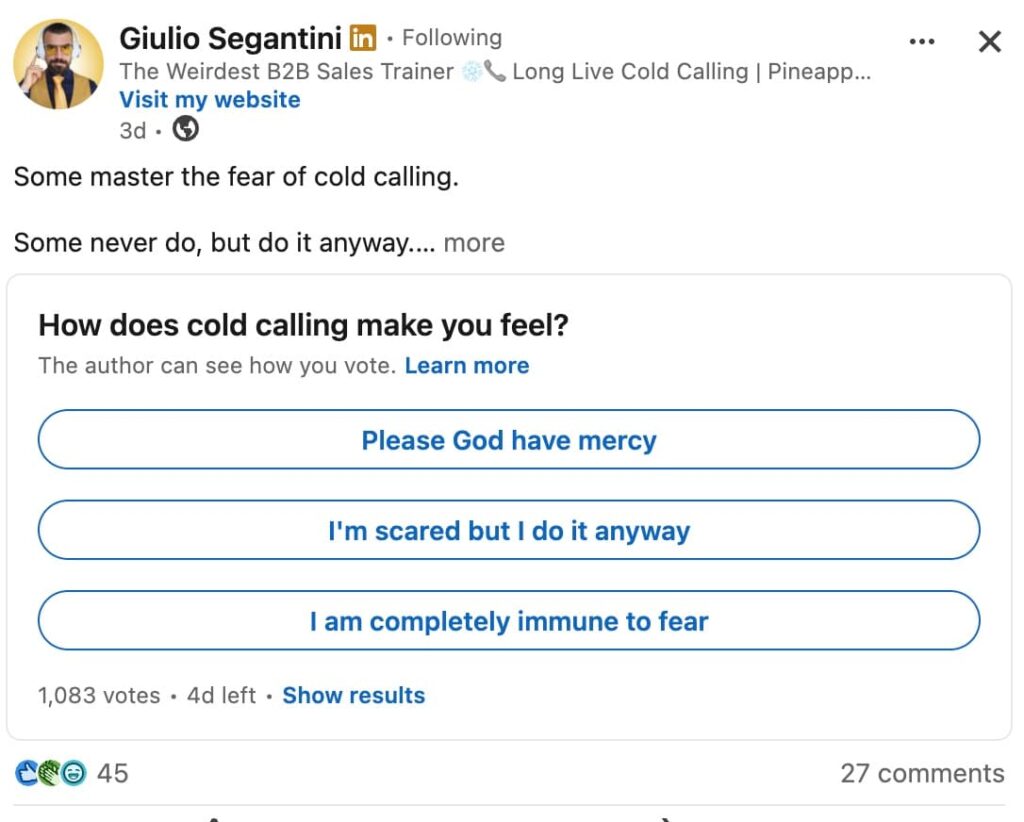
The lead gen play: each answer option works as a filter.
Ask “what’s your biggest challenge with [X]?” with 4 specific options, and every voter has just told you exactly which pain they’re trying to solve. DM them back referencing the option they picked instead of a generic opener — way higher hit rate than cold. Polls also work as conversation starters (every voter is a warm DM target). Keep questions concrete — vague polls don’t get votes.
Pro tip: Expandi can scrape any LinkedIn post. Paste in a poll post and it pulls every voter (and commenter, and reactor) into a lead list automatically — up to 2,500-3,000 per post. Then, you can write a different DM per answer option, and Expandi sends each voter the one that matches their pick — personalized outreach based on the pain they just self-reported. Same play works on any high-engagement LinkedIn URL, not just polls.
5. LinkedIn Live (scheduled)
LinkedIn’s live video product, available to Pages and to members who meet creator eligibility. From June 22, 2026, LinkedIn said that every live stream has to be scheduled in advance — even by a few minutes. The instant “go live now” button will be retired.
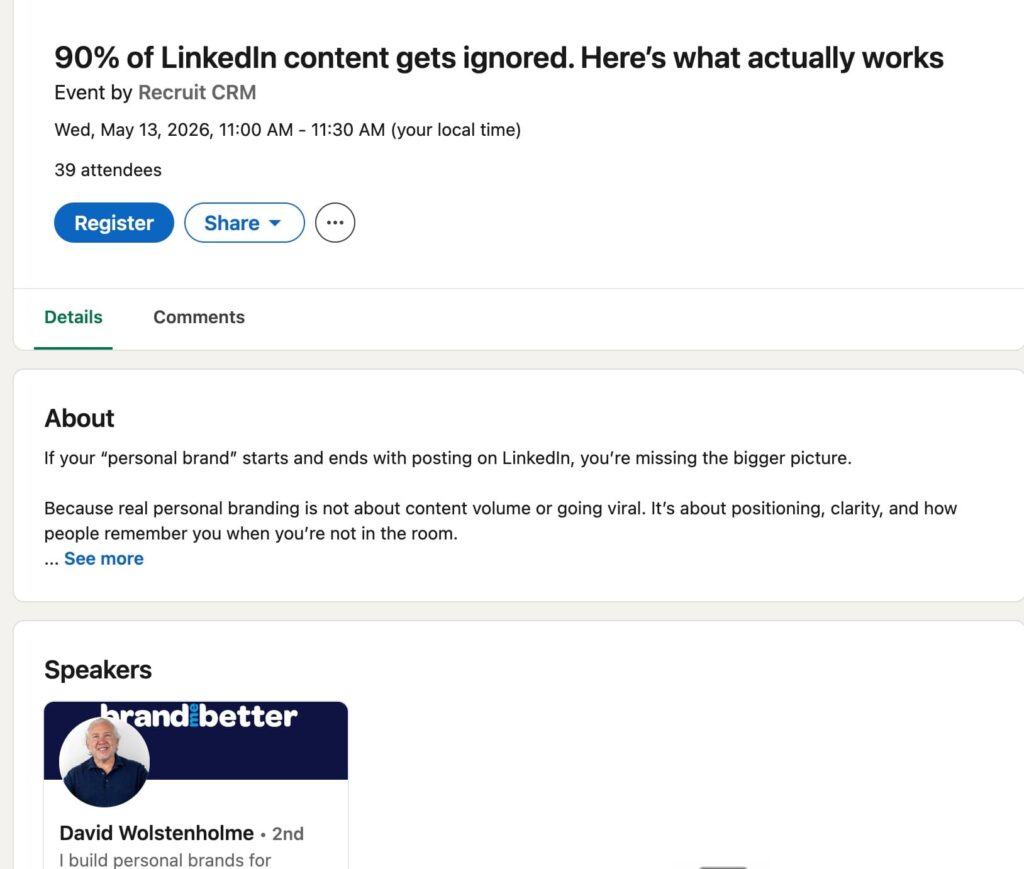
Why it matters for B2B: Live videos get more reactions and comments than native video posts, and scheduled events get pre-event promotion in the feed, follower notifications when you go live, and post-event analytics.
How to use it: schedule a recurring office-hours format, run product launches as scheduled events, or use it for industry panels. For audio-only sessions, host a LinkedIn Live and pipe in audio through StreamYard, Restream, or OBS Studio.
6. Native post scheduling
LinkedIn rolled out native post scheduling so you can schedule from inside the post composer (no third-party tool needed). Available from both personal profiles and Company Pages.
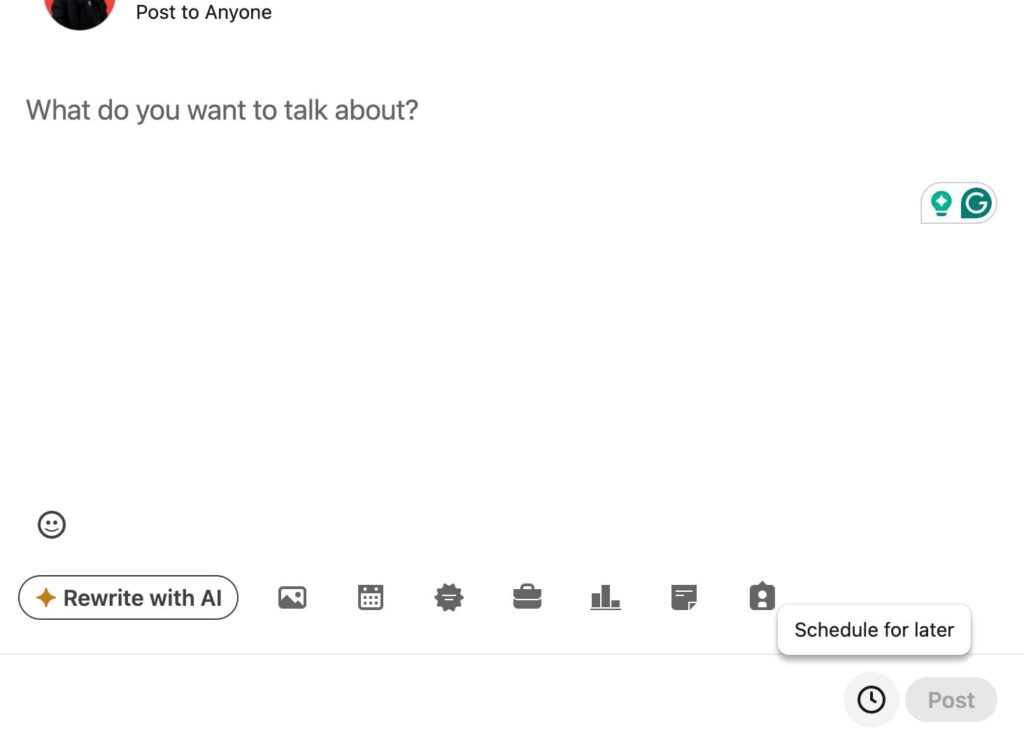
Solid floor option for solo founders who do not want to pay for a social scheduler — but third-party schedulers and other LinkedIn marketing tools still win on bulk scheduling, multi-account, and approval workflows.
Six LinkedIn features for networking and outreach
This is the cluster B2B teams spend the most time in. It is also the cluster where LinkedIn’s native tooling has not changed much — most upgrades happened in the Premium tiers above (Sales Navigator) and in the AI features below. The six features here are the unpaid, in-platform building blocks.
1. Personalized connection requests
Connection requests with a note are the foundation of LinkedIn outbound. The notes are limited to 200 characters for basic accounts and up to 300 for Premium members.
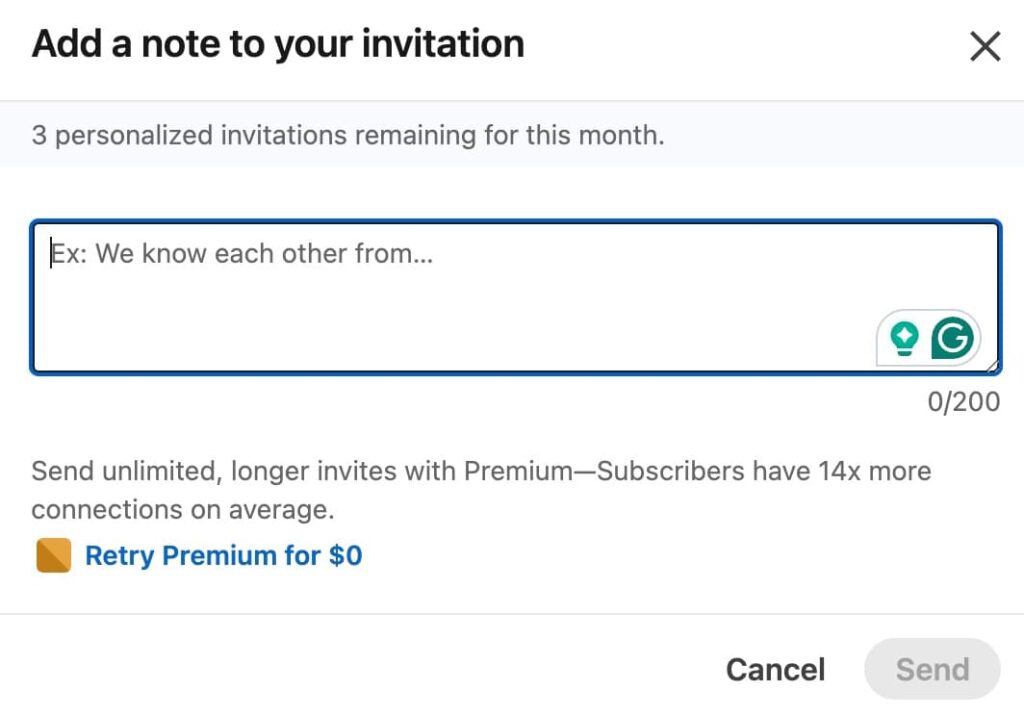
The conventional wisdom is that you should personalize for higher acceptance.
However, Belkins analyzed 20 million LinkedIn outreach attempts from Expandi customers in 2024 and found acceptance rates with and without notes were within rounding distance — 26.42% with a note vs 26.37% without. What the note actually moves is the post-acceptance reply rate: 9.36% with a note vs 5.44% without, a roughly 72% lift on the conversation that follows. So the note is for the DM that comes after the accept.
2. InMail
LinkedIn InMails are paid messages to people you’re not connected with — available to Premium, Sales Navigator, and Recruiter subscribers with monthly credit allowances per plan.
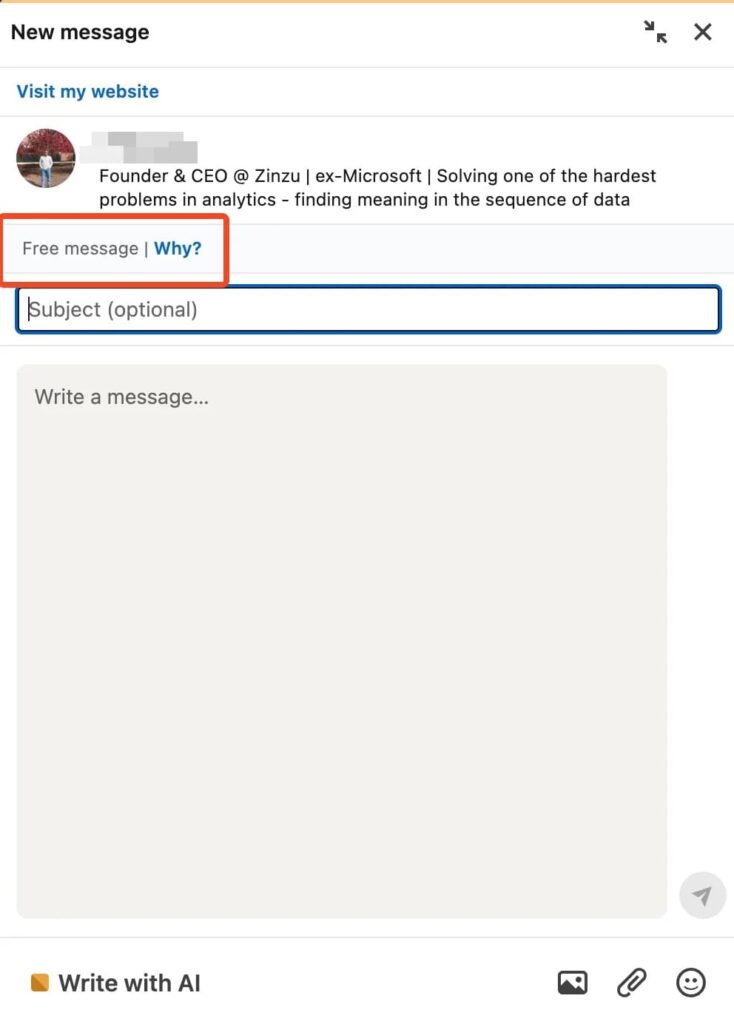
Why it matters for B2B: InMail bypasses the connection-request step entirely, which is the right move when targeting senior buyers who accept fewer cold connections. Reply rates beat cold email but fall short of warm DMs after connection — the recipient knows it was paid.
How to use it: subject line and first sentence carry most of the weight; treat the body like a cold email opener — short, specific, written to earn a reply.
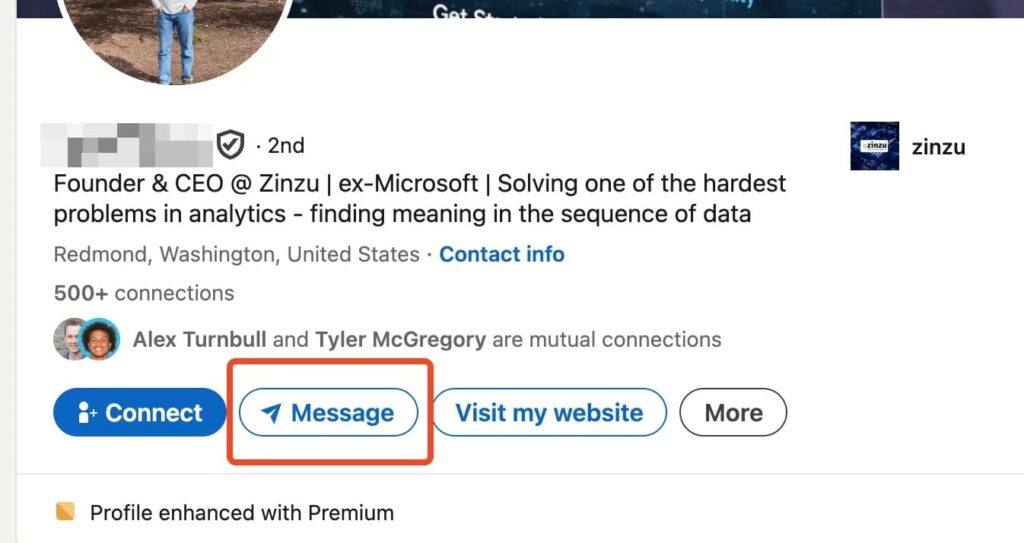
3. Open Profile InMail (free)
A subset of LinkedIn members have Open Profile turned on, which lets anyone send them a free InMail with no credit cost. Open Profile is a Premium-only feature for the recipient, so the pool is small — but for the right ICPs (consultants, coaches, recruiters), a large share of the segment has it enabled.
4. LinkedIn Groups
LinkedIn groups are the most underused B2B surface on LinkedIn. The catch: once you join a group, you can message any other group member directly even if you’re not connected — and the message lands at the top of their inbox as a Message Request, the same priority slot as a DM from a connection.
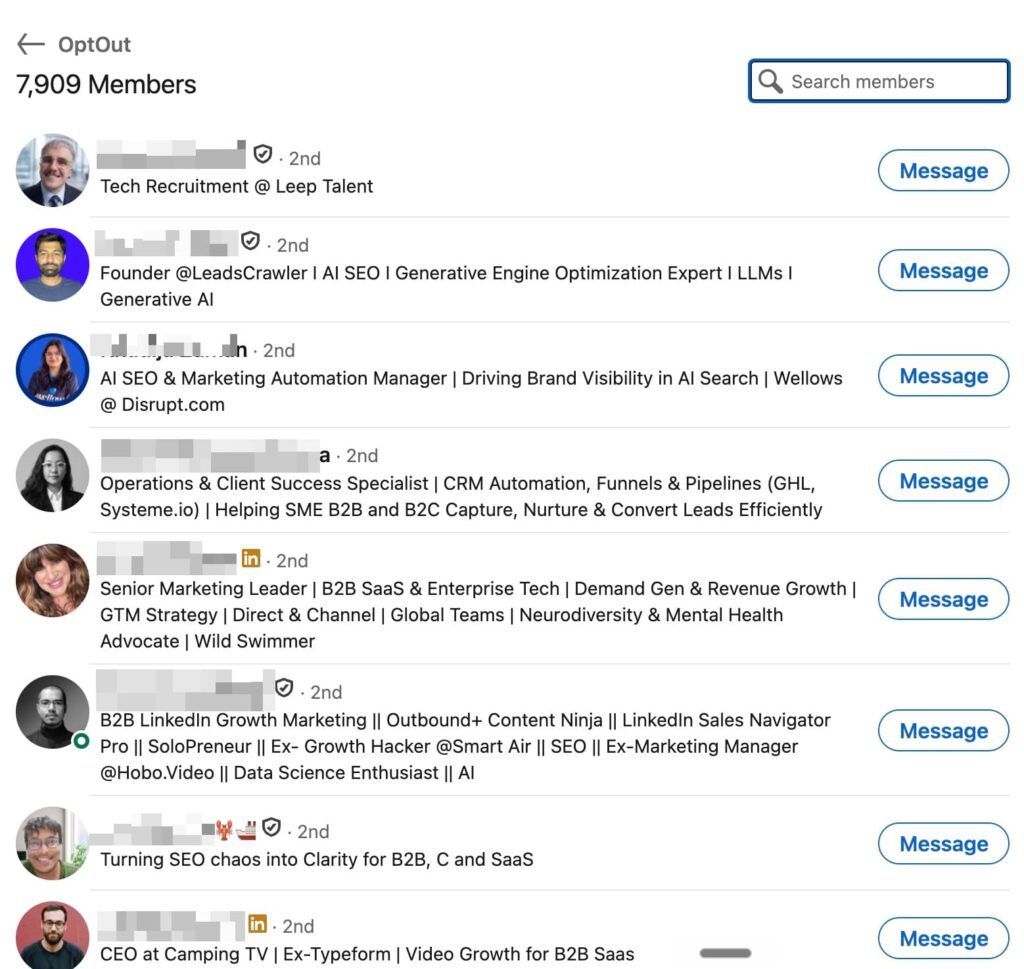
Why it matters for lead gen: group-based DMs convert higher than cold DMs because the shared-group context does the warm-up for you.
How to use it: join 3-5 groups your ICP participates in, message individuals (never group blasts) referencing the shared group, and lead with a conversation prompt over a pitch. To speed things up even more, you can use Expandi to automate DMs and follow-ups.
5. Saved searches (Sales Navigator)
Available inside Sales Navigator only. Saved searches are a stored combination of filters that LinkedIn re-runs in the background — they surface new leads matching your criteria as people change jobs, get promoted, or start showing up inside your target accounts.
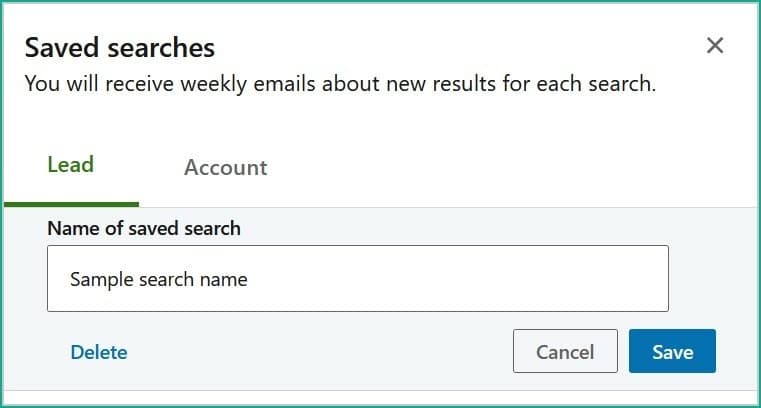
A working saved search for B2B outbound looks like: “Head of Sales or VP Sales at B2B SaaS companies, 50-500 employees, North America, posted on LinkedIn in the last 30 days, joined their company in the last 12 months.” Sales Nav stores those filters, runs the search daily, and drops fresh matches onto your home dashboard. No rebuilding the same query every Monday.
How to use it: 3-5 saved searches per Sales Nav seat is the working setup — one per persona-or-segment combination. Layer in spotlights (changed jobs in last 90 days, recent senior hire, mentioned in news, follows your company) to filter for warm signals. See linkedin sales navigator filters for filter design.
Pro tip: pair saved searches with Expandi’s signal-based campaign trigger. When a new lead pops into your saved search results (just changed jobs, just started posting, etc.), Expandi auto-fires a connection request sequence. Outbound runs off LinkedIn’s own job and activity signals without manual list pulls.
6. Boolean search
LinkedIn Boolean search is a way to combine search terms using logical operators — AND, OR, NOT, parentheses, and quotation marks — to build precise queries, and LinkedIn’s free search bar supports all five.
The five operators:
| Operator | What it does | Example |
|---|---|---|
| AND | Narrows to profiles matching both terms | “VP Marketing” AND “B2B SaaS” — both must appear |
| OR | Widens to match either term | “Head of Sales” OR “VP Sales” — pulls either title |
| NOT | Excludes a term | “Director of Engineering” NOT recruiter — strips recruiters who use the title |
| Parentheses | Group operators for compound logic | (“VP Sales” OR “Head of Sales”) AND (“Series B” OR “Series C”) — sales leaders at Series B/C only |
| Quotation marks | Match an exact phrase, not loose words | “Chief Revenue Officer” — exact title only, not loose word matches |
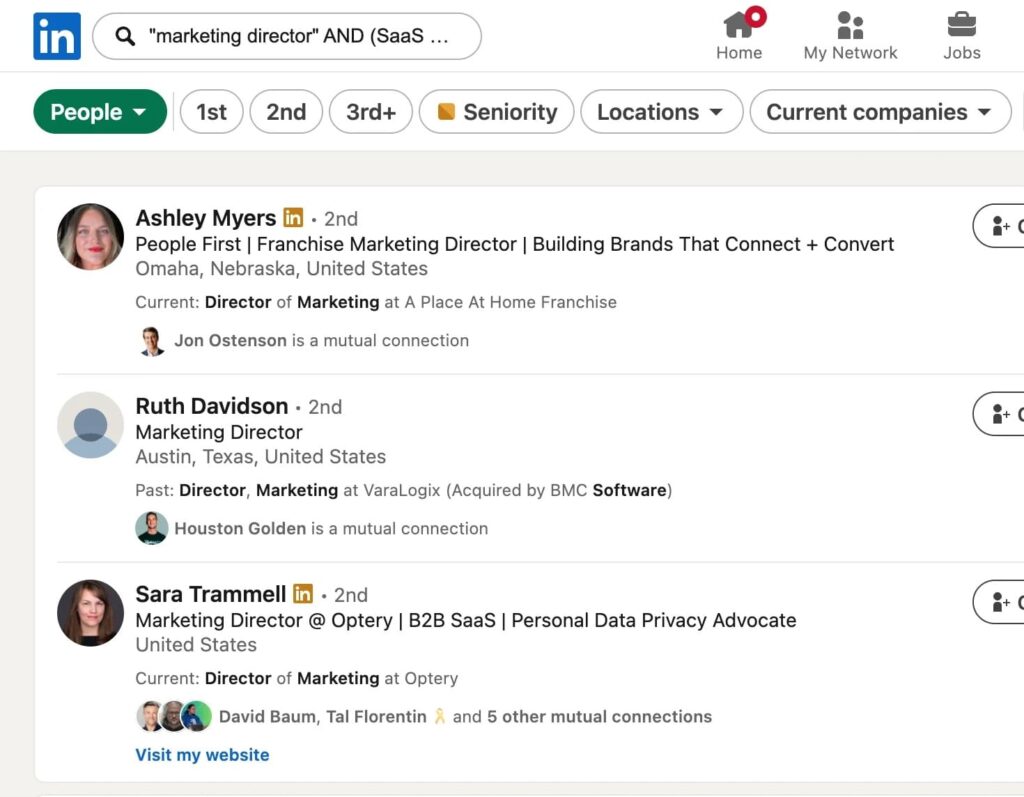
Why it matters for B2B: Boolean strings get you closer to ICP precision without paying for Sales Navigator — useful for ad-hoc list building, testing filter combinations before committing to a Sales Nav search, or quick competitive recon.
How to use it: combine all five in a single string for ICP-shaped lists, then layer in location and current-company filters from the basic search sidebar. See how to use these in action with real world examples in our guide to LinkedIn Sales Navigator filters.
Six LinkedIn features for business pages and analytics
LinkedIn Pages quietly got the biggest upgrades over the last 18 months — Featured Posts as a super admin pin, competitor analytics, newsletter analytics, and the iOS post-level views breakdown.
B2B marketing teams may run pages that are missing two or three of these. The six features below are the floor for a working Company Page in 2026.
1. Company Page
Free to create, requires admin access, and is the surface every other Page feature stacks on top of.
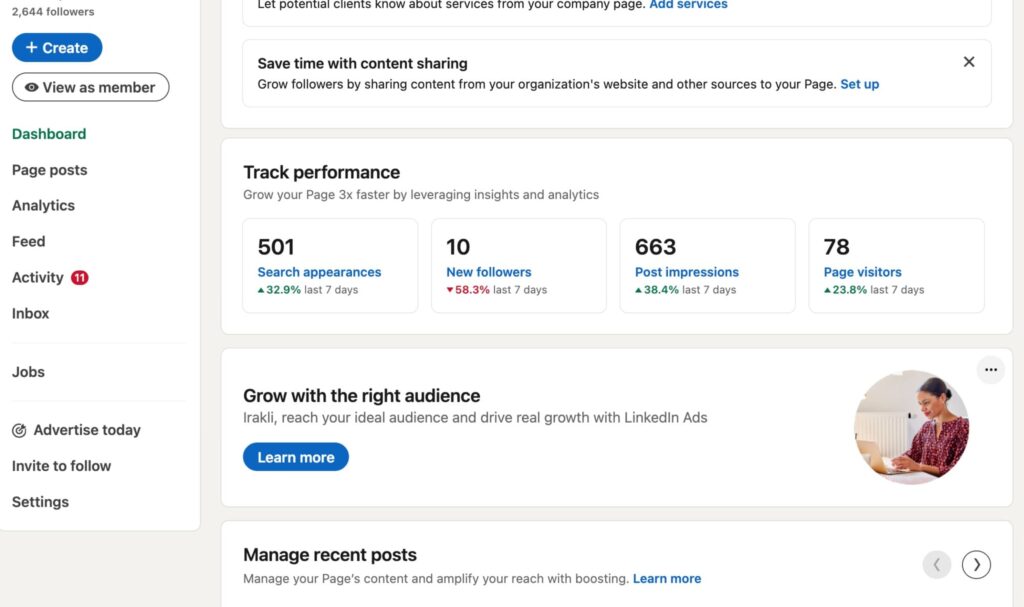
Why it matters for B2B: this is where prospects land after seeing your team in their feed or after an outreach DM — half of the “should I take this meeting” decision is the 5-second Page scan.
How to use it: complete every field, pin a strong post (see Featured Posts below), post 2-3x a week, and treat it as a credibility surface that backs up your team’s outbound, not a primary distribution channel. Dead Pages with three posts from 2023 are a credibility leak.
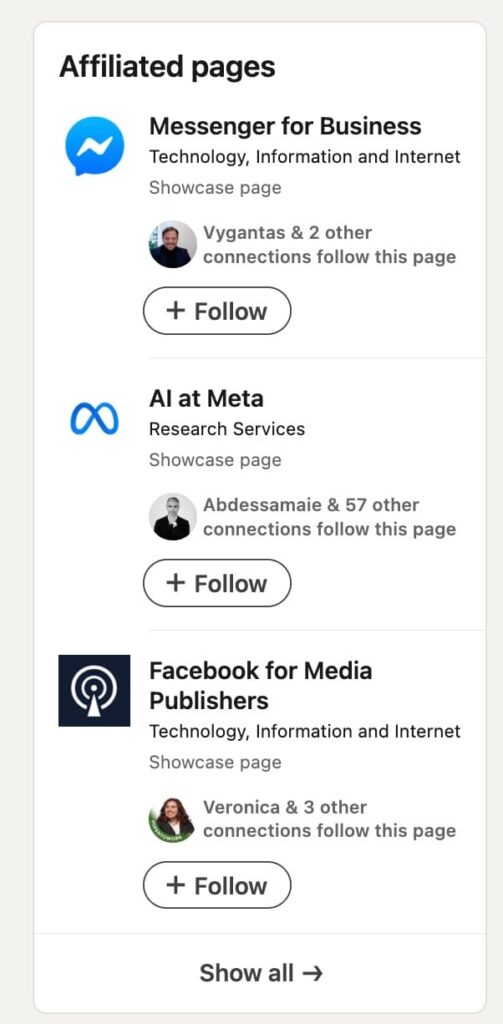
2. Showcase Pages
A showcase page is a sub-page under your main Company Page, each with its own follower base and content stream. Use them when you have distinct product lines or audience segments worth their own newsletter and content cadence.
3. Featured Posts (super admin)
Super admins of a Company Page can pin up to three posts to the top of the Home tab.
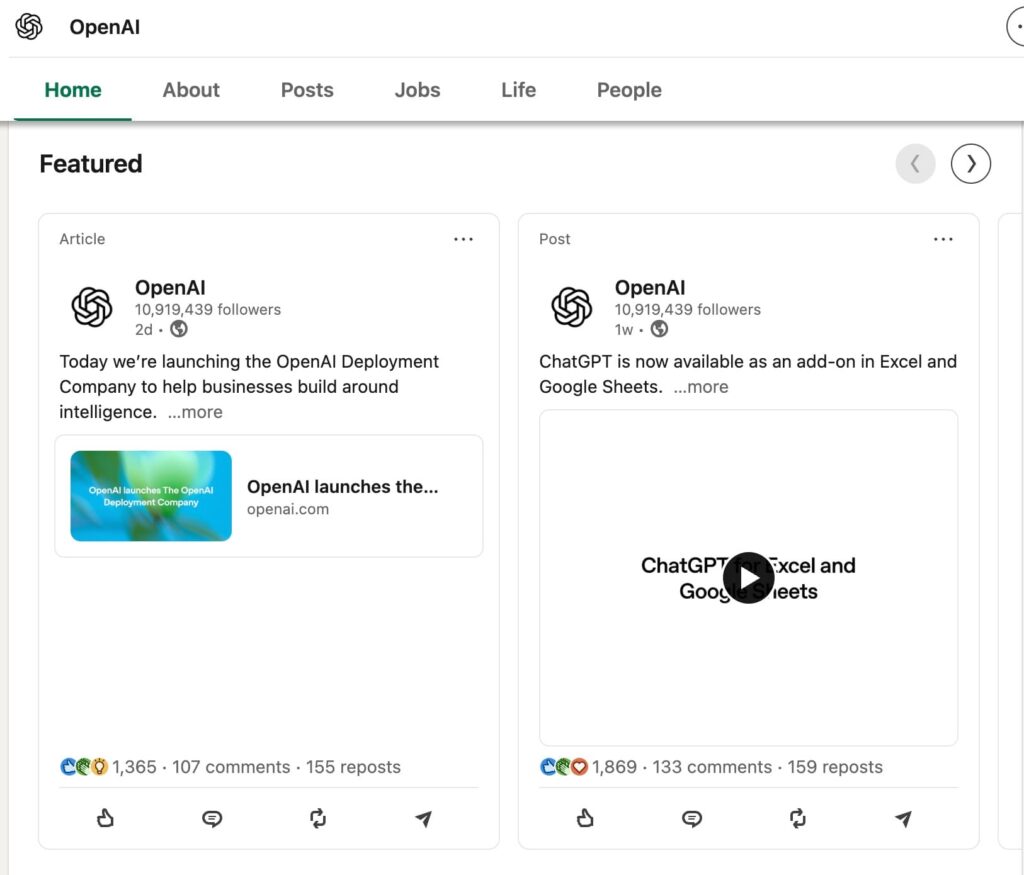
Why it matters for B2B: the algorithm de-prioritizes Company Page posts in the main feed — most discovery happens when prospects land on your Page directly from a sales touch, and Featured Posts are the only content visible above the regular feed in that moment.
How to use it: pin a strong case study, a recent product launch, and one social-proof post. Rotate quarterly so repeat visitors don’t see the same three for a year.
4. Page competitor analytics
Inside the Analytics tab, Page admins can track up to nine competitor Pages on follower growth, organic post frequency, and trending posts (refreshed daily). It is the closest LinkedIn comes to a free competitive intelligence tool.
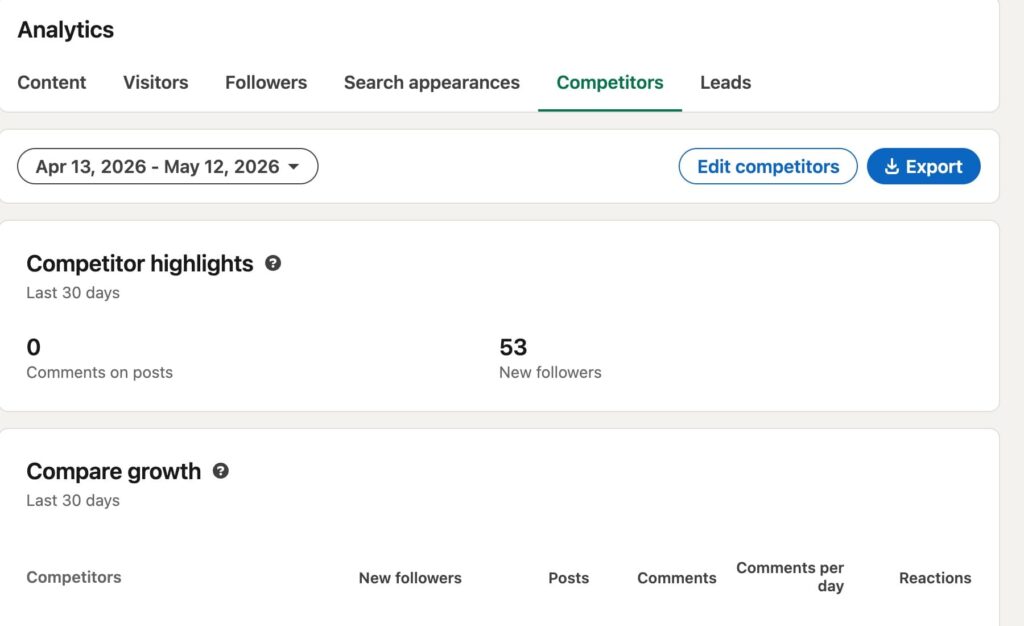
For B2B marketing teams, this is the input for “what content is earning real engagement in our category” — much more accurate than guessing from the public feed.
5. Newsletter analytics
Newsletter performance has its own analytics view: article views, new subscribers, impressions, engagement, and subscriber demographics broken down by job title, company, seniority, and location.
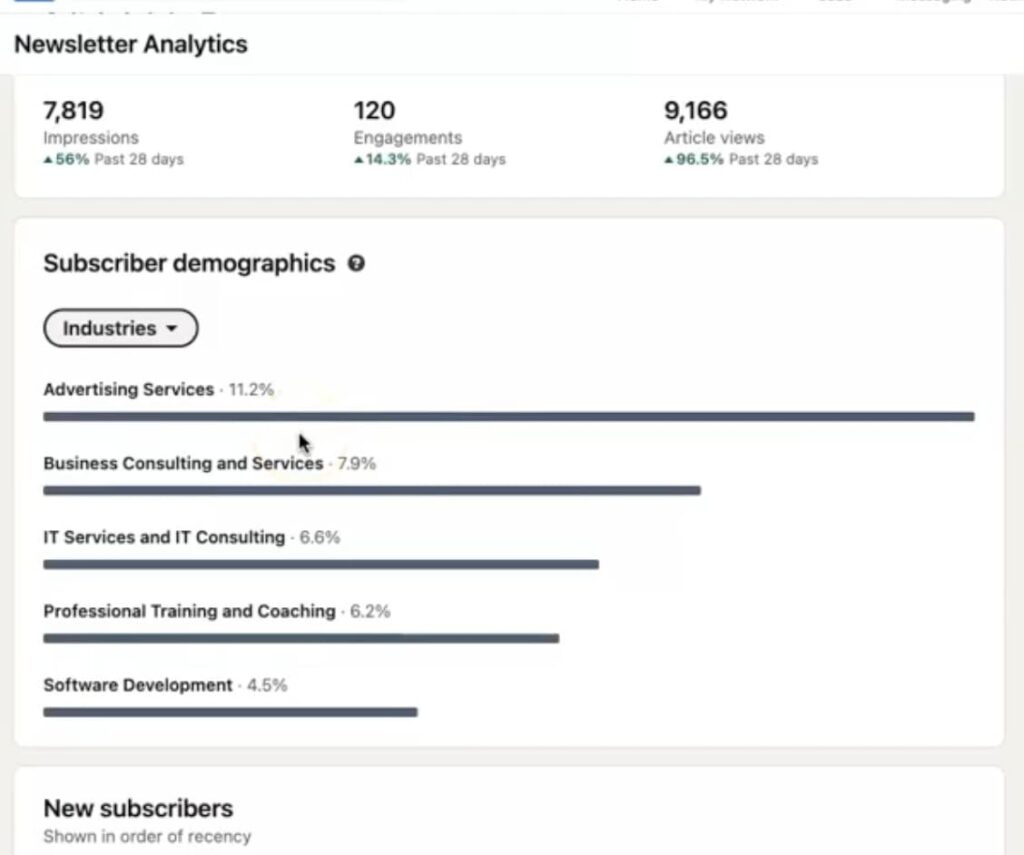
The subscriber demographics view tells you whether the audience you are growing matches your ICP.
6. Notify Employees
A one-click button on Company Page posts that sends a notification to every employee who has the company listed on their profile, prompting them to engage.
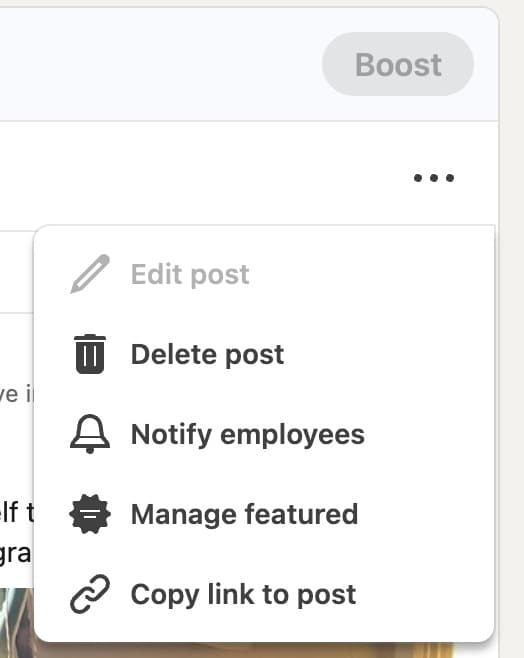
Effective when used sparingly — once a week max — for product launches, major announcements, or hiring posts.
Six LinkedIn features for Premium, hiring, and discovery
The Premium tier is where LinkedIn has been pushing hardest over the last 12 months — AI Career Coach inside LinkedIn Learning, the new Premium All-in-One bundle for SMBs, and AI conversational search inside Sales Navigator all shipped in this cluster between 2025 and early 2026.
The features below cover both legacy Premium offerings and the new ones. For a full Premium pricing breakdown across tiers, see LinkedIn account types.
1. Social Selling Index (SSI)
Social selling index used to be LinkedIn’s flagship metric — a free 0-100 score across four dimensions:
- Professional brand,
- Finding the right people.
- Engaging with insights.
- Building relationships.
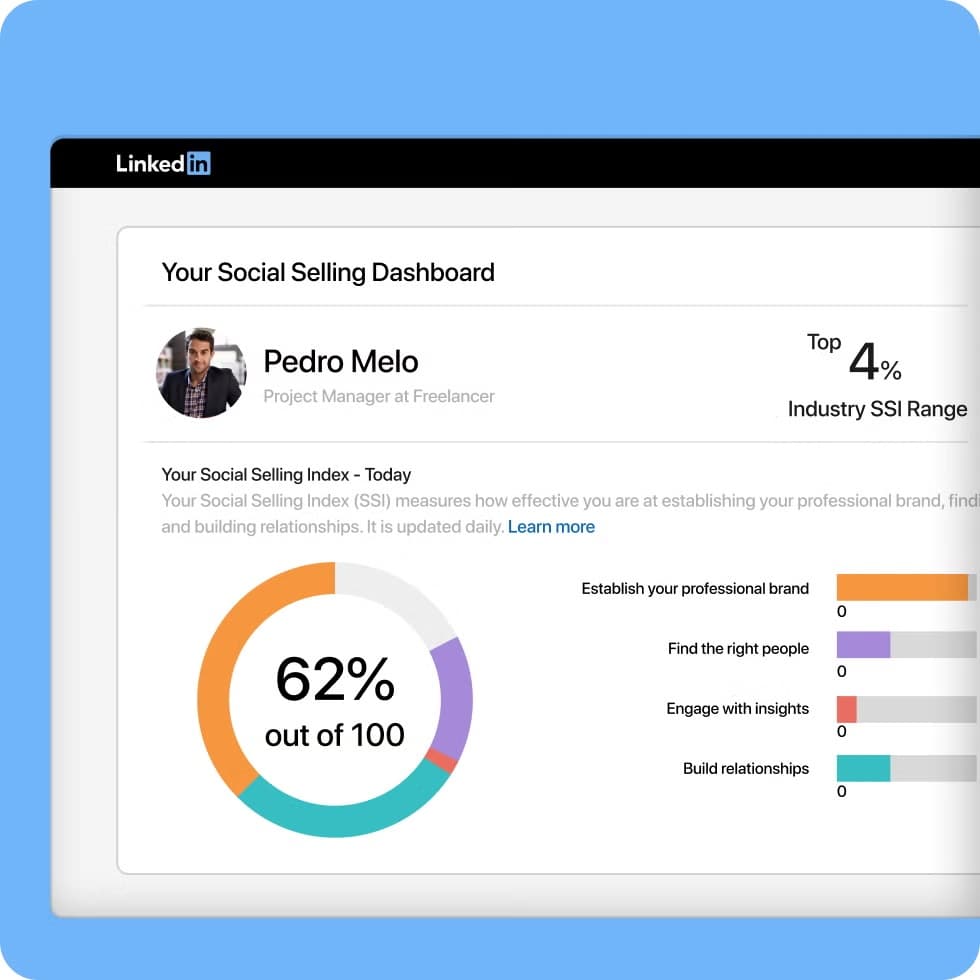
The four-dimension breakdown still tells you whether you’re doing the basic profile, posting, and engagement work that drives reach — regardless of what number the dashboard spits out. Check it once a quarter, work on whichever dimension is lowest. Full setup walkthrough in our boosting LinkedIn SSI guide.
2. Sales Navigator
Sales Navigator is LinkedIn’s own prospecting workspace that comes with:
- 50-plus advanced search filters.
- Lead and account lists.
- Saved searches with new-result alerts.
- InMail credits.
- and CRM sync to HubSpot, Salesforce, and Microsoft Dynamics.
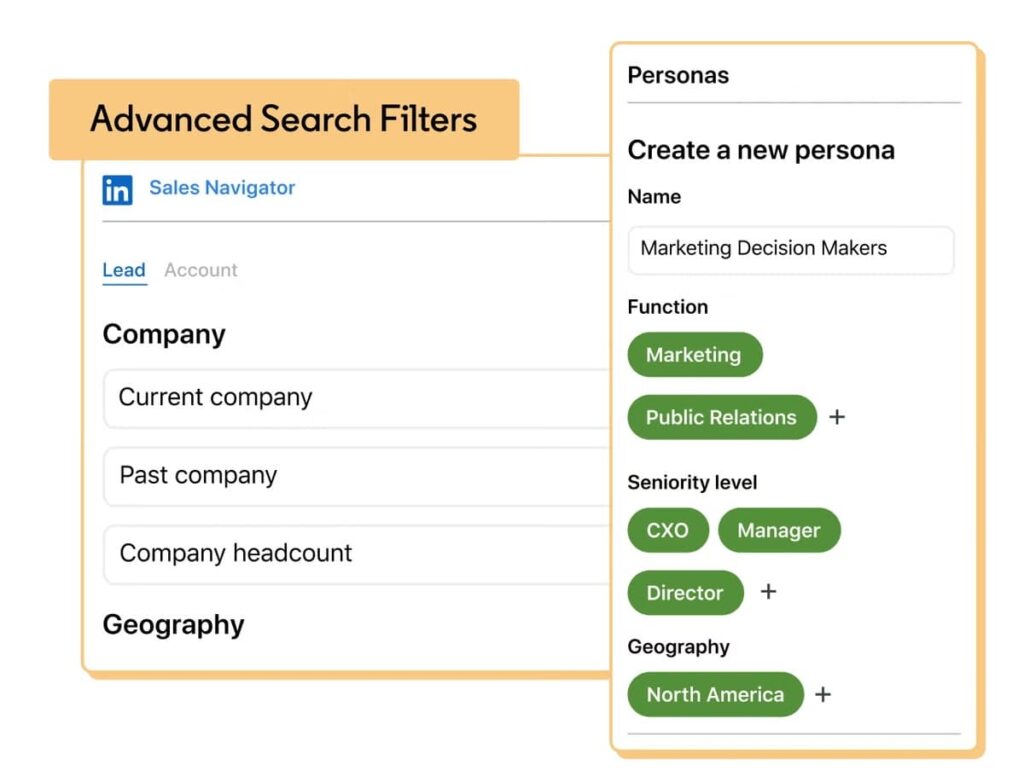
Why it matters for B2B: Sales Nav opens up advanced search filters the free LinkedIn search doesn’t cover. Whatever ICP shape you can describe, you can build a search for it.
How to use it: build 3-5 saved searches per persona, layer in spotlights to surface warm leads automatically, and sync to your CRM. See our guide on using Sales Navigator for a detailed overview of prospecting.
LinkedIn also rolled out AI conversational search inside Sales Nav in 2025-2026 — instead of stacking filter dropdowns, you type a full prompt like ‘VPs of Sales at Series B SaaS companies in EU’ and get a matched list.
3. Recruiter
LinkedIn’s hiring product. Same family as Sales Navigator but with hiring-specific filters (years in role, open to work signal, candidate spotlight features), InMail templates, and pipeline tools.
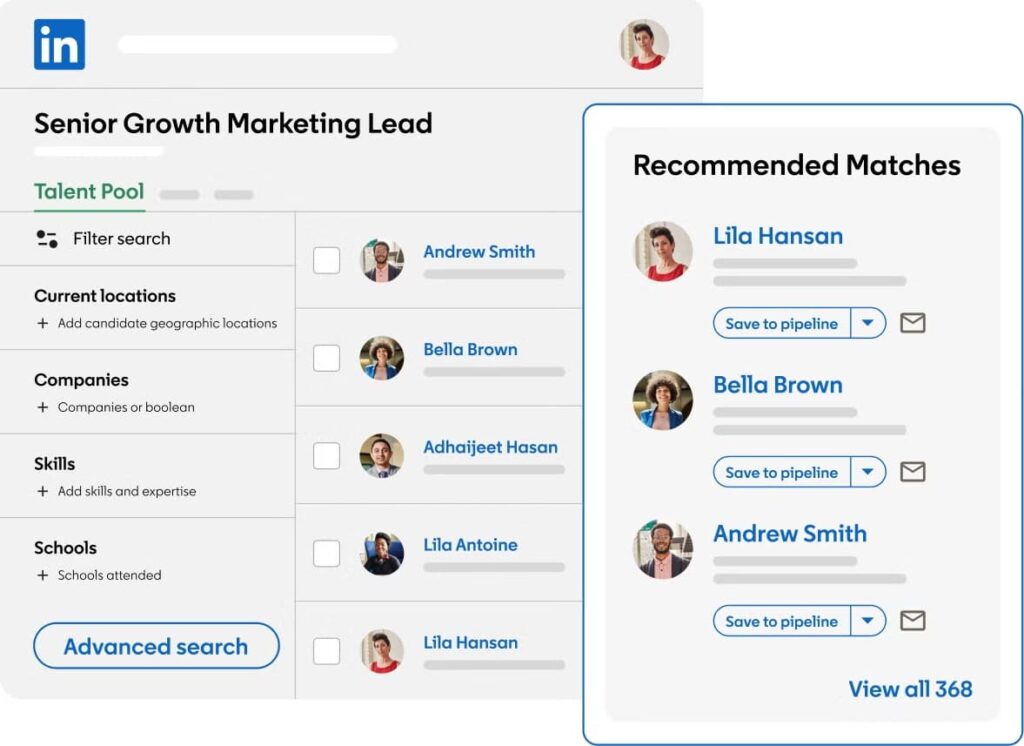
Two tiers: Recruiter Lite for individual hiring, Recruiter (corporate) for teams. The InMail volume on Recruiter is meaningfully higher than on Sales Navigator, which is the main differentiator beyond filters.
4. LinkedIn Learning and AI Career Coach
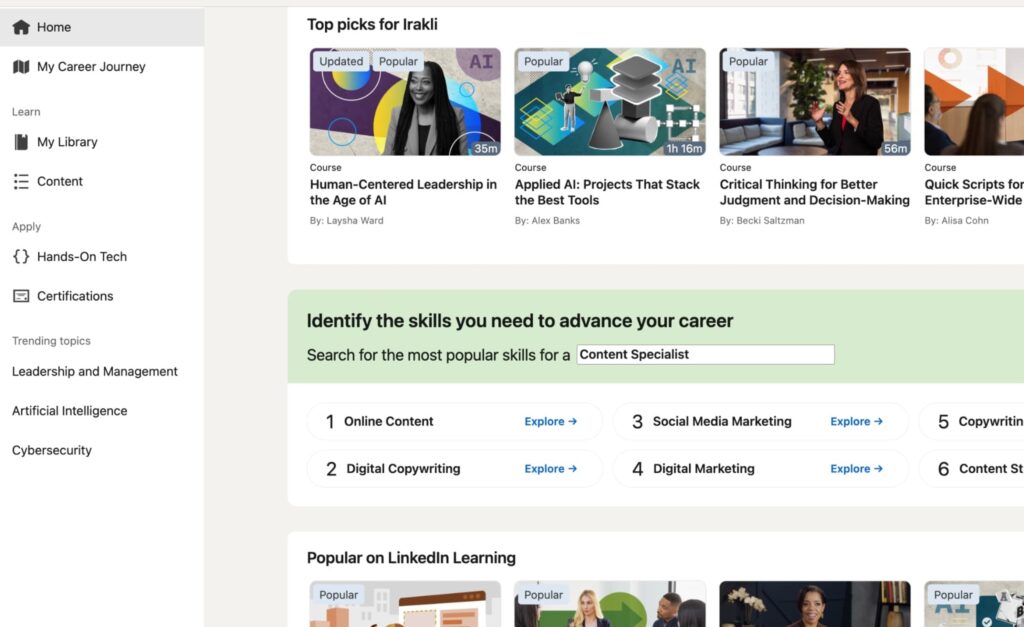
LinkedIn Learning is the courses platform — over 25,000 courses across professional skills, included with every Premium tier. AI Career Coach (launched 2025) is a Premium-only agent inside Learning that recommends courses based on your profile and suggests career paths.
5. Premium All-in-One (SMB bundle)
LinkedIn’s newest Premium tier, launched February 2026 at $99/month, or $89/month if you commit annually. Built for founders and small teams that want sales, marketing, and light hiring tools in one subscription instead of stacking Premium Business + Sales Navigator + Recruiter Lite.
What’s bundled:
- Daily prospect recommendations.
- Advanced search filters.
- Monthly InMail credits.
- Profile optimization suggestions.
- Automated engagement invites.
- $100 in ad credits.
- And a $50 monthly post-boost credit.
Worth it for: solo founders and 2-5 person teams running outbound, content, and the occasional hire out of one seat. If you only need one of those (e.g. pure outbound), Sales Nav alone is cheaper and more focused.
6. LinkedIn Services Marketplace
LinkedIn Service Marketplace is where providers (consultants, freelancers, agencies) publish a public Services page attached to their profile listing what they offer, pricing if they choose, and reviews from past clients. Prospects find these pages through LinkedIn search.
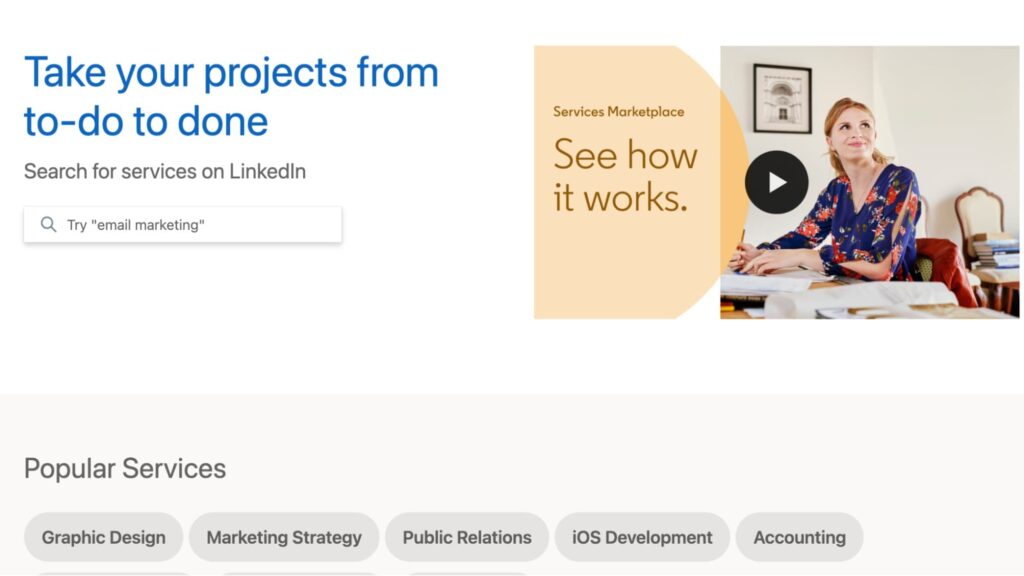
Free to publish, and the listing is visible in search results for service-related queries. Anyone doing consulting or freelance work alongside a day job should turn this on.
How Expandi connects LinkedIn features into one automated outreach workflow
Teams using LinkedIn features in 2026 may hit the same wall: each feature works in isolation, and pulling them together into a repeatable outbound motion takes manual coordination.
- Featured Posts attract attention, but nobody follows up with the people who engage.
- Sales Navigator surfaces new leads, but the connection requests still go out one-by-one.
- Polls drive engagement, but the voters don’t get a DM.
If you want to scale past manual coordination, the next step is automation — wiring the features together so a signal from one feature triggers a sequence across others, with follow-ups that branch based on what the prospect does.
A common workflow Expandi users run:
- Signal-based trigger — LinkedIn post engagement, profile view, or job change.
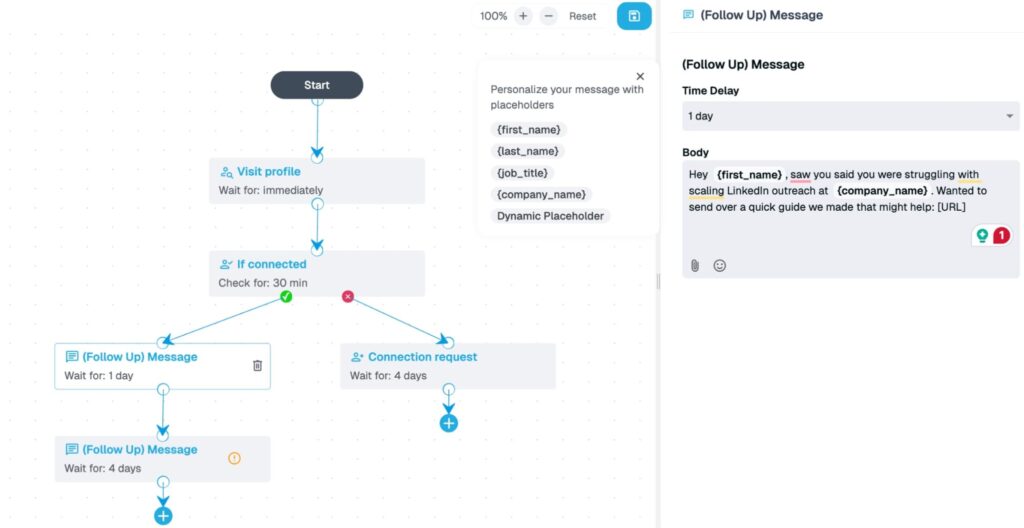
- Visit profile — passive warm-up touch.
- Personalized connection request — referencing the trigger context.
- Follow-up sequence — conditional branches based on whether the prospect accepted, replied, or went quiet.
This is what Expandi is built for. Its Builder campaign supports 19 actions and 11 conditions across both LinkedIn and email steps, so the workflow above can run end-to-end inside one tool.
LinkedIn features: frequently asked questions
AI was the biggest theme — AI conversational search inside Sales Navigator and AI Career Coach inside LinkedIn Learning both launched in the last 18 months. On the distribution side, verified identity badges crossed 100M+ profiles and post-level analytics now break follower growth out per post. Premium also picked up a new SMB-focused bundle called Premium All-in-One.
Most of them. The content stack (posts, polls, video, Newsletters), the search and networking stack (Boolean search, Groups, connection requests), and the entire Company Page setup are all free. Premium gates the scale features: Sales Navigator’s advanced filters and CRM sync, Recruiter, the custom profile CTA button, AI Career Coach inside LinkedIn Learning, and AI conversational search inside Sales Navigator.
Yes — Company Pages have a different feature set than personal profiles. The biggest add is analytics: page-level follower demographics, competitor tracking on up to nine other Pages, and newsletter analytics with subscriber breakdowns by job title and seniority. Content controls also differ: super admin Featured Posts, Notify Employees for one-click employee distribution, Showcase sub-pages for product-line splits, and page-as-author posting.
LinkedIn Premium Business is general-purpose: unlimited profile views, advanced search filters, monthly InMail credits, and LinkedIn Learning access. Sales Navigator is the dedicated prospecting workspace: 50+ filters, lead and account lists, saved searches with new-result alerts, and CRM sync. If you’re doing outbound full-time, Sales Navigator is the right tier.
For active outbound, layer personalized connection requests and InMail on top of Sales Navigator’s advanced filters.
For inbound, it comes down to the fundamentals: an optimized profile that earns the click, plus consistently posting 3-5x a week in whatever format your audience engages with.
Get the most out of LinkedIn features in 2026 with automation
LinkedIn in 2026 looks different than it did two years ago. Five features got retired or absorbed, five new ones shipped, and Premium picked up AI agents inside Sales Navigator and LinkedIn Learning. The hard part is wiring them into a workflow that does not depend on someone manually clicking through three of them every morning.
That is the gap Expandi fills. Smart sequences, signal-based campaign triggers, cloud-based execution, and a unified inbox turn the 30 features above into one outreach motion instead of 30 separate tabs.Start your free 7-day Expandi trial to wire your LinkedIn features into a workflow that runs while you sleep.

You’ve made it all the way down here, take the final step