How to Use LinkedIn to Reduce Churn and Grow Accounts (CS Playbook + Message Examples)

Closing a deal with clients isn’t the end of the business. It’s only the beginning. And without multiple touchpoints (regular check-ins, monthly updates, informal coffee chats, or quarterly reviews) to engage your existing clients, the relationship feels cold and transactional.
Consequently, customer churn increases and slowly kills business growth.
A report by McKinsey and Company revealed that the negative impact of churn can be twice as significant as the positive gains from revenue growth, thereby neutralizing those gains from customer acquisition efforts. This makes churn prevention not only important but also critical to business growth.
According to research, tools like LinkedIn contribute to a 10% improvement in customer retention rates. This makes the networking platform a valuable gem for creating a sustainable system to manage clients’ relationships post-sale.
But how do you do this?
In this guide, you’ll learn how to use LinkedIn to reduce churn and grow accounts. Let’s get started.
What is Customer Churn and Why Do Customers Leave SaaS Businesses?
Customer churn rate is the percentage of customers who stop doing business with your company over a given period. It’s a crucial metric that indicates whether your company is delivering consistent value or needs improvement.
Low customer churn often signals high customer satisfaction and strong product-market fit, enabling companies to expand into other target markets. On the other hand, high customer churn signals poor market fit, strong competition, or other economic challenges.
Although every business faces some level of churn, it’s essential to identify the sources to address the problem. Below are some reasons customers leave SaaS businesses.
1. Poor customer service
A study by Salesforce revealed that 43% of customers stop making a repeat purchase from a brand due to poor customer service experience. Unresolved complaints. Late responses. Lack of support. They all frustrate customers. And if they don’t find an actual person who can solve the problem, they churn.
2. Your product isn’t the right fit.
Sometimes, customers don’t understand that a product isn’t what they need. So, once they sign up and see it’s not a great fit, they churn. That’s why you should look at your messaging and position your brand appropriately to find the right fit.
3. Learning curve
Many SaaS products have a learning curve. A steep learning curve due to complex UI/UX or more features makes it difficult for users to navigate, leaving them discouraged.
We don’t just say this; the stat backs it up with a study that witnessed a 23% churn rate from 2,500 SaaS users who dealt with products with 15 more features. So, the harder it is for a customer to onboard and use your product, the more likely it is they will churn.
4. Price and value
The pricing of your product and the value it delivers play a huge factor to a customer’s consideration. If the value of your product doesn’t justify the price your customers are paying, they’ll likely leave for another competitor.
Now that you know why customers churn, let’s look at some solutions. In the next section, you’ll learn how to use professional networking platforms like LinkedIn to reduce churn for your business.
11 Steps to Using LinkedIn to Reduce Churn Rate and Grow Accounts
LinkedIn is one of the best channels for B2B businesses. Aside from using the platform to generate new leads, here are 11 steps on how to use LinkedIn to reduce churn and grow accounts.
1. Identify Why Churn Happens
First, identify the source of customer churn. Rather than assuming why the customers leave, ask questions to share why they cancelled to show you genuinely care. After all, about 68% of customers leave because they have a perception that companies don’t care about them.
One way to talk to customers is through surveys. Before they cancel their subscriptions or leave your pricing page, ask why. What was the friction? What were their expectations, and how did you fail to meet them?
For example, suppose a lead generation firm wants a cold outreach tool with an intuitive interface to send email campaign. However, they ended up with a tool that has a complex email sequencing feature which creates a rigid workflow to send a basic drip sequence.
They could leave because the tool costs them more time. A survey can unravel these answers and take the vendor one step closer to the solution. As good as surveys are, don’t rely on them alone.
Also review:
- Cancellation reason
- Support tickets
- Onboarding drop-offs
- Call notes
- NPS comments
- LinkedIn messages
- Public reviews on social platforms and review sites.
Group the feedback into recurring churn themes, for example: slow response times, unclear onboarding, missing features, pricing mismatch, or poor handoff after the sale. Negative reviews are especially useful because they often name the exact failure point. You can use them to improve the process, not just to reply publicly.
2. Target the Right Audience
When your sales team targets the wrong audience who aren’t the right fit for your product, chances are they will churn. No matter how much time and effort you spend on their onboarding process or customer service, they would never stick around for long if the product wasn’t a strong fit to begin with.
For example, here’s what it looks like in practice once you push them to close:
An email finder tool forcefully closes a deal with a sales agency who wants email deliverability. Upon noticing they lack their need, they flood supports with basic questions and request deliverability features that are not on the roadmap. One month in, the sales agency get frustrated and leave a one-star review citing poor value for their money.
The revenue the vendor generated doesn’t come close to the onboarding resources, support hours, and time the sales team spent on closing the agency in the first place. This is something no retention strategy can fix.
To avoid this, create detailed buyer personas and find people who align with your ICP. Use strict criteria to determine the leads that are really worth your time. With LinkedIn Sales Navigator’s AI-driven insights, sales teams can identify and refine targeted profiles by analyzing shared interests, professional updates, and engagement trends.
For instance, use first-party (such as webpages visited) or third-party data (public information) to score your leads. Then, prioritize those most likely to close. That’s how you find the right product-fit for your business.
3. Engage with Your Customers
Customer relationships aren’t meant to be abandoned after sales. In fact, that’s the time you need to engage them by making them feel seen, heard, and valued. When a customer feels seen, you interact with them as individuals.
For instance, you can post helpful content that reinforces how to get the most out of your products. Think onboarding videos, how-to guides, successful tips, and more.
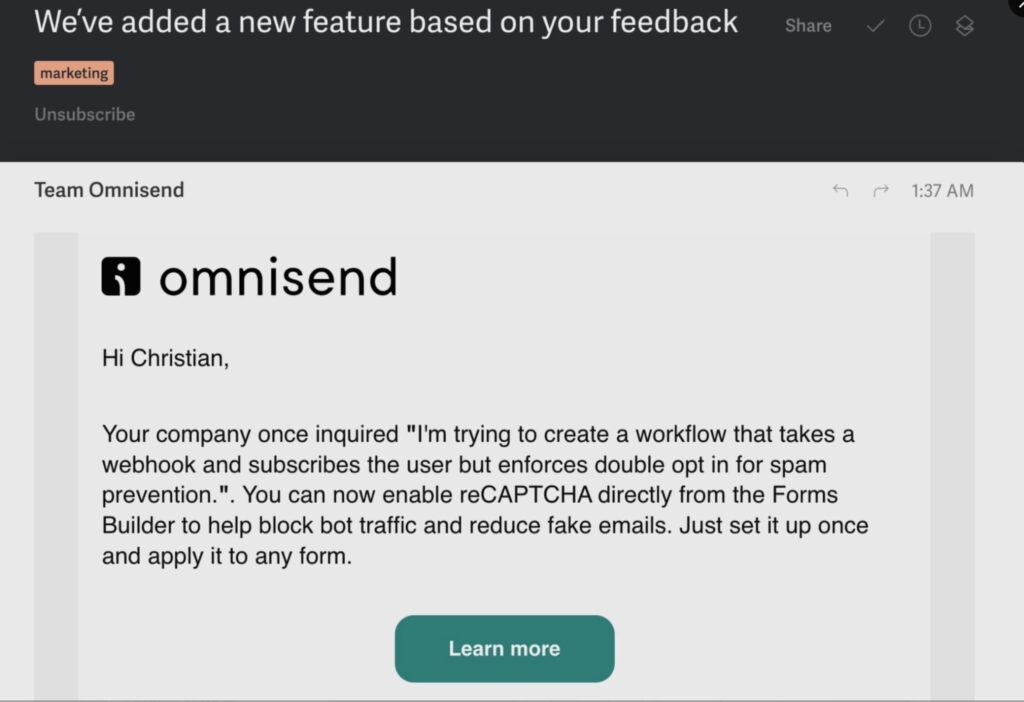
To make customers feel heard, let them know their voice matters. You recognize what they do when they interact with you. For instance, if a customer requests a feature update through your feedback portal and three months later, the update goes live. Send them an email letting them know their suggestion directly influenced the update. That single touchpoint would make them feel their voice matters.
See this example from Omnisend, which was shared on social media by a delighted customer:
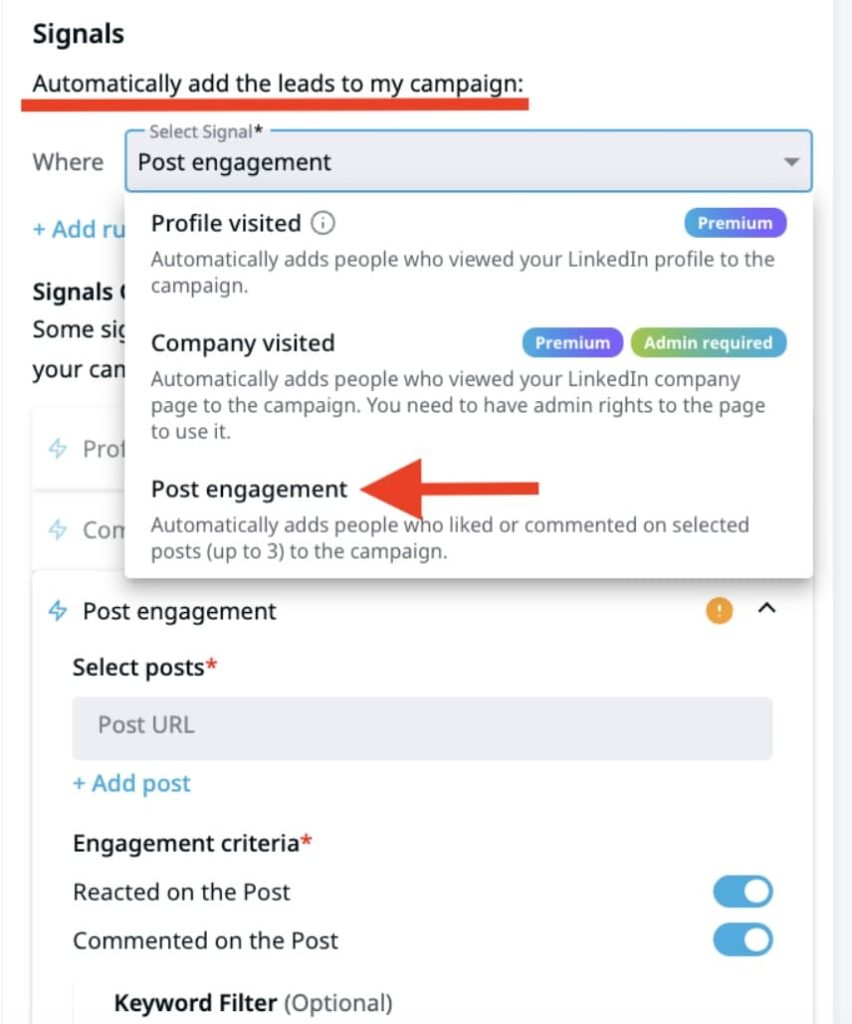
If they voice a complaint or offer a compliment directly in your DMs or on a public platform, acknowledge their thoughts. Use LinkedIn automation tools like Expandi’s Signals feature to monitor interactions with your post. This will inform you about the right time to engage with these prospects.
Finally, make your customers feel like they matter more than the money they spend. For instance, celebrate their business milestone by sending a congratulatory message or give early access to new product features.
With Expandi, you can supercharge LinkedIn message automation to engage customers at scale. For example, A17 technology, a custom analytics and data governance solution used Expandi’s outreach feature to send messages and follow-up on conversations. The result was a 21% response rate from the overall campaign.
When customers feel seen, heard, and valued, they become more invested in the relationship with your company. This develops a connection that reduces churn and grows your accounts over time.
Below, you’ll find a few message examples to help reduce churn when engaging your customers.
Celebration milestone message
Hi [name],
I saw your announcement [latest funding/product launch] — big win for your team!
As you scale, you may face new pressures or targets. If helpful, we can review how you currently use [your product] and see how we can support you in the next stage. Congrats once again!
[Your name].
Early Access to Product Feature Message
Hi [name],
We are rolling out a new feature focused on [specific outcome, e.g., outreach automation].
Given how your team uses [product] and the feedback you’ve shared over time, we’d love to offer you early access to the product before the public release.
If you’re open, we’ll walk you through the steps and tailor it to your use case.
We look forward to partnering with you. Thank you.
[Your name].
4. Educate your users
If your product has a steep learning curve, your customers will find it difficult to use it, no matter how great it is. Imagine your product is an enterprise-grade sales CRM platform. When someone purchases one of your products, it’s not a done deal. They’ll likely need help navigating the product or integrating it into their existing tech stack.
So, what can you do?
- Offer video tutorials and product guides
- Host live or on-demand webinars
- Create knowledge base articles and how-to content
- Provide interactive product demos and walkthroughs
Research revealed that 86% of people say they’re loyal to businesses that invest in onboarding content that educates them after they’ve made a purchase. So, your buyers need those helpful resources to integrate your product.
That’s how they get the value from their purchase and continue their subscription. Consequently, they make the most of your products, thereby reducing churn and improving the customer experience.
5. Analyze Customer Feedback
Since customers share their thoughts and experiences with a product through feedback, analyze those feedback for patterns, not one-off complaints. This helps businesses to identify the root causes of churn. Listen to this feedback and use it to prioritize solutions that will reduce it.
As you analyze the feedback, don’t forget to give timely responses, especially within the first 24 hours. A McKinsey and Company study reveals that 40% of customers expect the brand to respond within the first hour, and 79% expect a response within 24 hours. And if you fail to respond, you risk losing customers year after year, with a 15% churn rate.
6. Offer Great Customer Service
Your product can attract customers, but great customer service is what keeps them coming back. When customers feel unrecognized, ignored, and frustrated, they don’t just churn. They also take their experiences with them. This can cause a ripple effect in today’s world, where almost everything is digitally connected.
One poor interaction can blast through social channels and review sites. After all, a report by Verint showed that about 46% of respondent would give a negative review about a company on a digital channel.
To avoid this, offer better customer service:
- Even when you do not have the full fix for a customer’s problem yet, confirm ownership and set a clear next update time
- Be consistent wherever they reach you, whether by email, phone, or live chats
- Offer empathy when you talk to them, then give a concrete next step, timeline, or workaround
- Always check with the customer whether the fix worked in practice
- Create LinkedIn follow-up messages and send them to customers to show you care more than the outcomes
LinkedIn Sales Navigator can help with this. Track key account updates such as job changes, engagement shifts, or company growth to reach out with relevant recommendations and solutions. For instance, if a key decision-maker moves to another role, LinkedIn notifies your team, and they can provide guidance on maintaining service continuity in the new role.
7. Promote Employee Advocacy
How your employees feel about your company directly impacts how they treat your customers. You can’t afford to treat them poorly. Create an internal company culture that deeply respects and drives team members to achieve a purpose. Only then will they feel connected to their job and advocate for your brand.
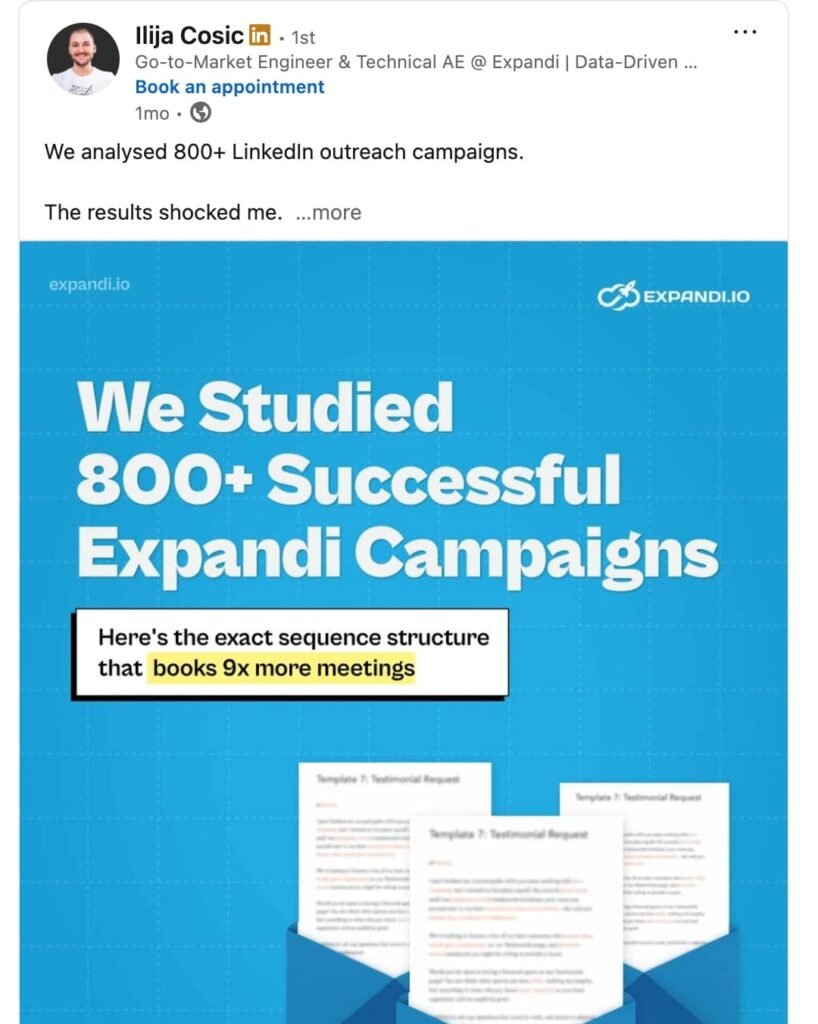
Studies revealed that 76% of people trust content shared by individuals rather than by companies. When your employees become the face of your brand and promote the products and services through their posts, that boost brand awareness and drives more engagement.
Here is a message example, Ilija Cosic, GTM Engineer at Expandi, shared to advocate for the brand to his audience. He leverages a research conducted by the brand to provide insights on what works for cold outreach campaigns. This adds credibility and further reinforces the brand’s authority in the industry.
8. Let Your Best Reps Handle Cancellation
When a customer says they want to leave a brand, it’s your last chance to turn things around. Instead of automating the response or having a junior rep handle it, have your best reps handle it. One who is experienced and empathetic when handling sales conversations.
Let these sales reps:
- Listen attentively to customers’ queries
- Use context from past interactions and goals to support conversations
- Display emotional intelligence and ownership
Once they do this, customers feel more heard and respected. This inclines them to stay even if their issues aren’t fully resolved. Even if they leave, you create an opportunity for future business conversations. In short, leverage the cancellation notice as a signal to prove your value and to help customers recognize you.
Here is a message example you could use to handle the situation.
Hi [Name],
I saw your cancellation request and would love to reach out personally before we process it. When you joined three months, you aimed to [specific goal e.g., increase qualified leads by 20%]. I would hate to close your account without knowing what changed.
Was there a specific moment where our product stopped working for you? I’m not here to talk you out of your decision. I just wanted to make sure you’re not leaving over something we can fix in one minutes.
Will you be open to a 15-minutes meeting to further discuss this?Regards,
[Name}
9. Offer Incentives and Flexible Pricing
If you apply the 80/20 rule to sales, it means 80% of your recurring revenue comes from 20% of your customers. Hence, there is a need to identify these priority customers and offer them incentives to keep them coming back.
But be careful not to let the incentive eat into your profit margin or make customers wait for better deals. That said, here are some incentives you can offer customers:
- Early access to beta launches that customers care about. Ask them to participate in a new product testing program to make them feel appreciated and valued.
- Event invitations and exclusive meetings with a company’s CEO to share their insights about the industry.
- Offer reward loyalty to celebrate milestones or renewals. For instance, offer special volume discounts when they reach a specific threshold.
- Offer loyalty points for regular product usage. Points can be redeemed for special prizes or product upgrades.
Incentives are for those who earn them, not just anyone. This safeguards your margin and boosts customer loyalty.
10. Build a Community
Communities are another way to reduce churn and grow accounts. Create customer groups, forums, and networking events to foster authentic conversations and drive customer engagement.
If one customer faces a challenge, chances are others do too. Communities let others ask these questions or easily find answers to other questions that have been asked.
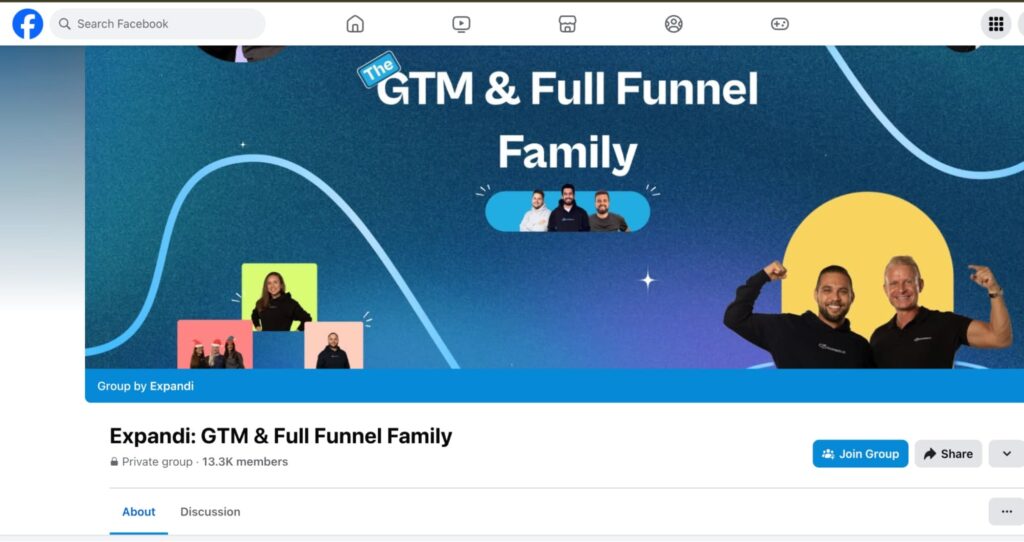
For example, Expandi has an active community on Facebook, called Expandi: GTM & Full Funnel Family, where they answer questions and help customers resolve any problem they encounter with the platform.
Besides, having a community provides a business with valuable insights into the customer experience. They can predict the problems customers are facing and offer the right solution to improve their experiences.
Suppose you releases a new product and have a community through a group on Facebook. Your customer support team can monitor it to gather real-time feedback on problems with the new product. Then, they pass such information to the product developers to make amends. This helps you to improve customer satisfaction and reduce churn.
11. Run Post-Sale Relationship Workflows
Most churn happens in silence: customers stop engaging, champions go quiet, and by the time renewal arrives the relationship is already cold.
The fix is consistency. Run five recurring LinkedIn campaigns, one for each post-sale motion, and you create touchpoints before the pressure hits.
Renewal Warm-Up (90–120 days out): Check in on outcomes, confirm renewal criteria, and connect with at least one additional stakeholder to reduce single-thread risk.
Stakeholder Mapping: Identify 3–5 roles that influence renewal or expansion. Connect with each using a reason tied to their specific responsibilities, not a generic intro.
Expansion Discovery: When you spot a hiring push, a new team, or a growth announcement, use that as a trigger to propose a use-case review for a second team inside the account.
Advocacy and Referrals: Ask for a quote or intro right after a clear win. Write the draft for them, make it a one-click yes.
Churn-Risk Saves: If a key contact goes quiet or changes role, reach out with ownership and a specific next step. Not a check-in, but a fix plan.
You can use Expandi to run each motion as a structured campaign: segmented lists, smart sequences with personalized variables, and reply detection to route engaged accounts to a human rep.
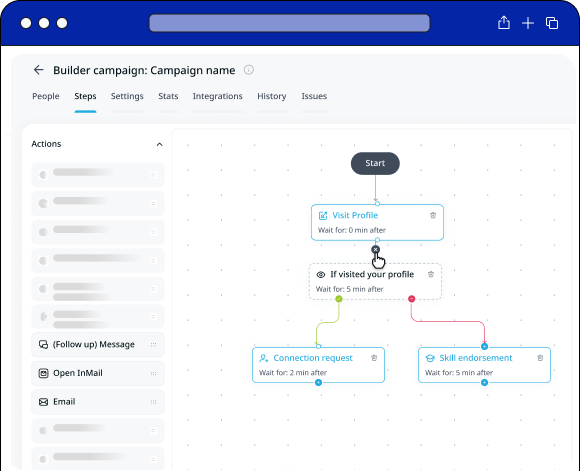
Automate the reach; handle the conversation yourself.
You’ll prevent customers from feeling abandoned after the sale.
Use Expandi to Reduce Churn and Drive Growth for Your Business
When customers leave, they represent more than lost revenue. They signal costs and opportunities you didn’t get to see through. In a competitive market, these signals add up faster than most businesses realize.
Hence, the need to reduce churn arises. As a LinkedIn user, you need the right people, the right processes, and the most appropriate tools to deliver value before customers even think of leaving your business. This is where a LinkedIn automation tool like Expandi comes into play.
With Expandi, you can:
- Connect with the right decision-makers who are most likely to convert
- Send personalized messages that feel human at scale to build meaningful relationships
- Have your employees advocate your brand to build trust and improve credibility
- Offer timely customer service to address the prospect’s needs.
The goal is to get closer to your customers each day so they don’t think of leaving your business. Expandi helps you achieve that.
Book a demo today to harness the tool’s full potential.





You’ve made it all the way down here, take the final step