Mass Messaging & Automation on LinkedIn (2026 Guide)

Suppose you intend to message 1,000 prospects on LinkedIn. Five minutes per prospect on the whole cycle from profile lookup to send adds up to about 83 hours of manual work. Repeating that at volume makes it harder to keep messages accurate and consistent.
A LinkedIn mass messaging tool won’t override LinkedIn’s account restrictions or recipient-eligibility rules, but it can absorb the repetitive setup and tracking that come with bulk outreach, turning what would be 83 hours of manual work into a few hours of campaign configuration.
In this article, you will learn:
- What LinkedIn mass messaging is and how it works.
- How to handle automated messaging campaigns.
- Best practices for targeting, personalization, and follow-ups.
Let’s get started.
What’s LinkedIn mass messaging and how does it work?
LinkedIn mass messaging refers to organizing outreach to multiple prospects. A campaign may involve separate private messages, whereas a group conversation places participants in the same discussion. This article focuses on connection invitations, direct messages, InMails, and follow-ups.
You can manage outreach manually or use campaign software to organize steps and personalize messages.
Manual outreach involves finding recipients, preparing messages, sending messages, and recording follow-ups. Campaign tools can reduce repetitive work, but delivery depends on the message type, recipient eligibility, and account restrictions.
Do note that LinkedIn prohibits unauthorized automated messages, and using campaign software doesn’t create additional messaging permissions.
How to send mass messages on LinkedIn manually
Here’s a step-by-step process on how to send mass messages on LinkedIn at once.
- Go to your LinkedIn messaging section.
- Click the pencil icon to craft a new message.
- Enter multiple names you’d like to send mass messages to.
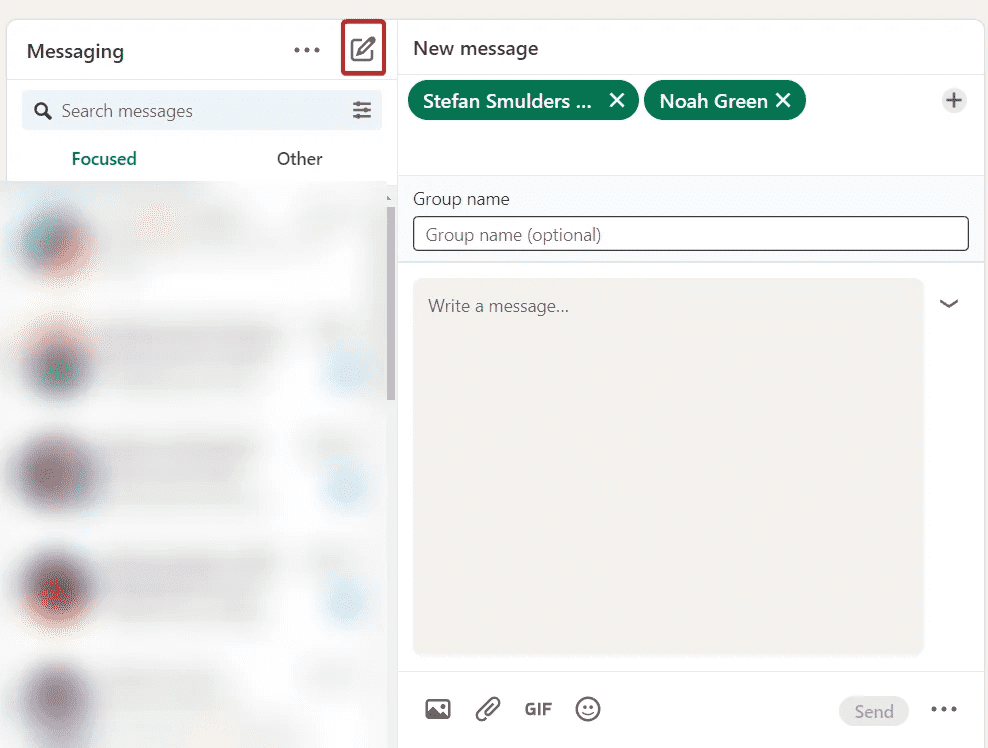
Adding several recipients creates a shared group conversation. It doesn’t deliver separate private messages to each person. Use this method when the recipients belong in the same discussion. For private outreach, start individual conversations.
How to automate sending mass messages on LinkedIn
Expandi is a LinkedIn mass messaging tool for configuring bulk outreach campaigns with actions and conditions.
The process is simple.
When sending automated mass messages on LinkedIn, you need to perform these three key steps :
- Identify your target audience.
- Create smart sequence steps (i.e., actions you’ll be automating).
- Use outreach templates with personalization tags.
1. Identifying your target audience
First, you start with LinkedIn prospecting to find your target audience. Use the LinkedIn search bar, groups, LinkedIn Sales Navigator, or CRM list to create a list of targeted profiles.
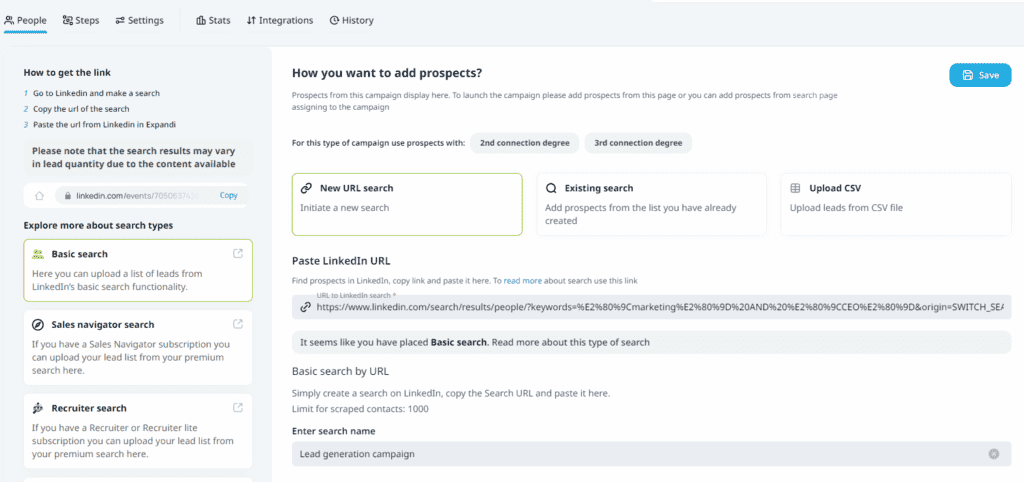
Here’s an example. Here, we input target keywords “marketing” and “CEO” to find those we intend to target.
2. Export your LinkedIn search into an automation tool
Once you’re done searching, export the result into an automation and outreach tool like Expandi. All you have to do is paste the URL. Exporting allows you to see the targeted profiles to whom you will send the messages, enabling you to track your outreach campaign more effectively.
3. Organize and manage targeted profiles
After exporting, make sure you’re sending messages to the individuals who fit your ideal customer persona. Hence, you can filter or manage your list as you want. Remove those who aren’t the right fit or segment the list for a more personalized approach.
When evaluating LinkedIn CRM tools, look for a way to record previous conversations and identify prospects your team has already contacted.
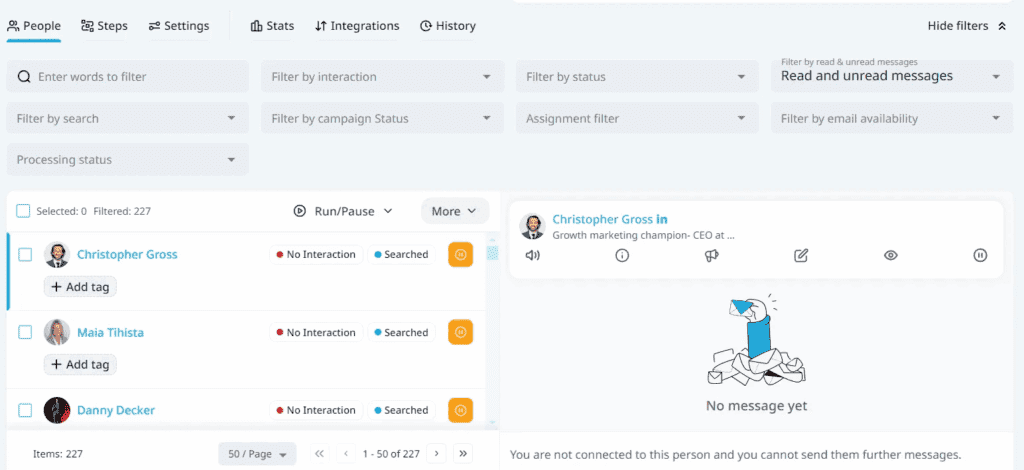
4. Automate mass message steps
With Expandi, you don’t have to send messages one-by-one. Instead, create campaign steps to deliver your messages to all your recipients.
For instance, you can use a connection request template and customize the content to increase the chance of being accepted. You can also generate personalized messages through dynamic landing pages or placeholder tags to engage your prospects.
Use smart outreach sequences to organize the next step around conditions such as whether a prospect has accepted your connection request.
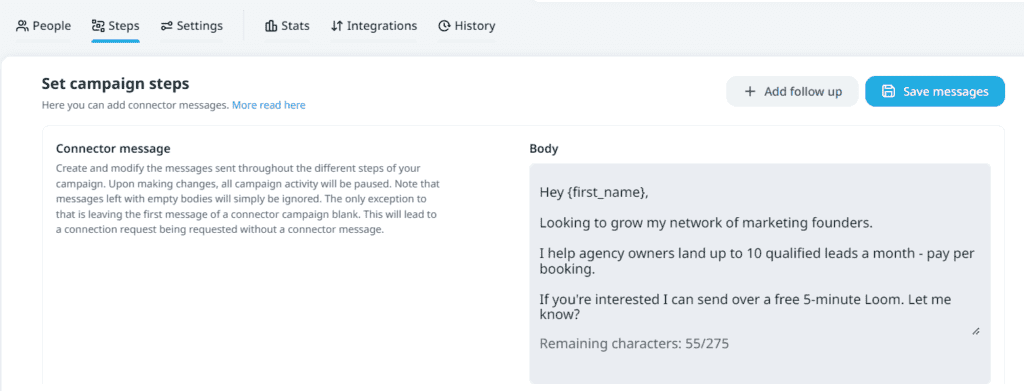
5. Set LinkedIn mass messaging automation limits
If you’re an avid LinkedIn user, you’d realize there are certain limitations around LinkedIn connection requests and messages. You’d want to abide by these rules to avoid having your account restricted, or worse, banned.
For context, here is an overview of LinkedIn limits on certain activities:
| Activity | What to check before sending |
|---|---|
| Connection invitations | LinkedIn applies invitation limits but doesn’t publish a universal numeric weekly allowance. |
| Direct messages | Follow account-specific restrictions; don’t treat a campaign’s configured volume as an official LinkedIn allowance. |
| Messages to group members | Check the rules for the particular group-messaging feature and your role. |
| Sales Navigator InMail | The subscription provides 50 credits monthly, with a maximum accumulated balance of 150. |
| Campaign pacing | These are tool settings, not additional permissions granted by LinkedIn. |
Configure campaign volumes and priorities before launch, and account for activity across all active campaigns. These settings help organize sending, but they don’t override LinkedIn’s restrictions. LinkedIn prohibits unauthorized automation and scraping, so pacing alone doesn’t establish compliance or eliminate account risk.
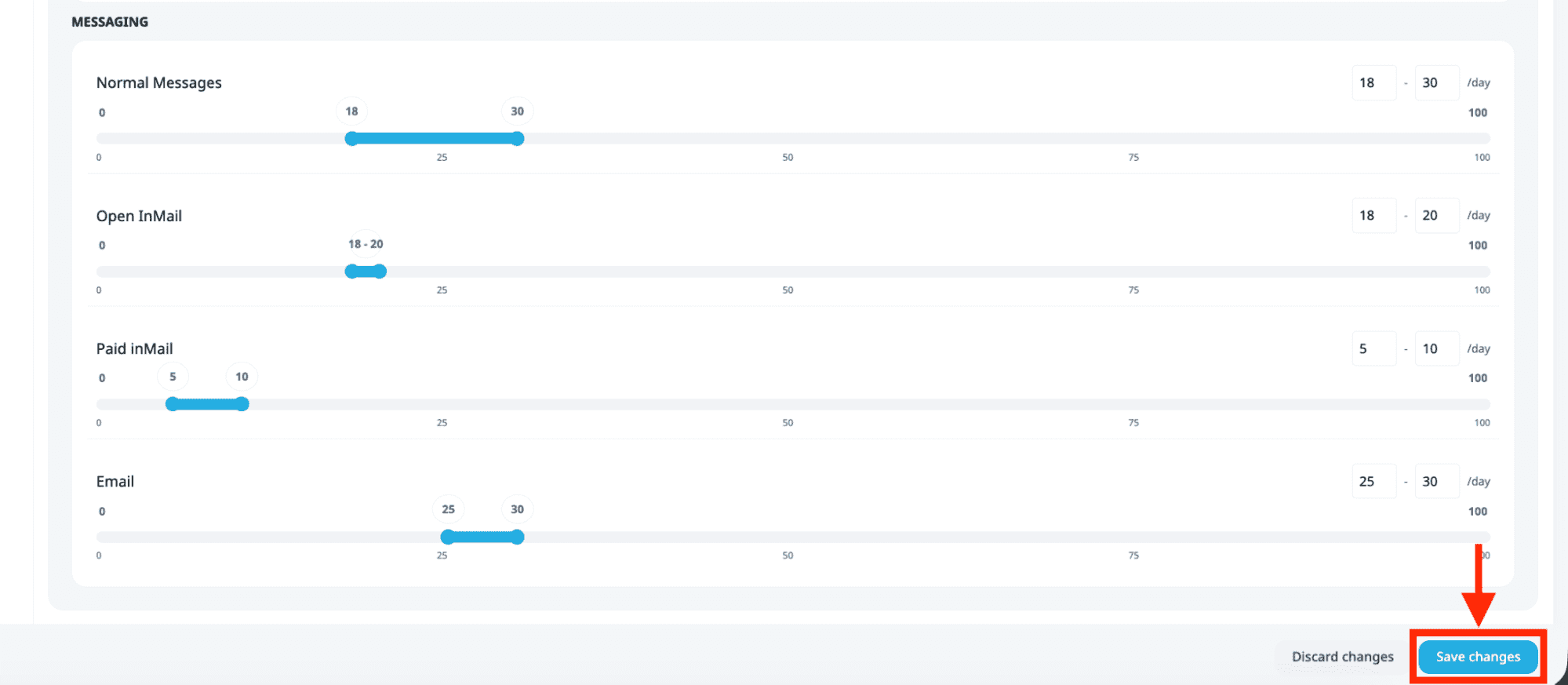
6. Launch and measure campaign performance
Once you’ve set the limits, launch your campaign. Then, look into the performance of your LinkedIn campaigns. Check your connection acceptance rate, open rates, reply rates, conversion rates, and other metrics.
For additional context, compare your campaign results with Expandi’s LinkedIn outreach benchmarks, allowing for differences in audience and campaign design.
This lets you identify what’s working and what requires improvement. Remember that your LinkedIn mass messaging outreach isn’t a one-time campaign. Continuously refine and iterate your strategies to achieve high-performing results.
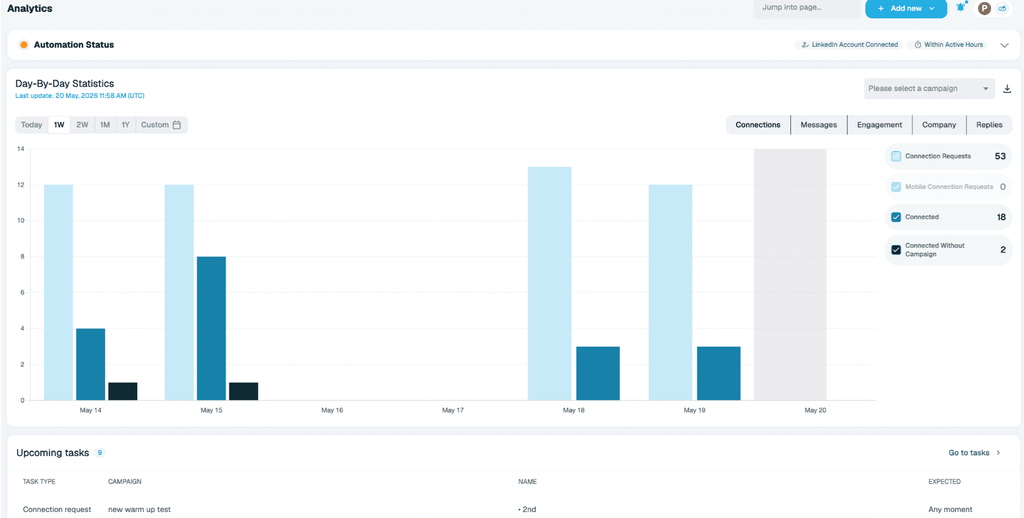
That’s the gist of it when it comes to sending mass messages on LinkedIn. As you see, setting up these campaigns is very straightforward. In the next section, we’ll show you some examples of LinkedIn messaging campaigns in Expandi.
How does LinkedIn mass messaging work on Expandi?
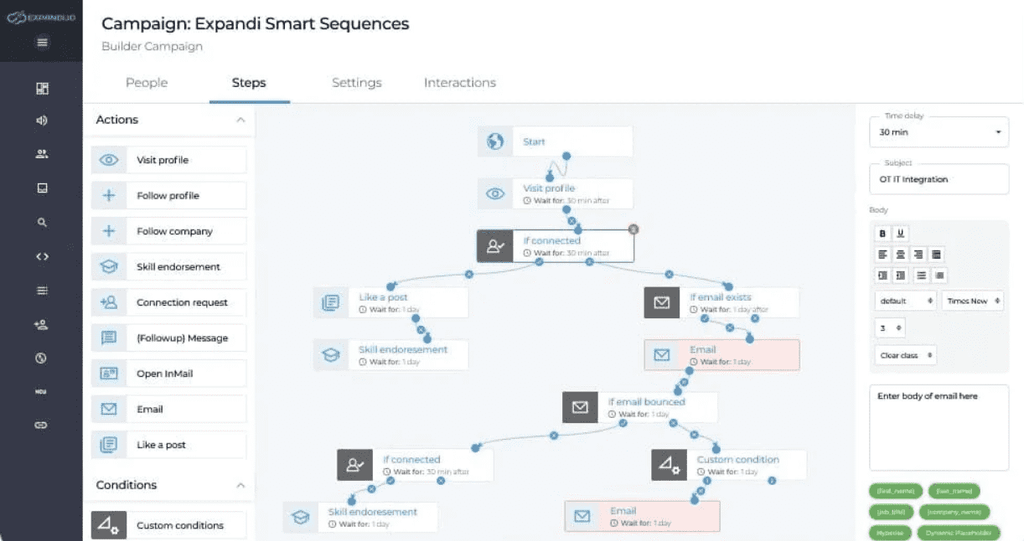
When setting up smart sequences for your mass messages with Expandi, you can customize actions and conditions as part of your outreach. Actions define what a campaign does. Conditions determine which branch a prospect follows based on their status or activity.
Actions:
- Visit profile.
- Follow profile.
- Follow company.
- Invite to follow the company.
- Endorse skill.
- Send a connection request.
- Mobile connection request.
- Send a follow-up message.
- Send an Open InMail.
- Send an Email.
- Like a post.
- Like a company post.
Conditions:
- If connected.
- If they followed you.
- If they visited your profile.
- If your email is opened.
- If your email bounces.
- If your email is clicked.
- If email exists.
- If Open InMail.
- If your post is liked.
Here’s a simple workflow example of how this would work with a LinkedIn campaign to grow your network.
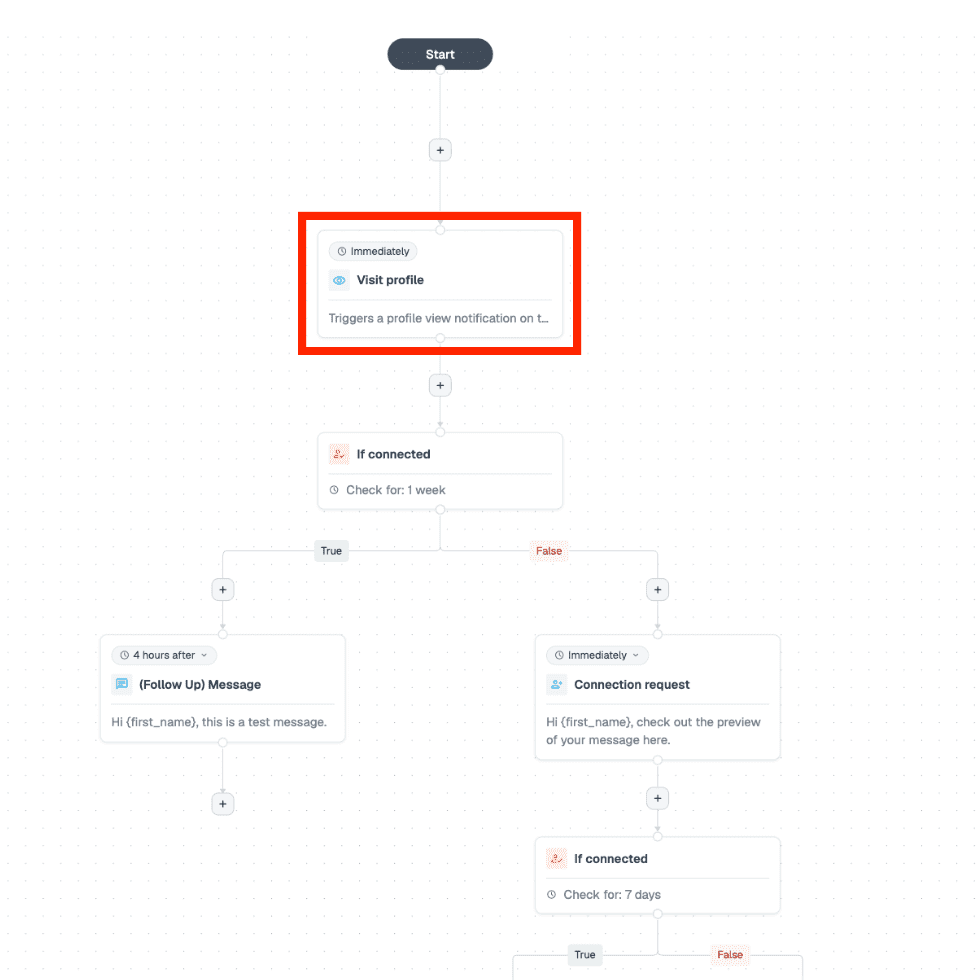
It’s also worth mentioning that you can set up different kinds of outreach campaigns when sending mass messages, depending on your goals. With a Connector Campaign, for example, your main objective is to simply automate sending connection requests at scale.
Some other examples of sending mass messages on LinkedIn include:
- Sending connection requests to potential leads.
- Sending follow-up messages to people you’re connected with.
- Automatically personalizing your follow-ups based on the lead profile.
- Scraping LinkedIn search results into a spreadsheet file to manage, qualify, and organize lead data as needed.
In the next section, we will take a look at why you should send mass messages on LinkedIn.
Why send mass messages on LinkedIn?
LinkedIn mass messaging offers various benefits, which include:
- Saves time and effort
- Smart sequences beyond basic automation
- Personalized campaigns
- Tracks campaign performance
1. Saves time and effort
Campaign tools can reduce repetitive work by letting you prepare outreach steps for multiple prospects in one workflow. Messages are delivered over time according to campaign settings and account restrictions.
2. Smart sequences beyond basic automation
LinkedIn automation like Expandi lets you send different types of messages, such as connection requests, group messages, InMails, follow-ups, and more. This allows you to reach more individuals through diverse ways.
Besides, smart sequences let you organize outreach steps around your targeting criteria and distribute activity across campaigns.
3. Personalized campaigns
When mass messaging on LinkedIn, you must personalize your messages to initiate conversations with your prospects.
Personalization goes beyond including their first names. Make sure you mention something that’s relevant to the prospects, perhaps one that addresses their pain points, and showcase how you can solve it.
Also, consider using LinkedIn mass messaging tools like Expandi to craft personalized messages that resonate with your prospects. With effective typing templates and elements like dynamic text or image layers and placeholder tags, you can customize messages across a large recipient list without rewriting each one.
If you use AI sales tools to help draft messages, check every reference to a prospect’s role, company, or recent activity before sending.
4. Tracks campaign performance
You can track manual outreach in a spreadsheet or CRM, but keeping those records current takes work. Record who you contacted, their response, and any planned follow-up so you can assess your campaign’s performance.
That said, LinkedIn mass messaging tools, such as Expandi, keep track of your LinkedIn campaign performance. It provides insights into metrics such as connection acceptance rate, reply rates, number of leads generated, and conversion rates.
7 best practices to keep in mind when sending mass messages on LinkedIn
LinkedIn automation is simple, on paper at least. But if you want to:
- Plan your outreach more carefully
- Grow your network with the right people
- Start building relationships with relevant, qualified leads,
then you’ll want to follow these best practices when sending mass messages:
- Define your ideal customer persona.
- Personalize your messages
- Include different follow-ups.
- Offer something of value instead of selling yourself directly.
- A/B test different outreach messages.
- Keep LinkedIn limits and platform rules in mind.
- Use LinkedIn Sales Navigator to make sure you’re targeting the right people.
1. Define your ideal customer persona
Before sending mass messages on LinkedIn, you need to define your ideal customer profile (ICP) first. Your ICP is the people who receive the most value from your product, service, and solution.
Ilija Cosic, Head of Sales at Expandi, is direct about the order of operations: “You cannot fix bad targeting with good messaging. It has to go downstream.”
In his diagnosis, when outreach underperforms it’s more often a targeting problem than a copy problem. The list determines what the message can even say, and message quality is capped by list quality. So the practical move before rewriting a single line is to cut the list.
That starts with your ideal customer profile (ICP): the people who get the most value from what you sell. Segment by more than title alone. Company size band matters because pain differs materially by revenue band, and geography and industry shape it further. Define who you are deliberately excluding, because as Ilija puts it: “If a message applies to everyone, it doesn’t apply to anyone.”
You can identify the ICP based on these four characteristics:
- Demographics: age, gender, and job title for individuals; industry, company size, and annual revenue for companies
- Geographic details: location of the individual and company.
- Psychographic details: values, interests, pain points, and other personality traits.
- Behavioral aspects: purchasing history, online activity, and preferred mode of communication.
By analyzing these traits, you identify those who get the most value from your LinkedIn message, the product you sell, or the service you offer. Build your LinkedIn lead generation plan around the people most likely to benefit from your offer. LinkedIn is a great place to find them.
Matteo Arisi, Customer Success Manager at Expandi.io, highlights three key ways he identifies those who align with his ICP.
- Sales Navigator filters → Use filters for title, company size, geography, and even recent activity. Only target prospects who match your offer.
- Advanced keywords → Broad search isn’t enough. Include words people add in their bios and posts to find people who have a real interest. This is a total game-changer for reply rates.
- Group targeting → Join LinkedIn or Facebook groups. Your ICP may hang out there. Pull lists right from those groups, as they can be very active, interested, and much more likely to reply.
That said, here’s a real-life example of how we found clients relating to our ICP in an outreach campaign we launched, based on our Expandi vs Dux-Soup landing page.
Dux-soup is a LinkedIn automation web extension (our competitor). We wanted to reach their users to get them to try Expandi instead. So, we scraped their Facebook group of 4,200+ members, found their LinkedIn, and reached out with a message saying how we found them in that group.

The results?
- 72% acceptance rate.
- 49% reply rate.
- 40+ booked demos.
See our guide on LinkedIn lead generation strategy for more info on this specific campaign.
Scraped a competitor’s 4,200-member group → 72% acceptance, 49% reply, 40+ demos booked.
2. Personalize your messages
Generic messages get ignored. We don’t just say this; the stat backs it up. In Attentive’s 2025 survey of 3,300 consumers, 81% said they ignore irrelevant marketing messages.
So, if you want your prospects to reply to your LinkedIn mass messages, make it personal. People love it when a message mentions their names or says something related to them.
Percival Miseroy, CEO at Expandi.io, shares a hack to do this. He says, “Add real context. Reference a post, role change, or job ad to boost replies.” He also advises keeping messages short. According to him, “messages under 150 characters perform best.”
So, how do you personalize mass messages you send automatically at scale?
It’s simple. With Expandi, you can include the following personalization tags as part of your outreach:
- {first_name}.
- {last_name}.
- {job_title}.
- {company_name}.
- {dynamic_placeholder}.
Using these elements, you can craft templates for your mass messages, which might look like this:
TEMPLATE EXAMPLE
“Hey {first_name},
Looking to grow my network of agency owners living in Germany.
Saw you working at {company_name} and thought I’d reach out.”
Mentioning the prospect’s name in your outreach is nothing new, though.
If you want to take your personalization to the next level, consider using dynamic, visual personalization, which looks like this.
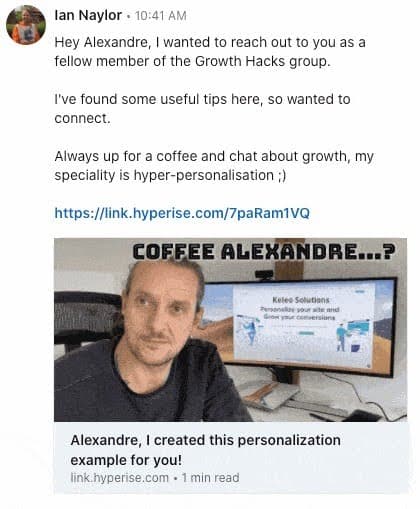
Start with these LinkedIn connection message templates, then adapt your invitation to explain why you want to connect with that person.
For more info on this kind of outreach, see how we used hyper-personalization to skyrocket our reply rate up to 55%.
3. Include follow-ups
Belkins’ 2026 follow-up report, drawing on Expandi platform data, reports a 12.22% reply rate for Messenger campaigns targeting existing LinkedIn connections.
With Expandi, this is as simple as adding a follow-up message step, with a relevant template. You can also combine LinkedIn messages with email follow-up for effective results.
If your follow-up moves to email, use cold email personalization to carry relevant context into that conversation.
Ilija Cosic, GTM Engineer at Expandi.io, reports the following conversion figures in his analysis of LinkedIn outreach touchpoints:
- 1 touchpoint: 9.3% conversion
- 3 touchpoints: 14.8% conversion
- 5–7 touchpoints: 19.2% conversion
- 8+ touchpoints: 16.1% conversion (diminishing returns)
In Cosic’s reported results, conversion peaked at 5 to 7 touchpoints and declined at 8 or more. Take this as a finding from that analysis, though not a universal follow-up rule. Monitor your own responses and stop when a prospect declines further contact.
Conversion by touchpoints: 1 → 9.3%, 3 → 14.8%, 5–7 → 19.2%, 8+ → 16.1% (diminishing returns).
4. Make a valuable offer
One thing that can prompt your prospect to give you a try is to make a valuable offer. Keep in mind that your prospects don’t know you. So, rather than selling yourself or getting them to book a call, offer a valuable solution that addresses their needs and solves their problems. Let them know what they stand to gain from the deal.
For instance, suppose your Fintech prospects waste time on manual data entry, your valuable offer could be an automation tool that extracts and validates customer data from documents, saving time and allowing them to focus on other business activities.
In short, position your messages in a way that’s valuable for them to care and reply to your message.
5. A/B test your messages
A/B test your messages to determine which message performs better. The best thing to do is to change only one thing at a time. For example:
- Different subject lines
- Different connection requests to see which one causes more people to connect with you.
- Different follow-up messages and CTAs.
- Different tone or style, and so on.
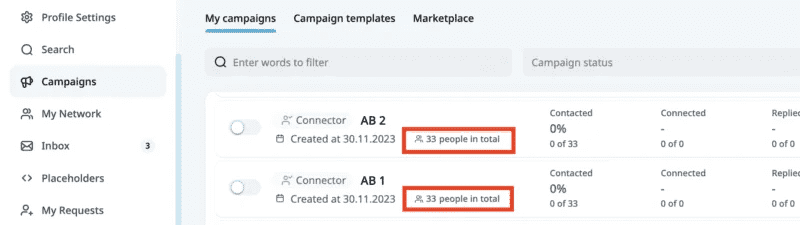
With Expandi, you can easily A/B test different campaigns and audience messages. Here is a step-by-step process.
- Create outreach campaigns you want to A/B test.
- Build one prospect list using consistent targeting criteria, then randomly divide it between the two campaign variants.
- Then, evenly split the prospects from your Search. Click on created search, and select Assign filtered contacts.
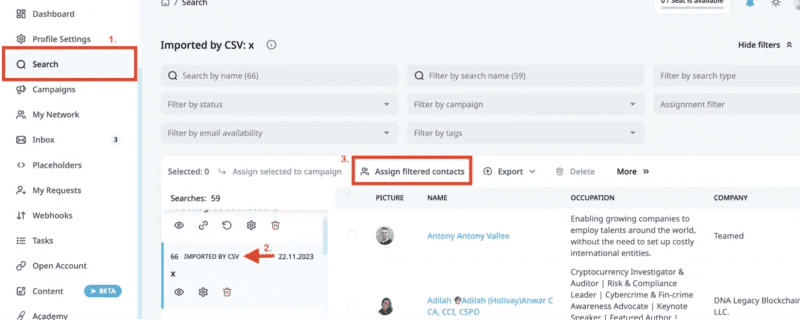
- Select both of the A/B testing campaigns from the drop-down menu and click Add filtered contacts to campaign.
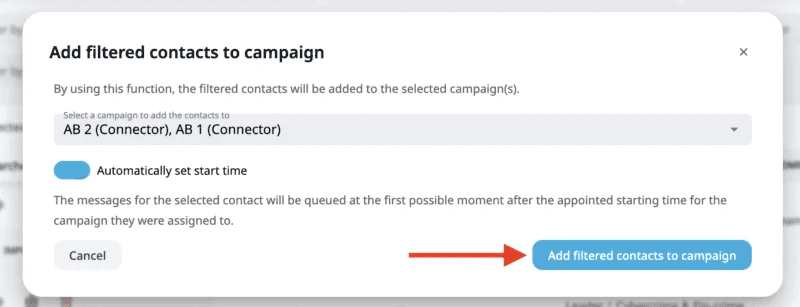
- Finally, the leads are evenly split and assigned to your outreach campaigns. Now you can activate the campaigns and start testing.
6. Keep LinkedIn limits and platform rules in mind
LinkedIn applies invitation restrictions to both Basic and Premium accounts, but doesn’t publish a universal numeric weekly invitation allowance.
Follow ethical LinkedIn outreach best practices by making your reason for contacting someone clear and respecting requests to stop. Review the limits guidance earlier in this article and our LinkedIn connection limits guide before setting campaign volumes.
Keep an eye out for any account warnings, and remember that campaign settings don’t override LinkedIn’s restrictions.
7. Use LinkedIn Sales Navigator to improve your targeting
According to LinkedIn, professionals who use the Sales Navigator to discover the right prospects and build relationships are:
- 51% more likely to achieve quota
- 80% more productive
- +46% more likely to close bigger deals.
Sales Navigator helps you identify suitable prospects and organize your outreach. If you’re looking for how to send mass messages on LinkedIn Sales Navigator, you should distinguish prospect selection from message delivery: LinkedIn says Sales Navigator InMails must be sent individually, not in bulk.
That said, here’s how to deploy Sales Navigator to improve your targeting:
- Use lead and account filters to identify relevant prospects.
- Save suitable leads to lists and review their profiles before contacting them.
- Draft an individual message explaining why you’re reaching out.
- Send the InMail from Sales Navigator and track the response before deciding on a follow-up.
Overall, use LinkedIn Sales Navigator to find your ideal prospects and send personalized messages to maximize replies and increase the chances of success.
Organize your outreach for efficiency with Expandi
Effective LinkedIn outreach starts with relevant targeting, messages that explain why you’re contacting someone, thoughtful follow-ups, and keeping up with the results.
Group conversations work when recipients belong in the same discussion. Private outreach requires separate conversations, and Sales Navigator InMails must be sent individually.
Campaign tools can help organize outreach and reduce repetitive administration, but LinkedIn’s restrictions still apply. Review your results and adjust your targeting and messages based on the responses you receive.
Want to explore Expandi’s campaign setup and personalization features? Start your free trial.
FAQs about LinkedIn mass messaging
LinkedIn mass messaging means organizing outreach to multiple recipients. Depending on the method, this may involve separate private messages or a shared group conversation. Those formats work differently and shouldn’t be treated as interchangeable.
LinkedIn lets you create group conversations, but adding multiple recipients doesn’t send separate private DMs. Sales Navigator InMails must be sent individually. Third-party tools offer campaign functionality, subject to LinkedIn’s rules on unauthorized automation.
Create a group conversation if everyone should participate in the same discussion. For separate private conversations, message recipients individually. Campaign management tools can organize outreach, but they don’t grant extra messaging permissions or guarantee protection from restrictions.
LinkedIn Sales Navigator helps you find prospects in bulk, but InMails must be sent individually. The platform doesn’t include a native bulk-send feature. Campaign management tools can help organize the outreach workflow, though they don’t grant additional messaging permissions and are subject to LinkedIn’s rules on unauthorized automation.



You’ve made it all the way down here, take the final step