Gmelius Review (2026): Features, Pricing, Pros & Cons


Key Takeaways
Gmelius is a strong choice for small and mid-sized teams that live in Gmail and want shared inboxes, AI-drafted replies and light automation without leaving it. It’s a poor fit if anyone on your team uses Outlook, or if you’re looking for a sales outreach tool.
| Best for | Gmail-first teams of 3–50 handling shared email: support, ops, account management, agencies |
| Not for | Outlook users, cold outreach at volume, teams wanting multichannel prospecting |
| Pricing | $19–$40 per user/month (annual); Enterprise custom |
| Free trial | 7 days on the Growth plan |
| G2 rating | 4.4/5 from 776 reviews |
| Biggest strength | Everything happens inside Gmail, so adoption is easy |
| Biggest catch | Monthly conversation caps on every plan below Enterprise |
We first tested Gmelius in 2023 and re-tested it in October 2026 after its shift to AI assistant territory. Below is what changed, what it costs now, and who should actually buy it.
Methodology
We used Gmelius for a month to understand what it can and cannot do. After all, nothing can replace first-hand experience.
But we didn’t stop there.
To provide you with a first-class Gmelius review, we have also talked to a number of former and current Gmelius users to see what they have to say about the software.
Additionally, we analyzed client reviews on all the reputable SaaS rating sites to save you the trouble of doing it yourself.
What is Gmelius?
Gmelius is a Gmail and Google Workspace add-on that turns Gmail into a shared team workspace, with AI assistants that sort, draft and route email. It runs as a browser extension, a web app and a mobile app.
It started as a Gmail productivity extension, then became a shared inbox and collaboration tool. In 2026, its pitch centres on AI: an AI “chief of staff” called Meli and AI agents that triage and dispatch email for a team.
Gmelius says more than 10,000 teams use it, including the French Red Cross and Personio.
Gmelius isn’t an email outreach or cold email tool. It’s built for managing incoming and shared email, not for running prospecting campaigns.
Who Gmelius is for (and who it isn’t)
Gmelius fits teams whose work arrives by email and needs to be shared, assigned and answered quickly.
Good fit:
- Customer support and success teams running a shared support@ or help@ address in Gmail
- Operations, finance and HR teams handling shared mailboxes like invoices@ or careers@
- Agencies managing client communication across several team members
- Executives and assistants coordinating one inbox
Poor fit:
- Any team where some people use Outlook or Microsoft 365. Gmelius is Gmail and Google Workspace only.
- Sales teams looking for outbound prospecting, sequences at volume or LinkedIn outreach
- Large support teams needing a full help desk with ticketing, a knowledge base and live chat
- Teams with very high email volume on a tight budget, because of the per-plan conversation caps
Gmelius key features
Gmelius’s features fall into three groups: AI assistants, team collaboration in Gmail, and automation and reporting. Here’s what each does and how well it works.
1. Meli and AI agents
Meli is Gmelius’s AI executive assistant, included on every plan. It drafts email replies, sorts and classifies incoming mail, schedules meetings and follows up, with the goal of helping you reach inbox zero.
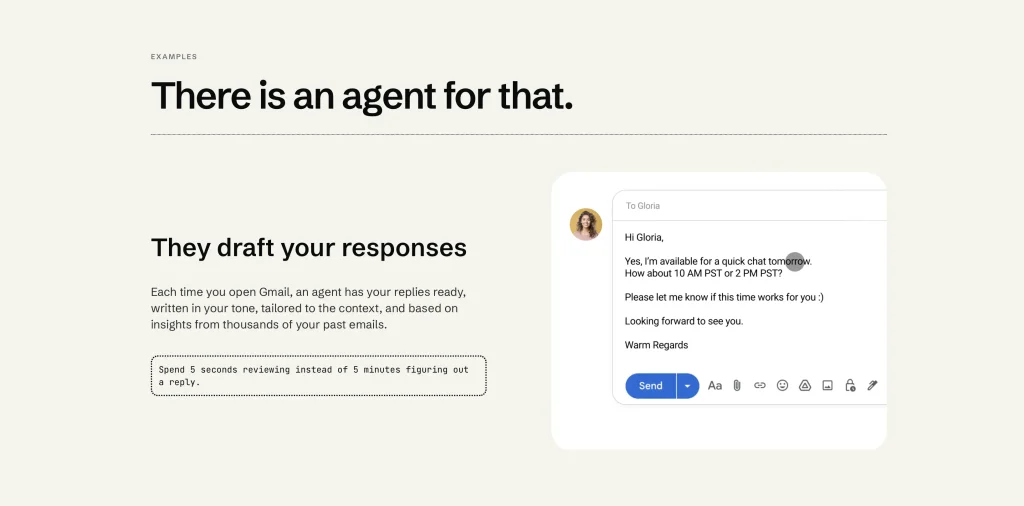
Higher plans add more specialised AI. Growth includes an AI automation architect and sentiment analysis; Pro adds AI dispatching assistants that route conversations across a team.
2. Shared inboxes and shared labels
Shared inboxes let a team manage an address like support@ together inside Gmail. Shared labels do the same for any Gmail label, so every email under that label appears for everyone it’s shared with.
The practical benefit is no more forwarding and CC chains. Everyone sees the same thread and its status. Both are unlimited from the Growth plan up; the Meli plan has none.
3. Assignments, notes and collision detection
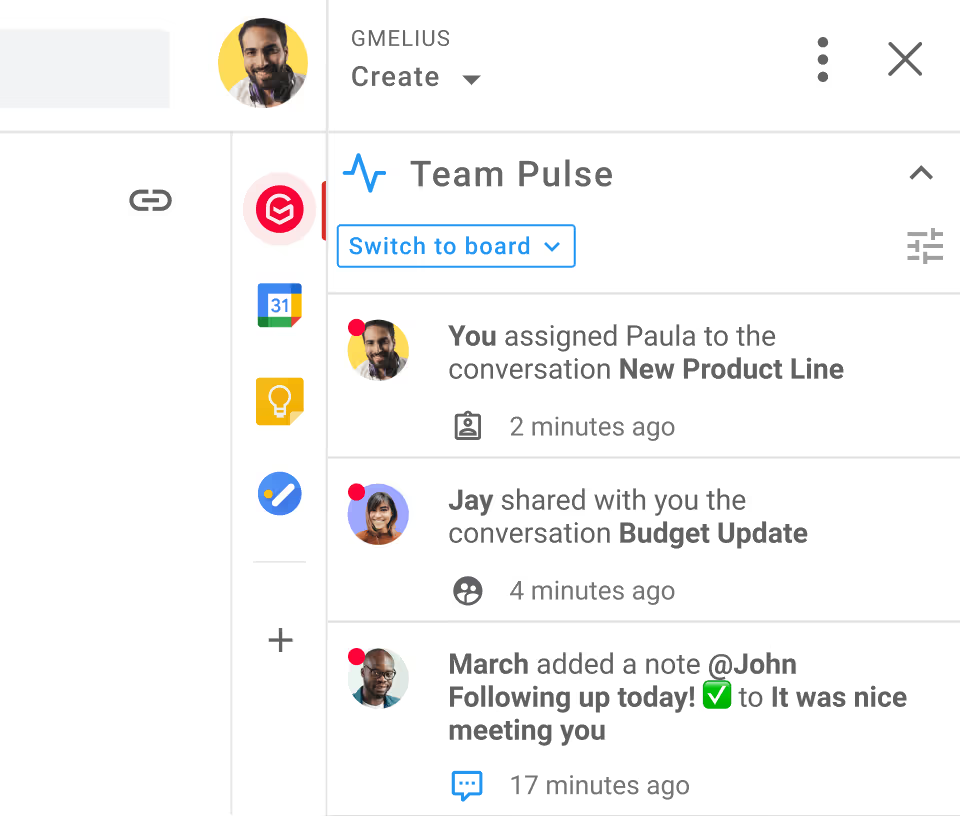
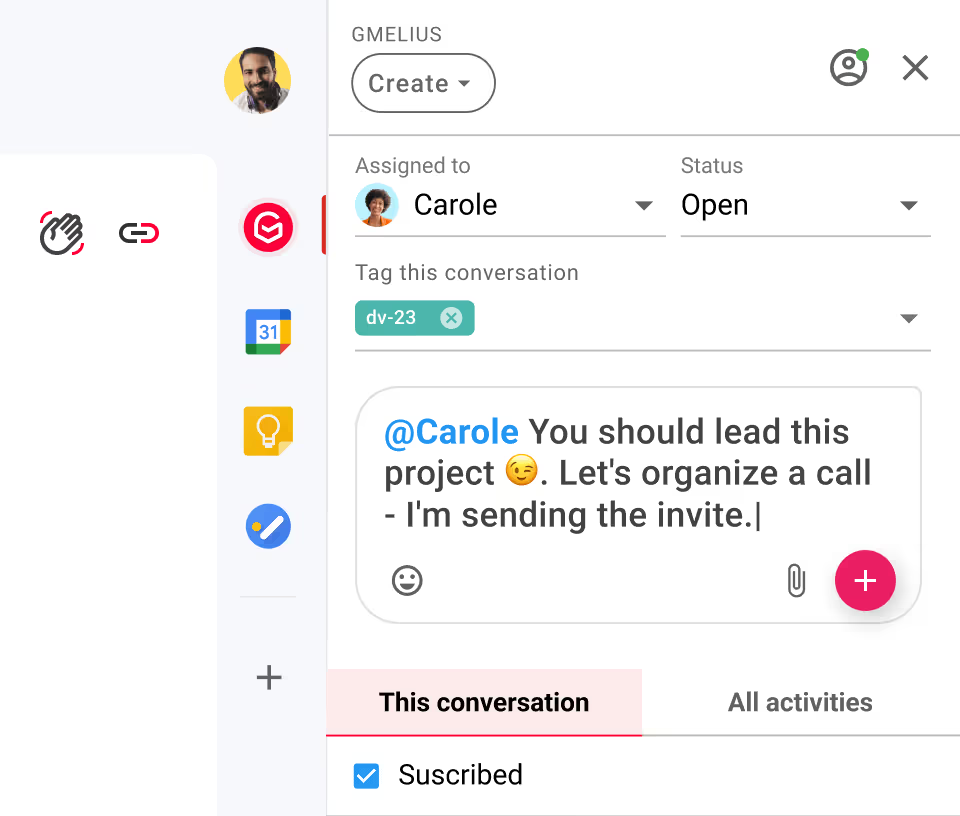
You can assign any email to a teammate, leave internal notes on a thread and @mention colleagues, all without the customer seeing it. Collision detection warns you when someone else is already replying.
Assignments can also run automatically: round-robin, load-balanced or rule-based, so new emails are routed without a manager triaging by hand.
4. Shared drafts and templates
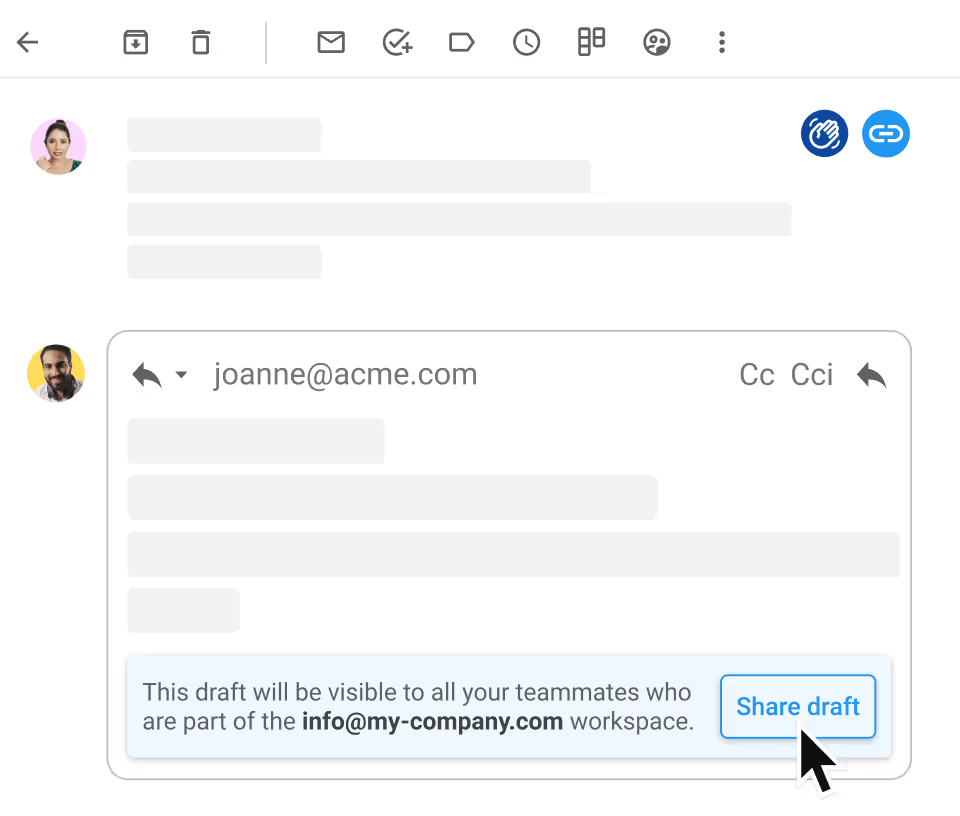
Teams can review and edit a draft together before it’s sent, which helps for sensitive replies or junior staff. Shared templates keep responses consistent and support attachments.
5. Kanban boards and custom views
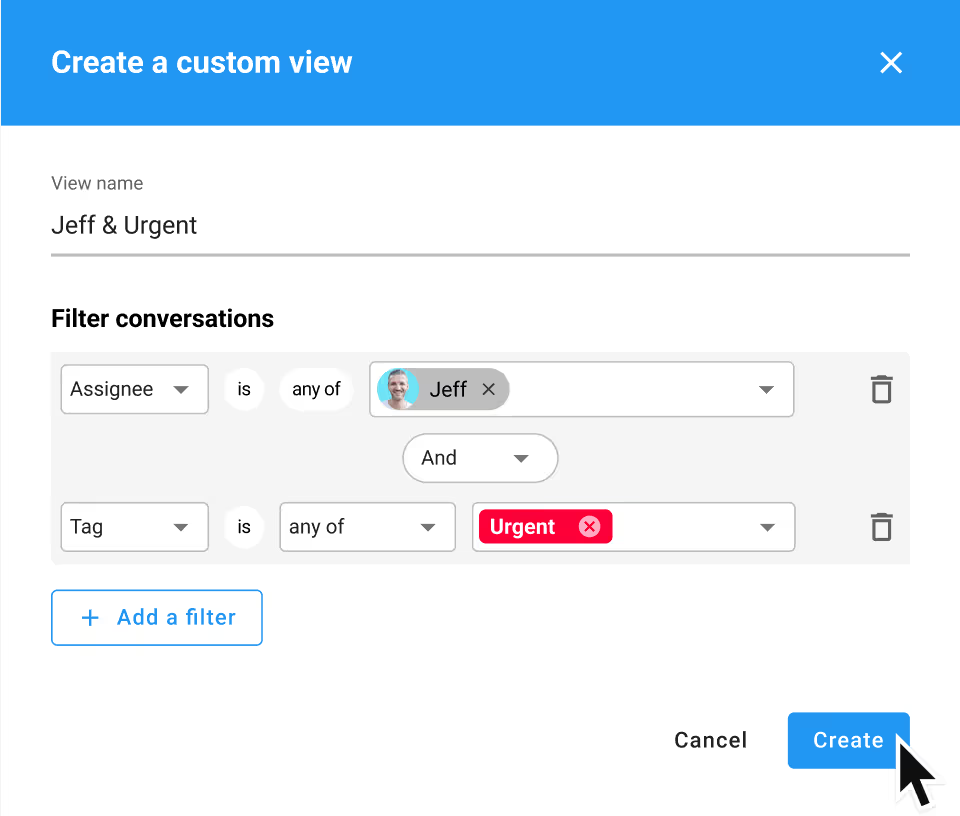
Gmelius can show email as cards on a Kanban board, so a shared inbox works like a simple project tracker. Custom views filter threads by assignee, status or tag.
This is useful for lightweight workflows like onboarding or order handling. It isn’t a replacement for a real project management tool.
6. Automation rules and SLAs
Rules can auto-reply, tag, archive and assign emails based on content or sender. Growth and Pro add response-time SLA rules and ready-made automation templates.
Rule executions are capped: 10,000 a month on Growth and 100,000 on Pro. The Meli plan has no rule executions at all.
7. Analytics
Reports cover conversations, team performance, productivity, SLA response times and tags. The reporting window is 3 months on Growth and 12 months on Pro; CSV exports and business hours need Pro.
8. Integrations and apps
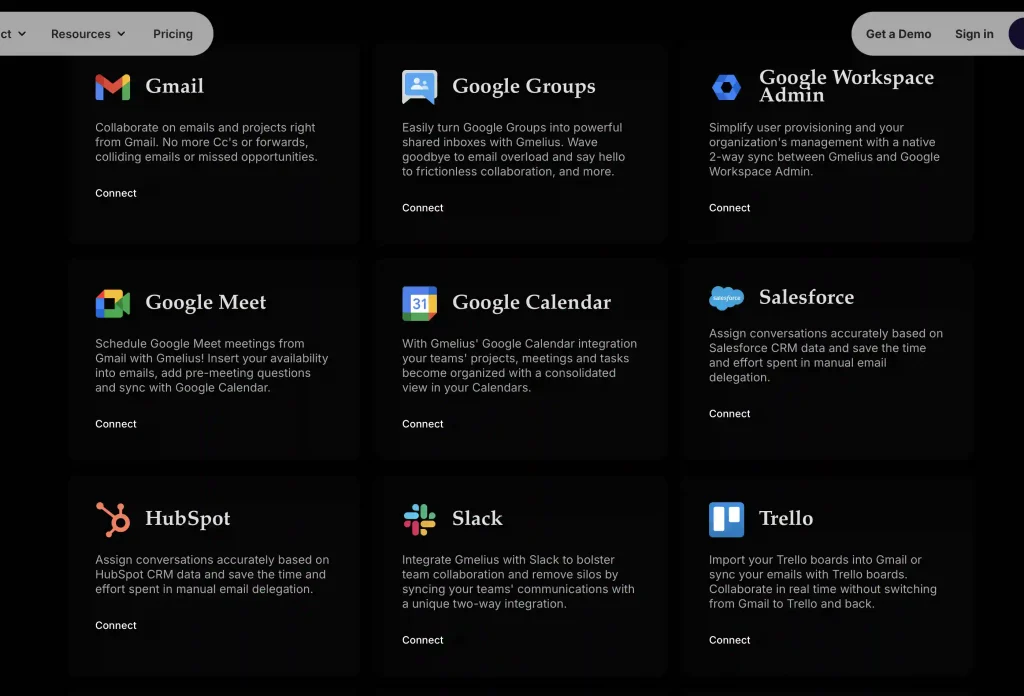
Growth includes Slack, Zapier, Make, Relay.app, Google Groups and the Gmelius API. HubSpot, Salesforce and webhooks require Pro.
Gmelius runs as a Gmail browser extension, a web app and mobile apps for iOS and Android. It’s SOC 2 Type II certified and GDPR ready on every plan.
What’s it missing?
- Outlook support. Gmelius works only with Gmail and Google Workspace accounts.
- Outbound prospecting. There’s no lead sourcing, LinkedIn outreach or high-volume sequencing.
Gmelius pricing
Gmelius costs $19 to $40 per user per month on annual billing, plus a custom Enterprise plan. For a team, Growth at $25 is the real starting point, because the $19 Meli plan has no shared inbox.
| Plan | Annual billing | Monthly billing | Conversations/month | Users | What it adds |
|---|---|---|---|---|---|
| Meli | $19/user/mo | $21/user/mo | Up to 5,000 | Up to 5 | AI assistant only: drafts, sorting, meetings, follow-ups |
| Growth | $25/user/mo | $33/user/mo | Up to 10,000 | Up to 50 | Shared inboxes and labels, assignments, rules, templates, Slack/Zapier/API, 3-month reports |
| Pro | $40/user/mo | $50/user/mo | Up to 100,000 | Unlimited | AI dispatching, HubSpot/Salesforce, webhooks, permissions, 12-month reports, Gmail and Drive backups |
| Enterprise | Custom (50-user minimum) | Custom | Unlimited | Unlimited | Bespoke AI assistants, custom integrations, SCIM, HIPAA BAA, dedicated success manager |
Source: Gmelius pricing page, checked October 2026.
Pricing details to know before you buy
- Conversation caps. Each plan limits how many email threads it handles per month. A busy shared inbox can force an upgrade even if your team size doesn’t change.
- One plan per team. All members must be on the same plan, so you can’t put light users on Meli and heavy users on Pro.
- The trial is Growth only. The 7-day trial gives you Growth; you have to email sales to trial Pro.
- Annual discount varies. Annual billing saves about 10% on Meli but about 24% on Growth.
- Non-profit discount. Non-profits and educational institutions get 30% off for 5–19 users and 50% off for 20+ users on annual Growth, Pro and Enterprise plans.
What a team actually pays
A 10-person team on Growth pays $250 a month on annual billing, or $330 on monthly billing. On Pro, the same team pays $400 or $500 a month.
That’s comparable to other Gmail shared inbox tools at the Growth tier, but per-seat pricing adds up quickly once occasional users also need access.
Gmelius pros and cons
Gmelius’s biggest advantage is that teams never leave Gmail. Its biggest drawbacks are Gmail lock-in, usage caps and occasional extension performance issues.
| Pros | Cons |
|---|---|
| Works inside Gmail, so there’s almost no change in habits | Gmail and Google Workspace only; no Outlook |
| AI assistant included on every plan | Monthly conversation and rule caps on all plans below Enterprise |
| Shared inboxes, labels, notes and assignments cover most team email needs | Meli plan has no team features, so Growth is the real entry price |
| Automatic assignment (round-robin, load-balanced) and SLA rules | CRM integrations and webhooks are locked to Pro |
| SOC 2 Type II and GDPR on every plan | Many features can feel overwhelming at first |
| Web, iOS and Android apps alongside the extension | Users report slowdowns and glitches at higher volume |
What users say on G2 and Capterra
Gmelius rates 4.4 out of 5 from 776 reviews on G2 and 4.7 out of 5 from 43 reviews on Capterra. About 81% of G2 reviewers come from small businesses.
What users like:
- How easy it is to assign emails and add notes so nothing gets missed
- Shared templates and email tracking for consistent, coordinated replies
- Value for money compared with tools that offer fewer features at a similar price
- Using it to coordinate an inbox between an executive and an assistant
What users complain about:
- Slowness with bulk actions and as volume grows, a pattern Drag’s review also highlights
- The Chrome extension occasionally not loading or needing re-authorisation
- Open-tracking notifications that sometimes fire falsely
- A feature set that can feel overwhelming for new users
Some Capterra reviews date back to 2019, before Gmelius’s AI features and mobile apps existed. Weight recent G2 reviews more heavily.
Gmelius alternatives
If you need a Gmail shared inbox, Hiver and Drag are Gmelius’s closest alternatives. If you need to support Outlook too, look at Front or Missive.
| Tool | Best for | G2 rating | Starting price |
|---|---|---|---|
| Hiver | Gmail teams wanting the most direct swap, with stronger reporting | 4.6 (1,302) | $25/user/mo (Growth) |
| Drag | Small Gmail teams wanting Kanban-style inboxes for less | 4.5 (261) | From $12/seat |
| Front | Larger teams on mixed email providers and channels | 4.7 (2,530) | $25/seat/mo (Starter) |
| Missive | Small teams on Gmail and Outlook | Not checked | $14/user/mo |
| Boomerang | Individuals wanting scheduling and reminders, not team features | 4.6 (424) | [VERIFY] |
Ratings from G2, November 2026. Prices from each vendor’s published plans; verify before publishing.
Need outbound, not an AI email assistant? Where Expandi fits
Gmelius manages email that comes to you. It doesn’t help you start conversations with new prospects, which is where many sales teams first look for a tool like it.
If your goal is pipeline, you need an outreach tool. Expandi runs signal-based outreach on LinkedIn and email: it spots warm moments like profile views and post engagement, then runs personalised sequences inside safe daily limits.
The two can sit side by side. Replies from LinkedIn prospects land in Expandi’s inbox, while email outreach and lead nurture sequences stays in Gmail with Gmelius.
With Expandi MCP, you can also run automated outreach from Claude or ChatGPT: build lists, draft campaigns and prepare replies, with you approving what goes out.
FAQs
No. Gmelius has no free plan, but every new account gets a 7-day trial of the Growth plan, and the trial doesn’t require a credit card.
No. Gmelius users must have a Gmail or Google Workspace account. Teams with any Outlook or Microsoft 365 users need a multi-provider tool such as Front or Missive.
Gmelius is SOC 2 Type II certified, GDPR and CCPA ready, and monitored by Vanta on every plan. Enterprise customers can sign a HIPAA Business Associate Agreement.
It isn’t designed for it. Gmelius manages shared and incoming email; cold outreach at volume needs a dedicated outreach tool with deliverability controls.
Gmelius doesn’t publish an overage rate. Check your monthly thread volume against the plan caps before buying, and expect to move up a plan if you exceed them.
Yes, as long as they have a Gmail or Google Workspace account. Pro and Enterprise let you group users by client or department.
Final verdict: is Gmelius worth it?
Gmelius is worth it for Gmail-first teams that share inboxes and want AI help without changing tools. Growth at $25 per user covers what most small teams need.
Skip it if anyone on your team uses Outlook, if your email volume would push you past the caps, or if you’re actually looking for an outbound sales tool.
For LinkedIn and email prospecting, start a free 7-day Expandi trial instead.






You’ve made it all the way down here, take the final step