9 AI Tools Your GTM Strategy Needs in 2026

Key Takeaways
- Whether a tool is AI-native or AI-bolted-on matters more than its feature count. Expandi’s own outreach data found AI-hyperpersonalized messages accepted 12% lower than the same accounts’ human-written templates, which is a case for AI-as-drafting-tool, not AI-writes-everything.
- Pricing ranges from free (Fathom, Zapier’s entry tier) to enterprise-only quote-based contracts (Gong, Common Room). Match the spend model to your stage before the feature list.
- Start with your single biggest bottleneck. A stack of nine half-adopted tools performs worse than two your team actually runs.
9 AI Tools Your GTM Strategy Needs in 2026


The best AI tools for your GTM strategy tend to do 4 jobs: outbound engagement, data enrichment, revenue intelligence, and pipeline execution. Most teams need one or two per category, not the full stack.
Buying all nine tools is how budgets get burned and tools get abandoned. The harder question is which two or three actually close the gap between your current motion and the one you want.
Our shortlist is deliberately tight, and it’s organized so you can find the tools that will solve your biggest bottlenecks and skip the rest.
Best AI Tools to Add To Your GTM Strategy At a Glance
| Tool | Category | Best for | Starting price (as of Aug 2026) |
|---|---|---|---|
| Expandi | Outbound & relationship-building | LinkedIn-led outbound teams and agencies | See site |
| Smartlead | Outbound & relationship-building | High-volume cold email | $39/mo |
| Clay | Data enrichment & intent | Custom enrichment waterfalls | $185/mo (Launch) |
| Warmly | Data enrichment & intent | Website visitor de-anonymization | Free tier; paid annual contract |
| Gong | Revenue intelligence | Conversation analysis for larger teams | Custom (quote-only) |
| Fathom | Revenue intelligence | Solo reps and small teams | Free; ~$16–20/user/mo |
| HockeyStack | Pipeline & attribution | B2B marketing attribution | ~$1,399/mo (Growth) |
| Common Room | Pipeline & attribution | Signal aggregation | Custom (quote-only) |
| Zapier | RevOps automation | Connecting your stack without engineering | Free; $19.99/mo (annual) |
Disclaimer: Pricing reflects publicly listed or third-party-reported starting figures as of August 2026 and changes often. Confirm current pricing on each vendor’s site.
Which AI Tools Can Help You Scale Your GTM Strategy in 2026?
1. Expandi
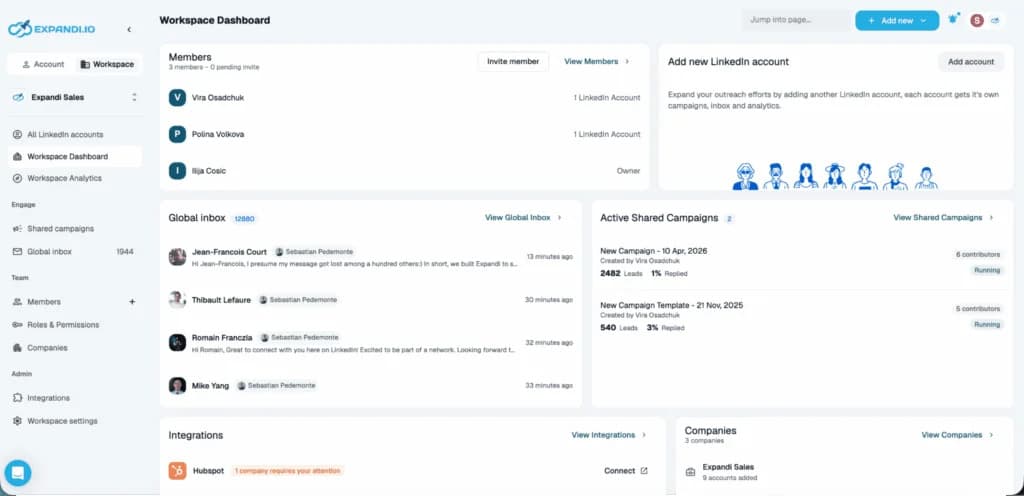
Expandi runs LinkedIn-led outbound through smart sequences that adapt to how each prospect behaves, combining LinkedIn steps with email follow-ups in one flow. It’s built for teams that want relationship-building at the front of the funnel rather than volume-first cold email.
Top features
- Smart sequences combining up to 11 actions for 9 “IF” conditions (+ custom ones), branching on prospect behavior
- Consented prospect data collection from LinkedIn groups, events, and post engagement for precise targeting
- Email follow-ups layered into the same sequence for omnichannel outreach
- Webhook delivery of replies and hot leads to Slack, a CRM, or any connected tool
- Image and GIF personalization in messages (recipient photo, company logo) via Sendspark and Hyperise integrations
- A/B testing of campaign sequences to compare openers and message variants
- Single-dashboard management of multiple LinkedIn accounts with roles, permissions, and a shared analytics view, built for agencies running many clients
Best for: agencies and sales teams making LinkedIn the primary channel for lead generation, with email as support.
Integrations: Native CRM integrations with HubSpot, Pipedrive, and Salesforce, syncing both contacts and full LinkedIn activity (connection requests, replies, messages, profile visits) to the CRM timeline, not just contact records. Also Sendspark and Hyperise for image/video/GIF personalization, Slack and other tools via webhooks, and Zapier for broader workflows.
Read more on Expandi CRM integrations.
Pricing: 7-day free trial; see site for current plan pricing.
How Stormbreaker went from $0 to $1 million ARR in just 2 years
Stormbreaker, a Texas-based advertising agency, built its LinkedIn lead generation on Expandi from day one. Targeting members off LinkedIn posts, groups, and events — then following up with personalized sequences — took the agency past $500k ARR in its first year and into $60k–80k MRR, plus client work with sales teams at the New Jersey Devils, Chicago Bulls, Indiana Pacers, and Golden State Warriors.
2. Smartlead
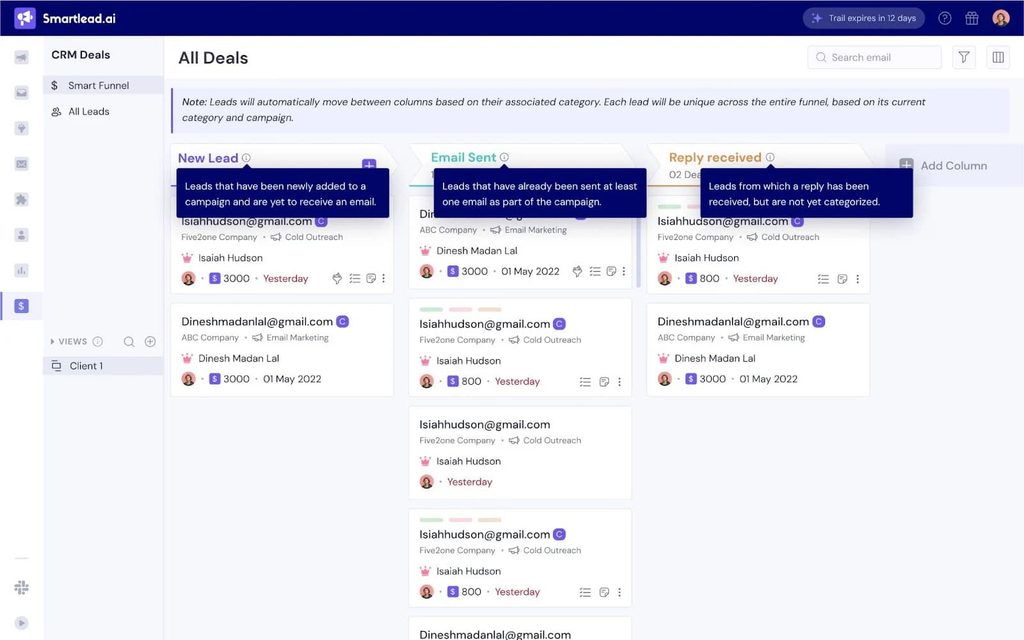
Smartlead is a high-volume cold email platform that includes unlimited mailboxes and warmup on every plan, priced by sending volume rather than per seat. It sits alongside a LinkedIn-led tool rather than replacing one, for teams where email carries the outbound load.
Top features:
- Unlimited sending mailboxes and warmup on all tiers
- Inbox rotation for deliverability
- Reply management
- AI campaign assistance.
Best for: email-first outbound teams and agencies sending across many mailboxes, where deliverability is the main constraint.
Integrations: CRM and workflow integrations (API access from the Pro tier; some connections via Zapier/Make).
Pricing: Base $39/mo, Pro $94/mo, Unlimited Smart $174/mo, Unlimited Prime $379/mo (annual billing ~17% less), as of Aug 2026.
3. Clay
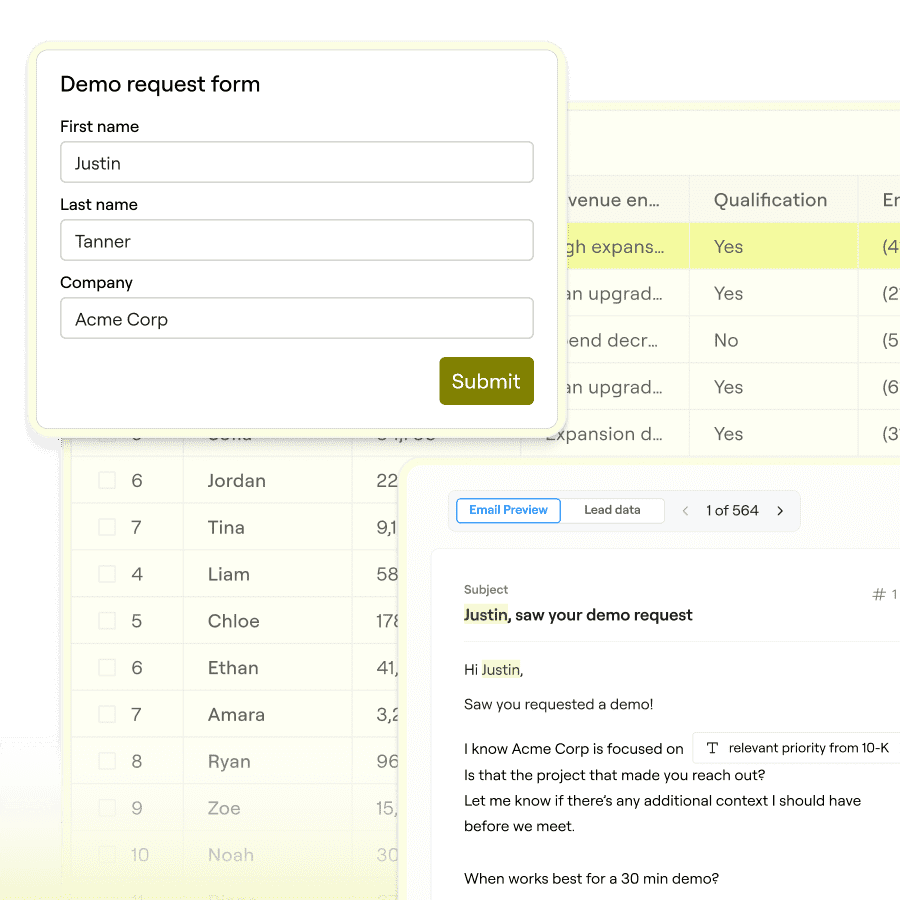
Clay pulls prospect data from 150+ providers in a waterfall, falling through to the next source when one misses, and its AI research agent can read a page or profile and return structured fields you define. It’s the enrichment layer for teams that want to build custom logic rather than accept a fixed schema.
Top features:
- Waterfall enrichment across many providers
- AI research agent (Claygent)
- Custom scoring and segmentation workflows
- CRM and outreach-tool integrations.
Best for: RevOps and outbound teams building bespoke enrichment and data pipelines.
Integrations: CRMs, HTTP API, and outreach tools (moved to the Growth tier in the March 2026 restructure).
Pricing: Launch $185/mo, Growth $495/mo (annual billing lower; legacy Starter/Explorer/Pro tiers retired for new customers March 2026), Enterprise custom, as of Aug 2026.
4. Warmly
Warmly identifies the companies and people visiting your website and matches that against intent signals, so your team can reach out while interest is live. It’s for teams that already get meaningful traffic and want to convert anonymous visits into named accounts.

Top features:
- Person- and company-level website de-anonymization
- Intent-signal tracking
- CRM integration
- Contact database access on higher tiers.
Best for: teams with real inbound traffic that want to act on it before it goes cold.
Integrations: CRM and outreach tools; RB2B/Vector data on the data agent tier.
Pricing: free tier (up to 500 visitors/mo); paid plans are annual and component-based (reported entry around $10,000/yr for the data agent), as of Aug 2026. Confirm current pricing on Warmly’s site.
5. Gong
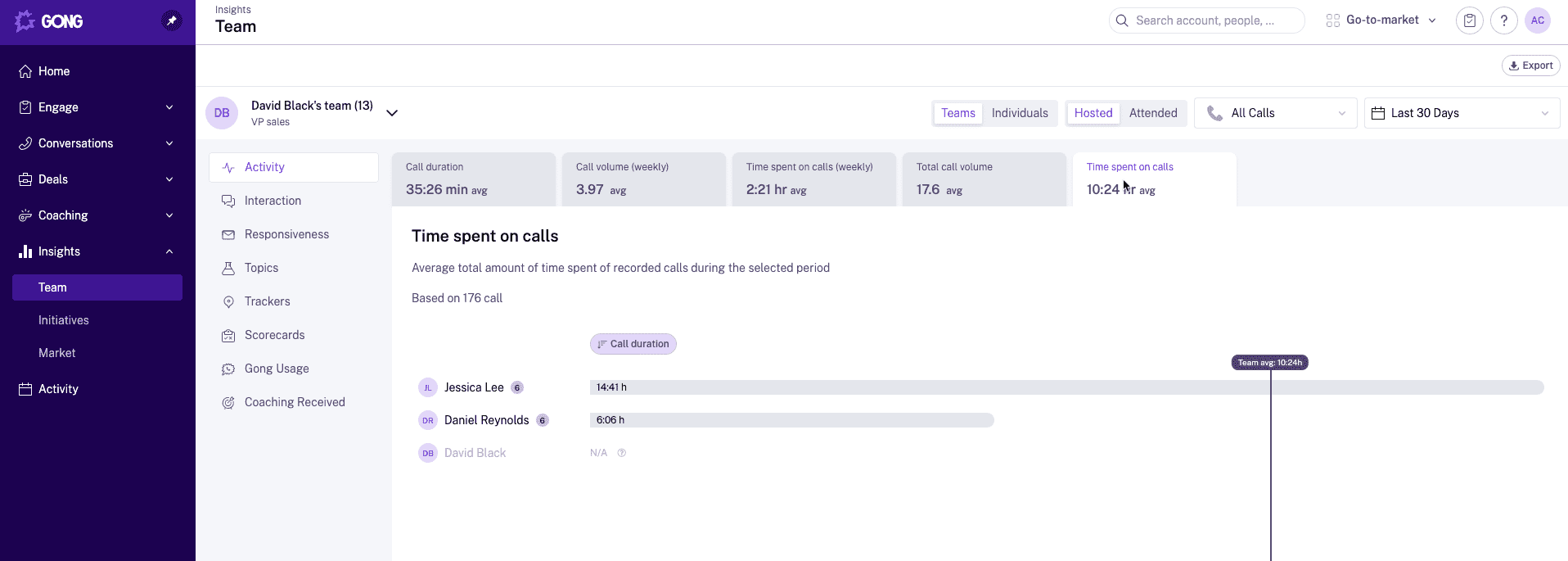
Gong records and analyzes sales calls, surfacing deal risk, competitor mentions, and coaching moments across a team’s conversations. It’s the category leader for revenue intelligence at scale, and priced accordingly.
Top features:
- Call recording and transcription
- AI deal and risk insights
- Forecasting and coaching modules (add-ons)
- CRM integration.
Best for: sales teams large enough that no manager can sit in on every call.
Integrations: major CRMs, dialers, and conferencing tools.
Pricing: custom, quote-only. Third-party reports put Foundations near $1,400–1,600/user/yr plus a platform fee; no free tier. Confirm directly with Gong.
6. Fathom
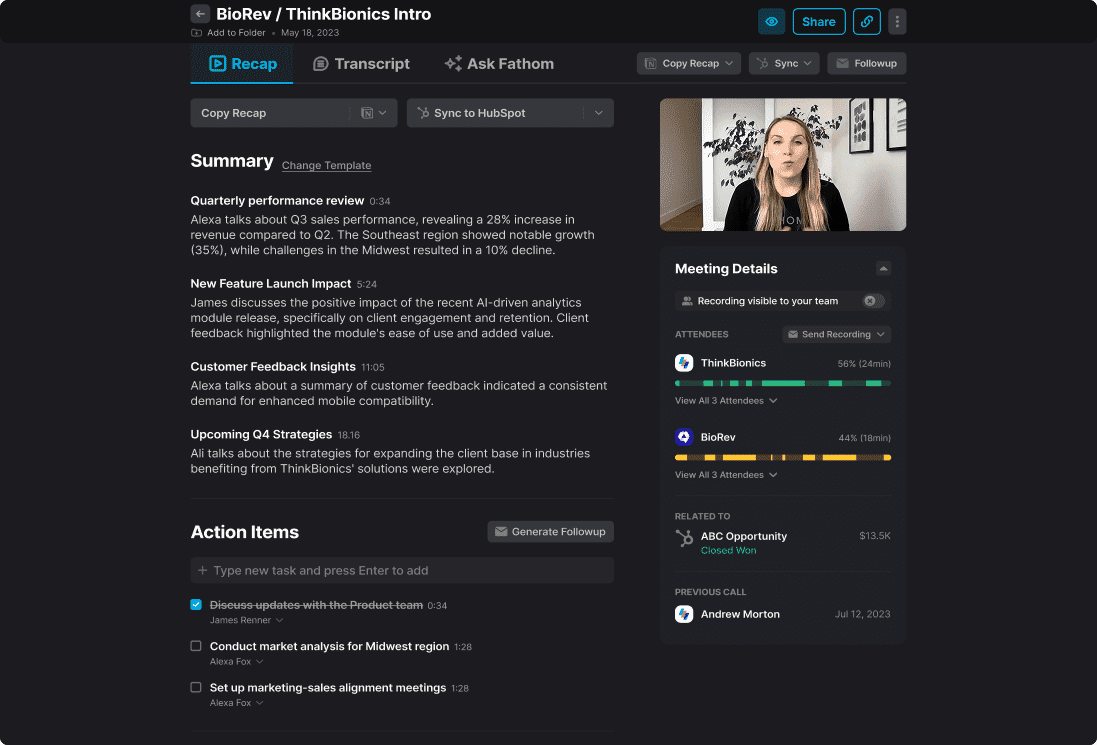
Fathom transcribes and summarizes calls into notes and action items, with a genuinely usable free tier. It’s the lightweight alternative to a full revenue-intelligence platform, aimed at individuals and small teams.
Top features:
- Unlimited recording and transcription
- AI summaries and action items
- CRM and Slack sync
- Ask Fathom conversational search on paid tiers.
Best for: solo reps and lean teams that want reliable call notes without enterprise setup or cost.
Integrations: Zoom, Google Meet, Microsoft Teams; HubSpot, Slack, Zapier.
Pricing: free plan; paid roughly $16–20/user/mo depending on plan and billing, as of Aug 2026.
7. HockeyStack
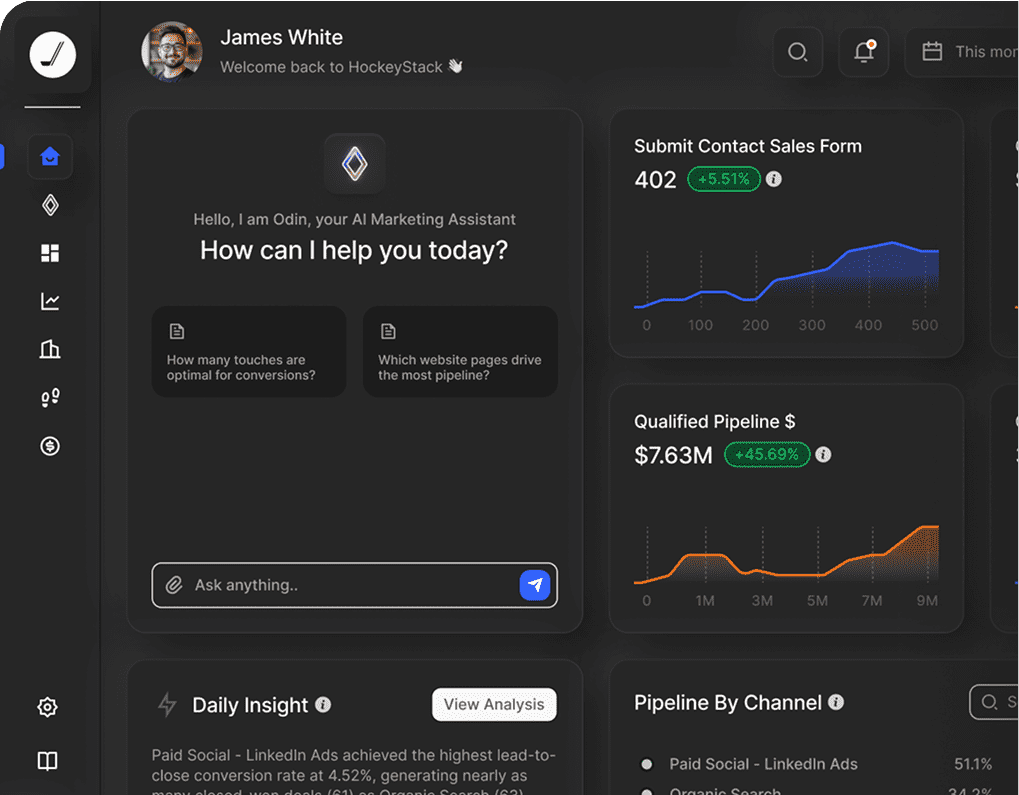
HockeyStack ties marketing touches to pipeline and revenue, so you can see which campaigns actually influence closed deals rather than guessing from last click. It’s increasingly a broader GTM analytics platform, not just attribution.
Top features:
- Multi-touch attribution across a long sales cycle
- Pipeline and revenue analytics
- Journey tracking
- AI analysis layer.
Best for: B2B marketing teams needing attribution across long, multi-touch cycles.
Integrations: CRMs, ad platforms, and marketing tools.
Pricing: not published; Growth plan reported starting around $1,399/mo, as of Aug 2026. Confirm with HockeyStack.
8. Common Room
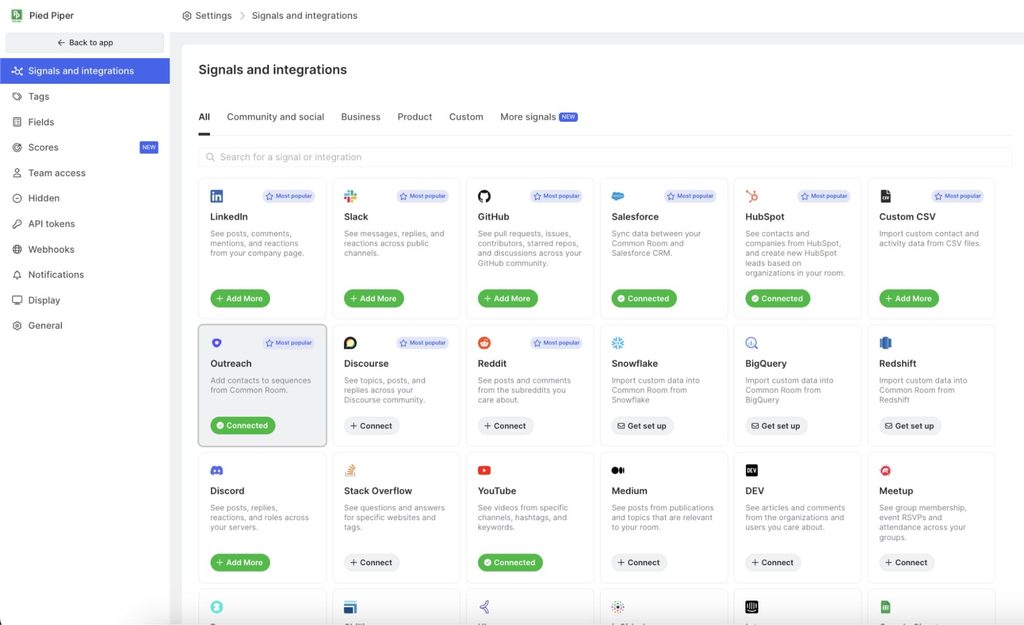
Common Room aggregates buying signals from community, product, social, and website activity into one view, resolving them to people so scattered intent becomes a prioritized list. It fits signal-led and product-led motions.
Top features:
- Signal aggregation across many channels
- Person360 identity resolution
- Prospecting and scoring
- Automated workflows and alerts.
Best for: product-led and community-led teams whose pipeline originates in signals, not lists.
Integrations: CRMs, community platforms, product and data sources; MCP server across plans.
Pricing: custom, quote-only; reported entry (Essential) around $2,100–2,500/mo billed annually.
9. Zapier
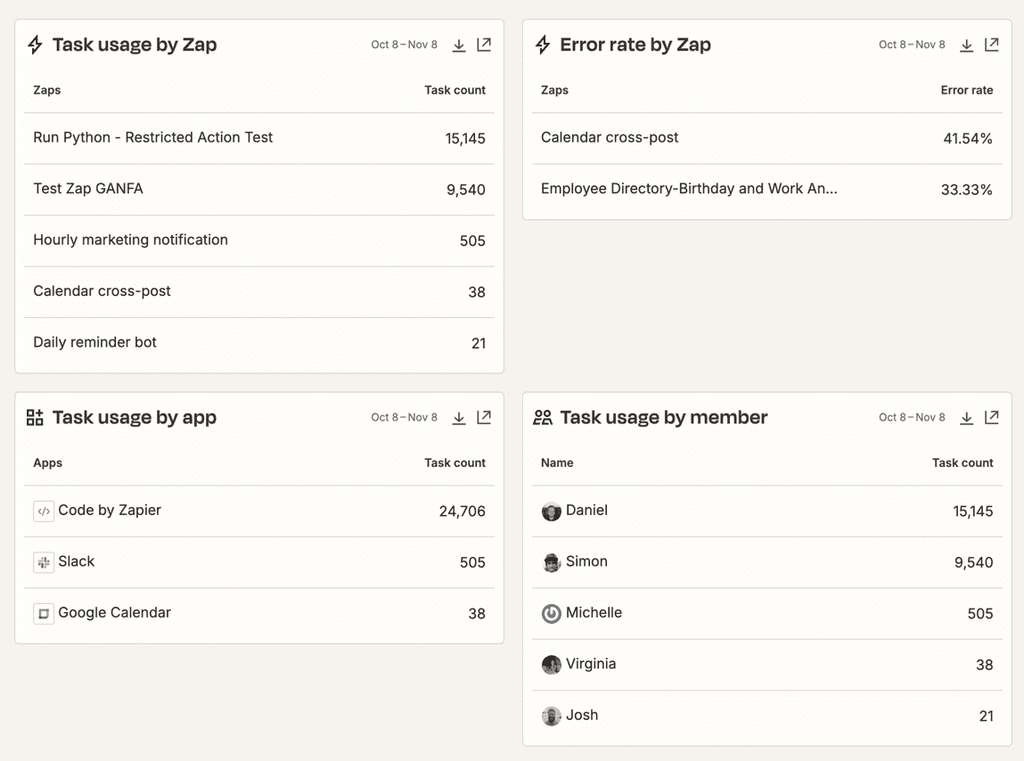
Zapier connects the other tools without custom engineering, routing leads, syncing records, and triggering actions when events fire across your stack. Its AI features can now build and adjust workflows from a plain-language description.
Top features:
- 9,000+ app integrations
- Multi-step workflows
- AI-assisted Zap building
- Tables and Forms.
Best for: teams that want their GTM tools talking to each other without engineering time.
Integrations: effectively the whole category.
Pricing: free (100 tasks/mo); Professional from $19.99/mo (annual) or $29.99/mo; Team $69/mo (annual); as of Aug 2026.
AI-native vs. AI-bolted-on: what actually matters when choosing
The split worth paying attention to isn’t feature count. It’s whether the tool was built around AI reasoning from the start or had an AI tab added to a legacy product later.
AI-native tools treat the model as the engine: enrichment decisions, message variants, and next-best-actions run through it by default. AI-bolted-on tools keep their original workflow and add a generative feature on the side, often a “write with AI” button sitting apart from the core product.
Neither is automatically better. A bolted-on feature inside a tool your team already lives in can beat a native tool nobody adopts.
There’s a data point worth holding onto here, because “AI-native” gets used as a synonym for “better outcomes” and the evidence is more specific than that.
In our State of LinkedIn Outreach H2 2026 analysis, AI-hyperpersonalized messages were about 12% lower than the same accounts’ own human-written templates, with reply rate flat.
The finding is within-account and directional, not a verdict on AI in outreach. What it argues for is a specific posture: use AI to draft fast, then edit with what you know about the prospect.
When you evaluate a tool’s AI, look at one thing: whether it hands you a better starting draft to edit, or tries to remove you from the loop entirely.
For more on where generative AI helps in outbound, see our guide to using ChatGPT for sales and learn why Claude may not be enough for successful outreach.
Is your GTM strategy ready for these tools?
Before you add anything, run through this. If you answer no to more than one, fix the foundation first, because AI tools amplify whatever data and process you already have, including the gaps.
- Is your CRM data clean enough to trust for routing and reporting?
- Do you have a documented ICP the tools can filter and score against?
- Does someone own the handoffs between tools, or will leads fall through the cracks?
- Can you measure what a new tool changes, or will its impact be invisible?
What to prioritize when building your GTM tech stack
Work through these in order before adding any tool. Each is a yes/no gate, and if you can’t answer clearly, that’s where to stop and fix things first.
1. Have you named the one bottleneck?
☐ Pinpoint the single place pipeline leaks — cold reply rates, unknown web traffic, calls no one reviews, or campaigns you can’t attribute.
Buy for that one thing first. One tool adopted beats three bought.
2. Is the foundation under the tool solid?
☐ CRM data clean enough to trust
☐ ICP documented and specific
Enrichment, attribution, and signal tools all sit on top of these. Without them, a tool amplifies the mess instead of fixing it.
3. Does the spend model fit your stage?
☐ Testing a new motion → self-serve, monthly, cancellable
☐ Proven motion at scale → annual or platform commitment
Some tools here start free; others are quote-only, five-figure annual contracts. Don’t sign a platform deal to test something a monthly tool could tell you.
4. Can you measure what it changes?
☐ Decide the metric first: reply rate, meetings booked, influenced pipeline
If you can’t see what the tool moved, you can’t tell whether it earned its cost. Pick the number before you buy, not after.
Frequently Asked Questions
AI GTM tools apply machine learning to go-to-market work: enriching prospect data, personalizing outreach, analyzing sales calls, and attributing pipeline to the activities that created it. They span outbound, data, revenue intelligence, and pipeline execution.
AI-native tools are built around model reasoning from the start, so AI drives the core workflow. AI-bolted-on tools add a generative feature to an existing product, usually as a separate option. The more useful test is whether a tool’s AI gives you a better starting draft to edit, or tries to take you out of the loop — Expandi’s outreach data found AI-written messages underperformed human-edited ones on acceptance.
Teams often get further starting with point solutions that fix a specific bottleneck than buying a platform that promises everything. Add tools as gaps appear, and consolidate onto a platform only once you know which jobs you run daily.
Choose the right AI tools to support your GTM strategy
Start with your biggest bottleneck, not the longest tool list. If outbound reply rates are the problem, the outbound and enrichment categories earn attention first. If you can’t tell which campaigns drive revenue, attribution comes before anything else.
Pick one tool that addresses the constraint, get it adopted, then move to the next gap. A stack of nine half-used tools performs worse than two your team actually runs.
Ready to build your reliable GTM toolkit? Get Expandi’s 7-day free trial today.





You’ve made it all the way down here, take the final step