B2B Sales Outsourcing: Pros, Cons, and How to Decide

Key Takeaways
- B2B sales outsourcing delegates parts of your sales process – from lead generation to full SDR functions – to an external provider or tool.
- It offers speed and savings, replacing the $83,732 average rep salary plus overhead with trained reps/AI systems who deliver in weeks.
- Drawbacks include reduced execution control, limited reporting transparency, and third parties speaking for your brand.
- While ideal for market tests, demand spikes, and early pipeline growth, it struggles with complex products, long sales cycles, and trust-based brands.
- Expandi offers an in-house alternative with automated LinkedIn and email outreach averaging 28.5% connection acceptance across 13.2 million requests for $99/seat/month.
B2B Sales Outsourcing: Pros, Cons, and How to Decide


When growth targets rise and your internal pipeline stagnates, the pressure to scale becomes immediate. Building a high-performing sales engine from scratch is notoriously expensive and time-consuming. It’s no wonder many companies view B2B sales outsourcing as a convenient shortcut to reliable revenue. But shifting your outreach to an external provider isn’t just a budgetary choice – it’s a major strategic decision.
B2B sales outsourcing trades control for speed: an external team starts working your pipeline within weeks, and in exchange, another company now speaks for your brand.
Having built the outreach infrastructure for 15,000+ users, we’ve witnessed the real-world outcomes of outsourcing from both sides of the table. We support 2,500 lead generation agencies (the exact providers companies hire) while simultaneously powering the in-house sales teams of thousands of growing businesses. This unique vantage point has given us a first-hand view of where outsourcing consistently delivers, and where it frequently fails.
This guide lays out the pros and cons of each route so you can make the call with open eyes.
Here’s what we’ll cover:
- The 5 types of B2B sales outsourcing and what each one hands over.
- The pros and cons, summarized in one table and argued in full.
- A four-step framework for making the decision.
- What keeping sales in-house looks like when automation does the heavy lifting.
The 5 types of B2B sales outsourcing
B2B sales outsourcing means hiring an external company to run part or all of your sales process, from finding prospects to closing deals.
Providers package the work in five common forms, and the type you pick decides how much of the customer relationship leaves your building.
These are the five types of B2B sales outsourcing providers offer:
1. Lead generation outsourcing
A provider builds targeted lists and delivers qualified leads. Your team still runs every conversation. The provider fills the top of the funnel.
2. Appointment setting
The provider contacts prospects, handles the follow-ups, and books meetings straight into your closers’ calendars.
3. Inside sales outsourcing
Remote reps run the full sales cycle on your behalf, a fit for SaaS and other transactional products with shorter cycles.
4. Field sales outsourcing
Contracted reps give you in-person coverage in regions where you have no local presence.
5. Outbound sales outsourcing
A dedicated external SDR team prospects, qualifies, and hands opportunities to your account executives.
One distinction worth keeping in mind before you shortlist anyone: a sales staffing agency recruits reps who join your payroll and follow your process, while an outsourcing provider brings its own team, tools, and playbook.
The first grows your sales org. The second replaces part of it.
B2B sales outsourcing pros and cons
| What you gain | What you give up |
|---|---|
| One provider fee replaces salaries, benefits, and tooling | Retainers add up, and switching providers mid-contract is disruptive |
| Trained reps start producing in weeks | Onboarding a provider on your product and ICP takes real internal work |
| Specialized talent, playbooks, and sales tech included | The provider runs its own methods, so you lose control over execution |
| Capacity scales up or down with demand | Your account competes with the provider’s other clients for attention |
| Your internal team stays focused on product and customers | An outsider speaks for your brand in every conversation |
The pros of outsourcing B2B sales
Outsourcing B2B sales typically hinges on five strategic pillars: cost, speed, expertise, flexible capacity, and focus. While these benefits are significant, it is equally important to understand where their effectiveness reaches its limit.
1. B2B sales outsourcing costs less than an in-house sales team
Sales headcount is expensive before a single deal closes.
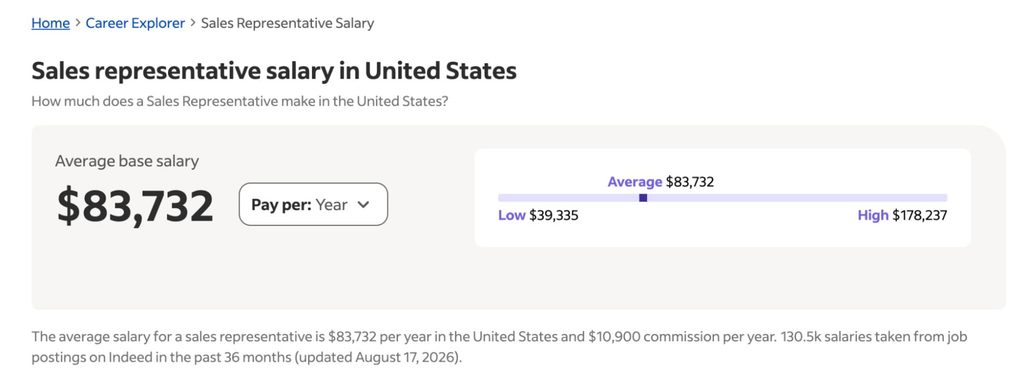
Per Indeed salary data, the average US sales representative earns $83,732 a year plus $10,900 in commission — before benefits, sales tools, data subscriptions, and management time land on top.
An outsourced provider folds all of that into one fee, which turns a steep fixed cost into a predictable line item.
The same math applies at the top of the funnel.
Our breakdown of how much lead generation costs shows where in-house budgets go, and it’s the benchmark to hold any provider quote against.
2. Speed to pipeline
Hiring an in-house rep means writing the role, interviewing, making the hire, and waiting out a ramp period measured in months.
A provider shows up with trained reps, a working tech stack, and a tested cadence, so the first booked meetings arrive in weeks. For a company entering a new market or racing a funding milestone, that gap is the whole argument.
3. Specialized expertise and tooling
Deloitte’s 2024 Global Outsourcing Survey, drawn from more than 500 executives, found that skilled talent and agility have joined cost reduction as key drivers for outsourcing.
Companies buy capability, and a sales provider is a package of it: reps who work your industry daily, managers who have run the motion for years, and a tested outbound playbook.
The tooling comes bundled too. A provider arrives with sales engagement platforms already configured, which spares you the evaluation, purchase, and learning curve of building that stack yourself.
The better providers also fold AI lead generation software into their delivery:
- List building.
- Data enrichment.
- Reply handling that would take your team multiple quarters to set up alone.
4. Flexible capacity that scales with demand
Demand rarely arrives on a flat line. Seasonal businesses, launch quarters, and market tests all create spikes that an in-house team either staffs for and then carries through the trough, or misses entirely.
An outsourced team scales in both directions on contract terms: add reps for the push, cut back after, with no layoffs on your books.
5. More time for core business functions
Salesforce’s State of Sales research finds sales reps spend 60% of their time on non-selling tasks: admin, CRM entry, internal approvals. Outsourcing moves that whole layer of grind outside the company.
Your remaining team spends its hours on product, customers, and the deals that need a founder or senior seller in the room.
The cons of B2B sales outsourcing
The cons of B2B sales outsourcing tend to centre around one theme: distance.
The people speaking for your company sit outside it, and every disadvantage below flows from that.
1. Communication and time-zone friction
Sales runs on fast feedback: a prospect objects, and the message adapts by the next call. Add a provider in a different time zone or a different working language, and that loop stretches from hours to days.
Misread briefs, delayed reporting, and slow escalations follow, and each one costs deals.
2. Loss of control over the sales process
Handing your pipeline to a provider means their playbook runs and yours goes on the shelf. In practice, the loss of control over the sales process shows up in three places:
- Selling approach: the provider follows its own methods and pitch structure, and course-correcting from outside the team is slow.
- Transparency: you see the reports the provider chooses to send, which makes performance hard to audit.
- Consistency: if in-house reps and outsourced reps run different processes, prospects get different versions of your company depending on who calls.
3. Cultural and brand-fit gaps
A provider in another country or region brings different business norms: how direct to be, how fast to follow up, what counts as pushy.
None of that shows up in the contract, and all of it shows up in the conversations your prospects have.
4. Risk to your brand and customer experience
Every touchpoint an outsourced rep sends carries your name. If the messaging drifts off-brand — down to the email subject lines for sales landing in prospects’ inboxes — buyers meet a version of your company you never approved.
Aggressive tactics do more serious damage. A pushy outsourced rep reads to prospects as a pushy company, and that reputation cost lands on you and stays after the contract ends.
The 2026 version of this risk is AI volume. Per Deloitte’s 2024 survey, 83% of surveyed executives use AI as part of their outsourced services, and in outbound that means machine-drafted messages going out under your name at scale.
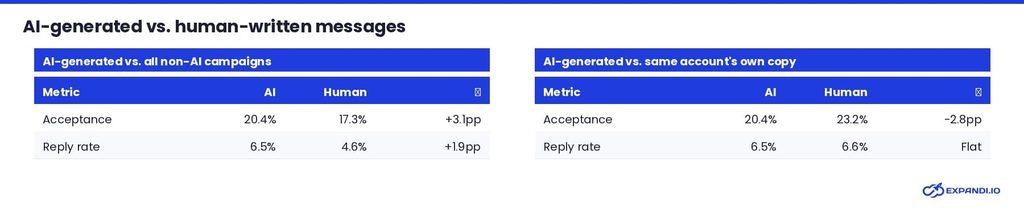
Our State of LinkedIn Outreach H2 2026 report shows the cost: within the same accounts, AI-generated messages were accepted 12% less (in relative terms) than human-written copy. A provider chasing activity targets with unedited AI output spends your brand’s credibility to hit its own numbers.
Email outsourcing carries a technical version of the same risk.
Messages sent from your domain draw on your domain’s sender reputation, and under Google’s sender guidelines, senders must keep reported spam rates below 0.3%, with SPF, DKIM, and DMARC authentication required at 5,000+ messages a day.
A provider that blasts its way to a meeting quota without warming up can push your domain over that line, and the deliverability damage outlasts the contract.
The same logic applies on LinkedIn.
A provider needs profiles to send from, so either your team’s real accounts carry the restriction risk of the provider’s tooling, or the relationships get built on profiles that belong to someone else — and leave when the provider does.
How to decide if B2B sales outsourcing is right for your business
Deciding whether B2B sales outsourcing is right for your business comes down to 4 steps. Skipping straight to vendor selection is how mismatched partnerships get signed.
Work through the four steps in order:
- Audit your needs. Write down current sales volume, target market, growth plan, and budget before talking to any provider. The audit tells you which type of outsourcing, if any, matches the gap.
- Weigh the pros and cons against your context. Cost savings matter more at a 20-person company than a 200-person one, and control matters more for a complex product with a long cycle. Score the tradeoffs against your reality, never in the abstract.
- Vet providers on evidence. Ask for references and case studies from your industry, check how they report results, and confirm who will run your account day to day. Geographic fit, language, and working hours belong on the checklist too, and so does a data processing agreement if your prospects sit under GDPR.
- Run a pilot before committing. A 90-day pilot with clear metrics (meetings booked, opportunity quality, feedback loops) shows how the provider performs at low stakes. Set the success bar in the contract before work starts.
Our honest verdict?
B2B Sales Outsourcing is best for:
- Companies testing a new market
- Covering a demand spike
- Building a pipeline before the first sales hires
B2B Sales Outsourcing might not be a good fit when:
- The product is complex
- The sales cycle is long and consultative
- Brand trust is the thing you sell
Expandi: the in-house alternative to sales team outsourcing
There’s a third option between hiring a sales team and outsourcing one: keep sales in-house and automate the repetitive LinkedIn outreach that makes outsourcing tempting in the first place.
The pendulum is moving that way broadly: the same Deloitte survey we mentioned earlier notes “insourcing” is surging as organizations rebalance how they source talent. This refers to the strategic shift of bringing previously outsourced sales functions back under your own team’s control to reclaim ownership over data, messaging, and brand quality.
Expandi is a cloud-based LinkedIn automation tool that runs your outreach around the clock. Automation tools like Expandi fit here by handling the repetitive, manual tasks (like outreach and lead list building) that often tempt teams to outsource, allowing you to scale your own team’s output without sacrificing that crucial in-house control.
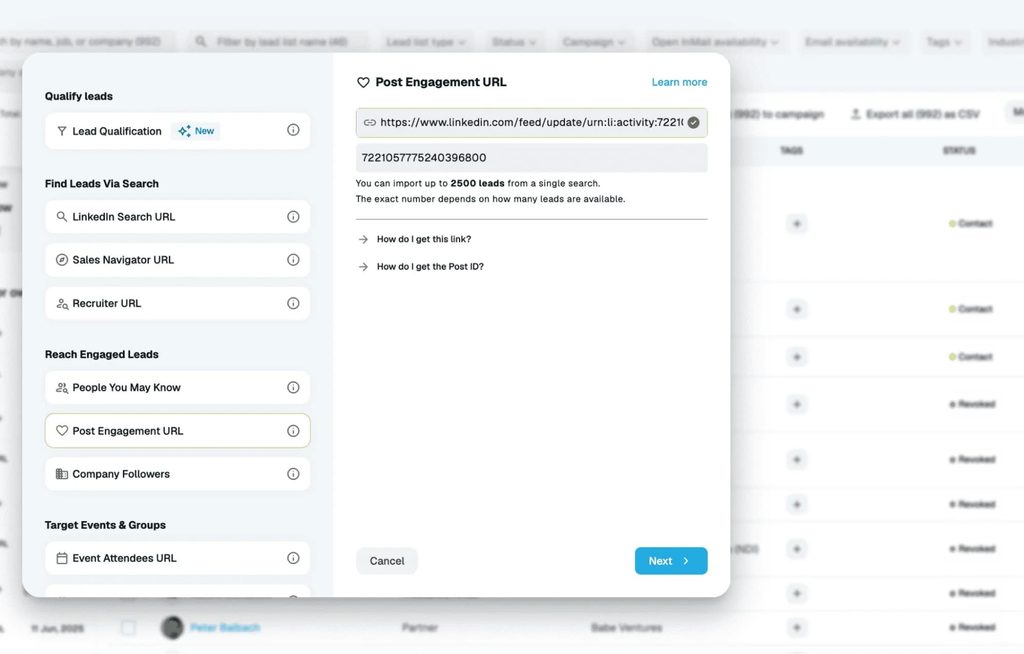
Connection requests, follow-up messages, and email steps fire on schedule from a dedicated country-based IP with smart daily limits, and the lead lists come from LinkedIn itself: scrape a Sales Navigator search, a post’s engagement, an event’s attendees, or a shared group, and feed the list straight into a campaign.
The work providers package as outbound sales outsourcing (prospecting, outreach, and follow-up) is the work Expandi automates:
- LinkedIn lead generation and email outreach run as one campaign, with duplicate prevention and blacklists built in.
- Smart sequences chain 20 actions and 11 conditions into if-then flows that adapt to each prospect’s behavior.
- The AI Analyzer drafts campaign messages and in-conversation replies, then sorts incoming responses by sentiment so hot leads surface first.
- Workspaces let a team or agency manage every account from one dashboard, with full campaign analytics.
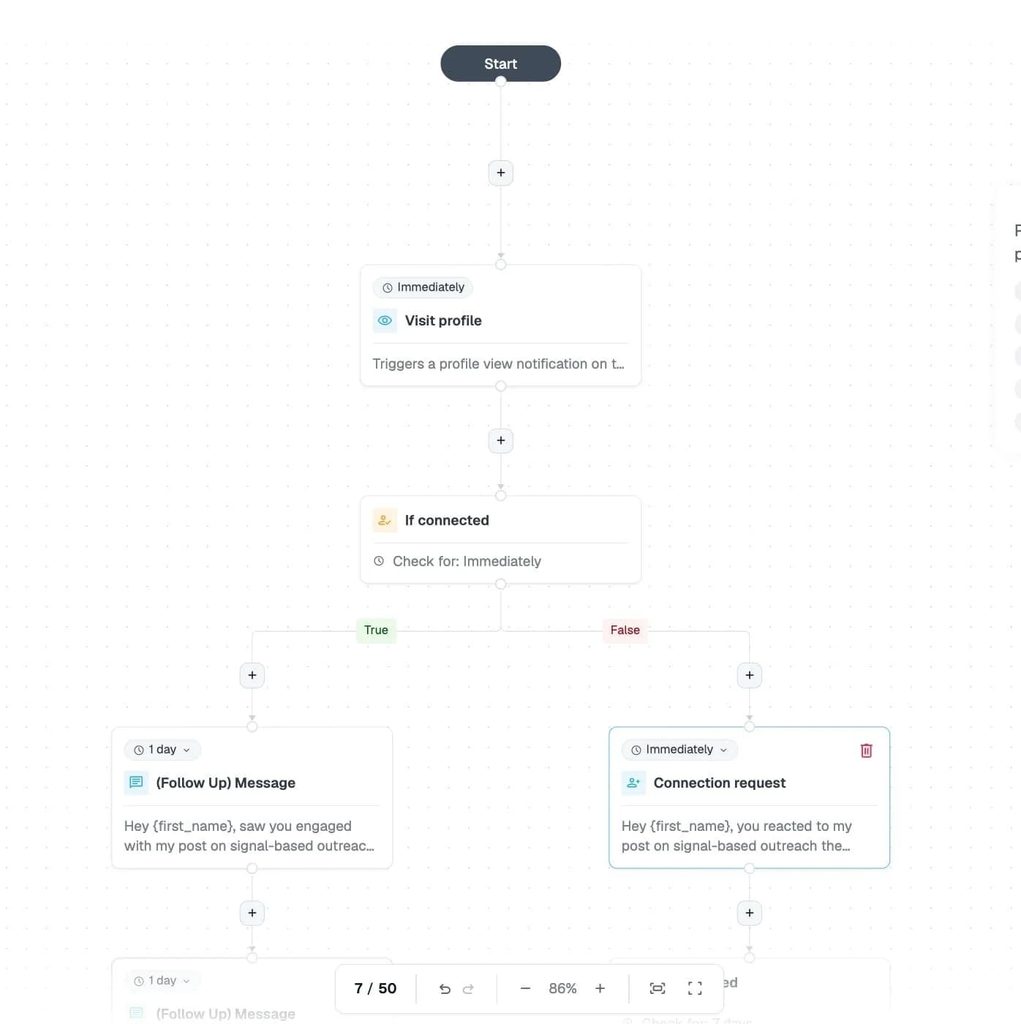
The output is measurable: across the 13.2 million connection requests in our LinkedIn outreach benchmarks dataset, campaigns average a 28.5% connection acceptance rate and a 10.4% message reply rate. And where a provider’s AI-written outreach underperforms, the AI Analyzer drafts and your team edits, so the copy stays yours.
Where the comparison with outsourcing bites is control and cost.
Your team writes the messaging, owns the prospect data, and sees every campaign metric live — the exact things a provider takes over.
For sales leaders comparing routes, the sales automation software path keeps the process, the data, and the customer relationships inside the company, while software does the repetitive outreach work an outsourced team would otherwise absorb.
Is B2B Sales Outsourcing the Right Move for Your Strategy?
B2B sales outsourcing is a real lever: lower fixed costs, faster pipeline, and borrowed expertise, paid for in control, brand risk, and distance from your own customers.
The four-step framework above (audit, weigh, vet, pilot) keeps the decision grounded in your numbers rather than a provider’s pitch. And if the work you want off your plate is outreach specifically, automation removes the grind while the process stays in your hands.
Start your 7-day free trial and see what in-house outreach looks like when the repetitive work runs itself.
Frequently Asked Questions
Yes. B2B sales outsourcing means hiring an external company whose reps run part or all of your sales process, from lead generation and appointment setting through closing. You choose the scope. The provider supplies the people, tools, and process.
Outsource when speed and cost matter more than control: new market tests, demand spikes, or pipeline building before your first sales hires. Keep sales in-house when the product is complex, cycles are long, or brand trust drives the deal.
A needs audit followed by a 90-day pilot turns the question into a decision.
Sales outsourcing exists to buy outcomes without building infrastructure: trained reps, working playbooks, and sales technology, delivered for a fee. Companies use it to cut fixed costs, enter markets faster, and keep internal teams focused on product and customers.
Outsourced sales and marketing services are external teams that run revenue-generating work on your behalf: lead generation, market research, appointment setting, inside sales, field sales, and campaign execution. Scope ranges from a single function to the full funnel.
Outbound sales outsourcing is hiring an external SDR team to run proactive prospecting: building lists, sending cold outreach across email, phone, and LinkedIn, and booking qualified meetings for your closers.
It covers top-of-funnel work only. Your own team still runs the conversations that close.
Pricing follows three models: monthly retainers per rep or per team, per-appointment or per-qualified-lead fees, and commission on closed revenue. Totals vary with scope, market, and region, so compare quotes against the fully loaded cost of an in-house rep (salary, commission, benefits, tools, and management time) rather than salary alone.
Shortlist providers with case studies and references in your industry, then test for transparency: how they report, what data you keep, and who handles your account day-to-day. Confirm language, time zone, and cultural fit for your target market.
Run a 90-day pilot with agreed metrics before signing a long-term contract.
The best alternative is an in-house team using sales automation software like Expandi, which keeps outreach, data, and prospect relationships in-house while automating the repetitive parts of the process.
Yes, many B2B sales outsourcing providers offer lead generation as part of their service package, handling LinkedIn outreach and appointment setting on your behalf.


You’ve made it all the way down here, take the final step