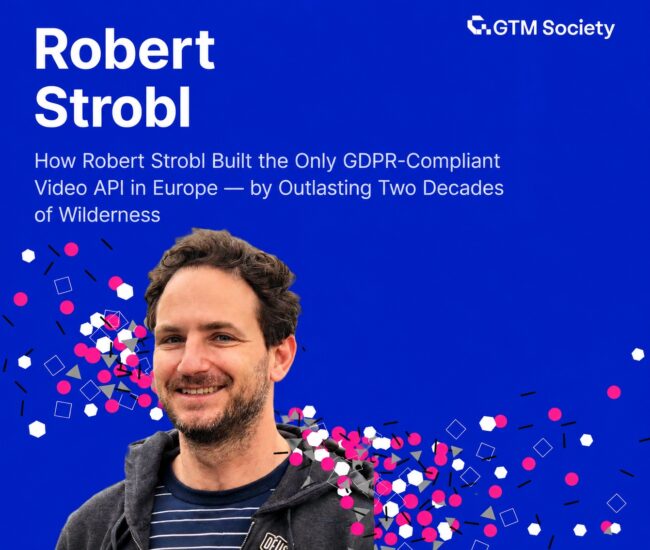
How Robert Strobl Built the Only GDPR-Compliant Video API in Europe — by Outlasting Two Decades of Wilderness
The companies that outlast their category’s commodity wave have a permanent advantage. They are still in the room when the market changes. Robert spent twenty years building video conferencing in the wilderness; he is now the only operator in Europe with a privacy-native video API — and twenty years of compounded technical depth nobody can replicate.

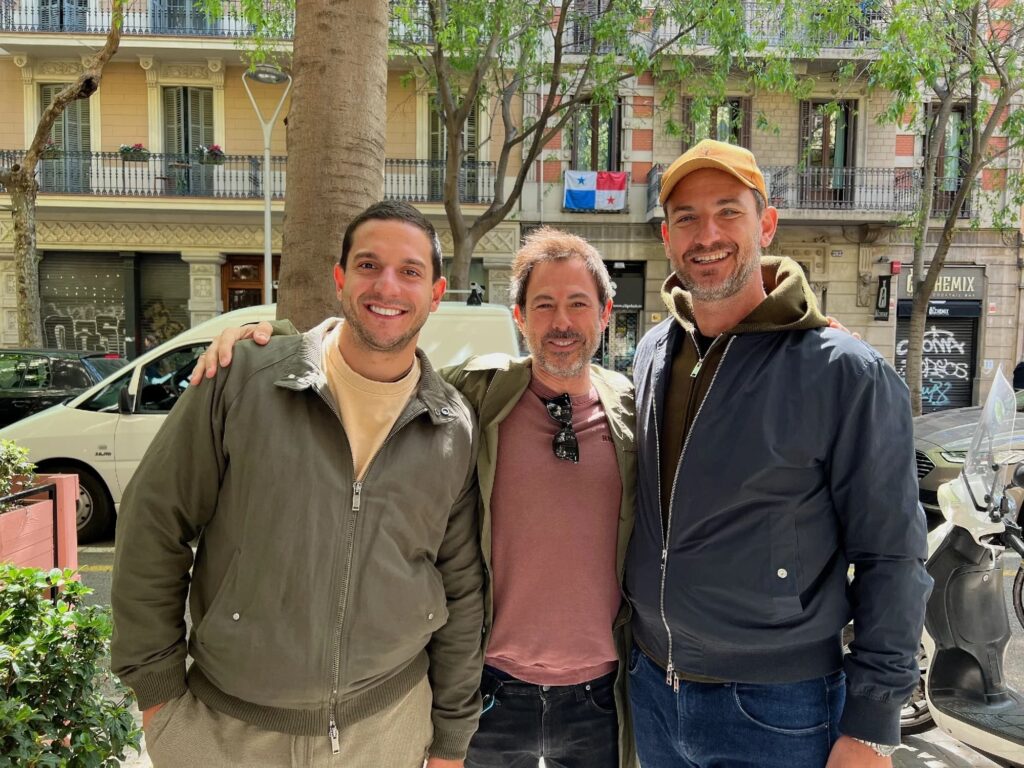
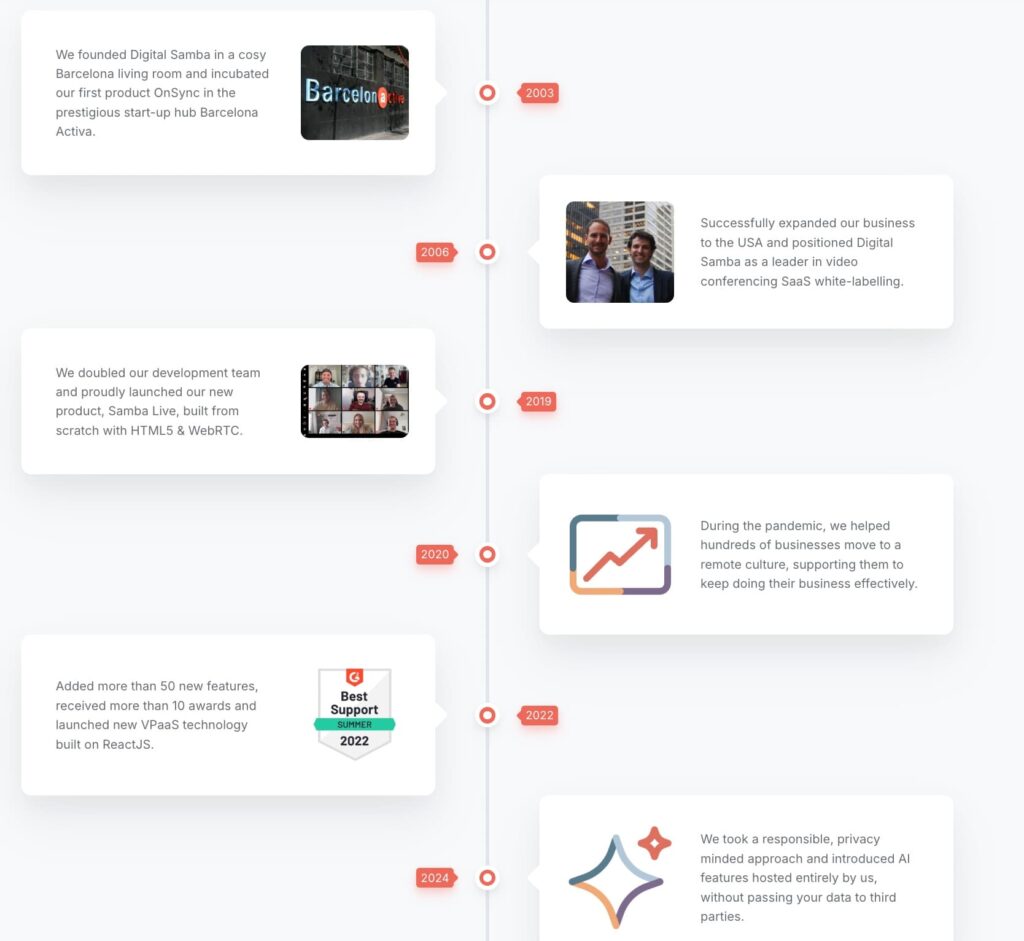
Barcelona, 2002. Robert Strobl and two friends — Jorge Maiquez and Matthias Kritz — are sitting in a small apartment. They have an idea: build video conferencing software for the web.
The reaction from the people they tell is consistent. Who is going to use video conferencing? They keep building. Within a year, Digital Samba is incorporated. Skype launches the same year. The race nobody thought was a race has begun.
Twenty-two years before this was a category
Robert is in his late twenties at the time. Born in Vienna, with a marketing degree from Lancaster, his early career has been in web consulting — most recently at Arthur D. Little. He is a generalist with no background in video research, but he has noticed something most of the room has not: when broadband stops being a luxury, the browser will become a place where humans can look at each other, in their browsers, in real time. In 2002, this was a fringe position. In 2026, it is the default.
The two decades in between are the story. Most of them happened off-stage.
Digital Samba stayed bootstrapped through every consolidation wave. It kept building customer by customer, through eras most people forget the early web ever had.
The wilderness years
Bootstrapping a video conferencing company for twenty-plus years means operating through several distinct eras of the internet.
- The early 2000s were a market where most prospective customers had never been on a video call.
- The 2010s were Skype’s decade — a market dominated by a free consumer product that nobody could compete with on price.
- WebRTC standardised in 2013, opening the door for browser-native video without plugins.
- Then the giants moved in: Zoom, Microsoft Teams, Google Meet.
Each era had a moment when Digital Samba could have died. They survived each one for the same reasons: no investors demanding a faster exit, no headcount scaled past what cash flow could support, and a small team with the engineering depth to keep the platform competitive without burning the runway.
The boring answer to “how did you survive” is that they never put themselves in a position where they had to be rescued.
The pandemic paradox
2020 should have been Digital Samba’s moment. The world suddenly needed video conferencing. Adoption that would have taken five years happened in twelve weeks. Every business school student and every retired uncle learned to use Zoom.
But that is also when the differentiation collapsed.
Every business in the world had a video conferencing tool. Most had three. The category became a commodity inside a quarter. Companies that had spent a decade building feature parity with Zoom suddenly had no story to tell, because the customer’s question had changed from “does it work” to “why would I switch.”
For a bootstrapped European company without Zoom-scale ad spend, the path forward was to find an axis the giants had not bothered to occupy. Competing on consumer conferencing was a losing bet against Zoom-scale ad spend.
The pivot to VPaaS — and the privacy moat
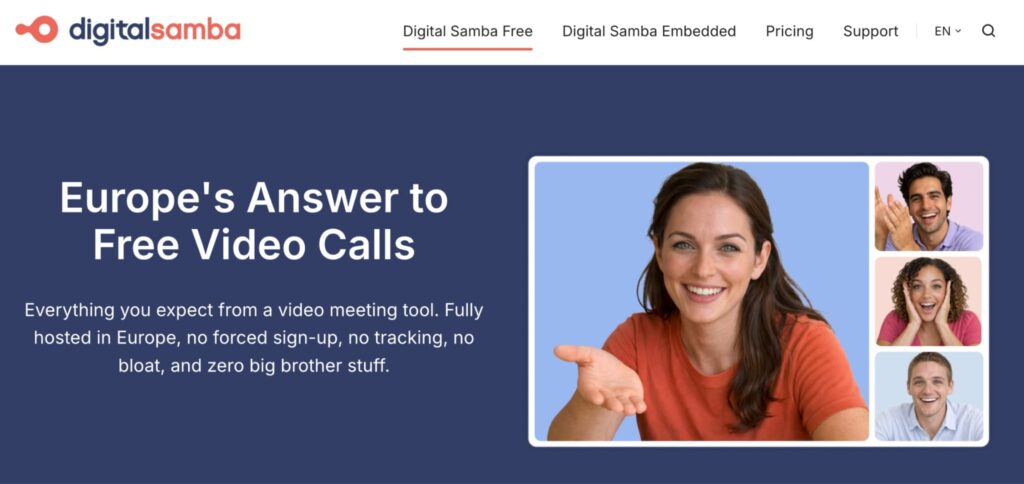
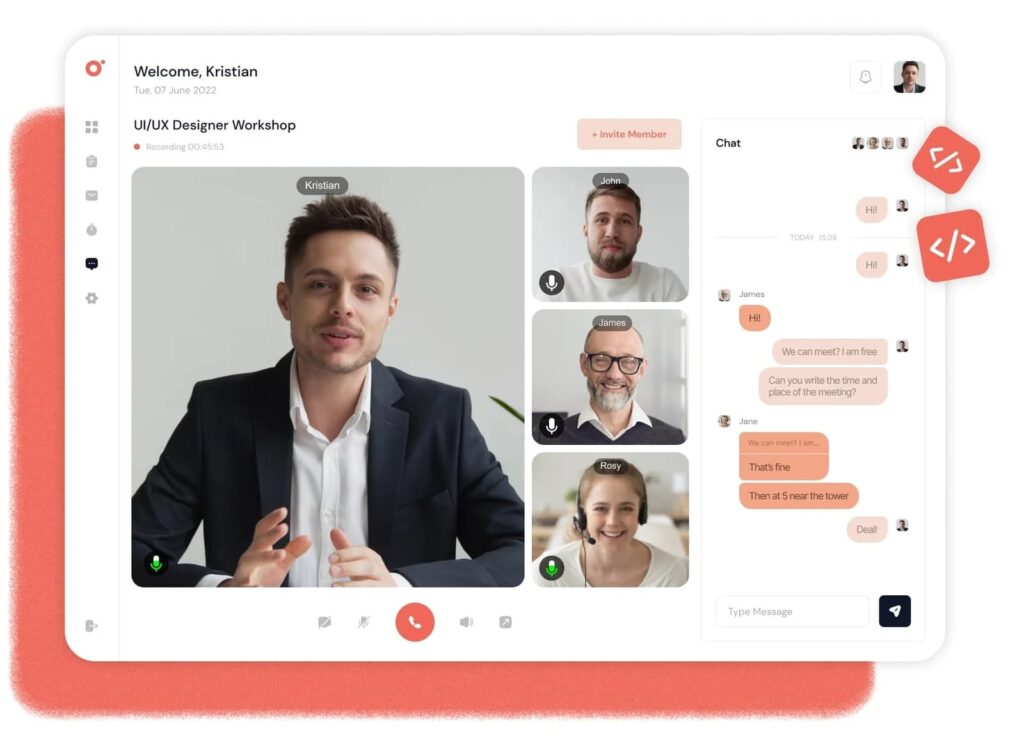
Around 2022, Digital Samba reframed its product as a video conferencing API for developers building video into their own SaaS platforms — eLearning, healthcare, fintech, anywhere a tool needs a real-time face-to-face layer. The technical claim is direct.

What we’re building is the best way and the safest way to integrate videoconferencing into your SaaS platform. It literally takes two lines of code to integrate videoconferencing into your SaaS application.
The strategic claim is sharper. Digital Samba is the only video API built and hosted entirely in the EU. Every frame of every call stays within European data residency. GDPR runs through the architecture, end to end.
The competitors with bigger feature sets cannot match this without rebuilding their stack from scratch, which they will not do because the rest of their customer base does not require it.
Robert’s framing of the customer is developer-first throughout: a well-documented API, a clear ICP, and a deliberate choice to make the platform something developers can take and make their own rather than fighting them on UX.
The bet is that the European buyer set — regulated industries, public-sector tools, healthcare platforms, schools — needs a video layer that does not require a data-processing addendum the size of a contract amendment. Narrow by design, the bet works for the buyer set Digital Samba spent two decades earning the right to serve, and that buyer set is a short list.
What other founders can take from Robert’s story
Robert’s story is the twenty years that made the pivot possible. The pivot itself is just the moment everything before it started compounding.
Building a privacy-native, EU-hosted, browser-embeddable video API takes a decade of running your own real-time infrastructure, a second decade of customer relationships in regulated verticals, and a third quality nobody talks about: the willingness to sit in a category for long enough that you are still there when the market changes its mind about what matters.
The reframe for founders who feel late to a category is the inverse: being in a category early but unfashionable is an asset that compounds, if you can survive long enough for fashion to swing back.
Privacy was a niche concern in 2010. GDPR came in 2018. The European preference for sovereign infrastructure compounded through 2024. The 2002 decision to build video conferencing in Europe could not have anticipated any of this.
But the founders who were still building in 2024 got to choose what to do with it.
If you take one thing from Robert’s story, it is that the long game has more optionality than the fast game. The team that lasts twenty years gets to pick the angle the next decade rewards. The team that exits in three has already locked in their bet.
Robert is also clear that the next phase will be different.
Digital Samba is now a developer-first product, sold into developer-led teams. The marketing motion is shifting accordingly — LinkedIn is the primary channel, the team is investing in content and API documentation, and the developer-relations work that turns a privacy positioning into a felt advantage is now the priority.
After twenty years of being a quiet European bet, the company is becoming visible — and the story it has to tell is one that no AI-era competitor can manufacture in a quarter.
If you want to speak to GTM leaders like Robert directly, join the GTM Society — where the founders building for the next decade share what they are working on right now.
Join the GTM Society. The room where GTM actually gets built. Founders, SDRs, and operators. No noise. Just systems.