LinkedIn Weekly Invitation Limit for 2026 (+ 5 Outreach Tips)

Key Takeaways
- LinkedIn doesn’t publish a fixed numeric weekly or daily invitation allowance.
- Expandi advises staying within 100 invitations per week, but your account may be restricted sooner.
- Daily sending schedules are a planning guidance, not LinkedIn-approved safe rates.
- Premium and Sales Navigator don’t come with a published guarantee of more invitations.
LinkedIn Weekly Invitation Limit for 2026 (+ 5 Outreach Tips)


If you’re a business professional, LinkedIn is your go-to platform for connecting with other decision-makers and individuals who can advance your business’s growth. But it can be frustrating to hit a connection limit when attempting to communicate, especially since LinkedIn doesn’t publish a fixed weekly or daily connection-request allowance.
Staying within 100 connection invitations per week is the safest tactic. This is planning guidance and not an official LinkedIn quota, and some accounts may be restricted before reaching that number. LinkedIn’s own documentation doesn’t specify a universal numeric allowance.
Your invitation allowance is also separate from LinkedIn’s network size limit. LinkedIn officially allows up to 30,000 first-degree connections. Once you reach that, it’s no longer possible to send or accept another connection request until you remove an existing connection.
This guide covers:
- LinkedIn’s latest connection limits
- Sensible daily pacing
- What happens when you reach the weekly limit
- Five ways to get more from your outreach without relying on connection requests alone.
What are LinkedIn connection limits?
LinkedIn connection limits are behavior-based restrictions in place to reduce spam and encourage high-quality interactions on the platform. There are two limits to understand:
- Total network size limit: LinkedIn members can have up to 30,000 first-degree connections.
- Invitation limits: The platform restricts how many connection requests an account can send, but doesn’t disclose one fixed daily or weekly allowance.
LinkedIn says invitation limits apply to both Basic and Premium members. It may also restrict an account if too many invitations are left ignored or pending, or marked as spam. Excessive invitation activity and suspected automation can also trigger restrictions.
Below is the clearest way to interpret the available figures:
| Type of limit | Free account | Premium | Sales Navigator |
|---|---|---|---|
| Total first-degree connections | 30,000 | 30,000 | 30,000 |
| Official numeric weekly invitation allowance | Not published | Not published | Not published |
| Official numeric daily invitation allowance | Not published | Not published | Not published |
| Expandi’s planning guidance (not a LinkedIn entitlement) | Stay within 100 invitations per week; restrictions may occur sooner | Same guidance | Same guidance |
| Daily pacing example (not an official LinkedIn limit) | 15–20 invitations across five working days | Same suggestion | Same suggestion |
LinkedIn doesn’t publish a universal numeric daily or weekly invitation limit. Expandi advises staying within 100 invitations per week, but this doesn’t guarantee that LinkedIn will permit that volume. Sending 15-20 invitations across each of five working days totals 75-100 invitations. It’s a scheduling suggestion, not a definite safe rate.
How many LinkedIn invites can I send per week?
Most LinkedIn users should plan around approximately 100 connection invitations per week, which is our recommendation. This number was derived from current third-party reporting and account observations, but it’s not an official numeric allowance imposed by the platform.
Your account may face the limit earlier or later, and LinkedIn doesn’t explain anywhere how exactly it determines each member’s allowance. Still, its help center identifies several behaviors that may put you in the invitation timeout zone:
- Sending an excessive number of invitations in a short amount of time
- Accumulating invitations that remain unanswered or ignored
- Having invitations reported as spam
- Using automation in a way LinkedIn considers suspicious.
LinkedIn also doesn’t promise a higher invitation allowance for Premium or Sales Navigator subscriptions. Those plans give you other prospecting tools, like InMail and more detailed search filters, but they remain subject to invitation limits themselves.
So, our advice is this. For campaign planning, stick to 100 weekly invitations as an estimate and spread them evenly across the week. A pace of about 15-20 invitations on each of five working days leaves some room for variations.
New, inactive, or previously restricted accounts should exercise more caution, like starting lower and increasing gradually only if LinkedIn continues to allow the activity.
The number of invitations isn’t as important as how many of them lead to useful conversations. Focus on people who fit your ideal customer profile and have a credible reason to connect with you. A focused LinkedIn outreach campaign consumes fewer invitations than a wide list built around job titles alone.
Personalization can also help, but account type is the deciding factor here. Basic and free LinkedIn members can add a personalized message to five connection requests per month, whereas Premium members can include personalized messages with an unlimited number of their connection requests. The overall invitation limit still applies. Use these notes where context will help the recipient understand why you’re reaching out, and avoid adding the same generic line to every request.
What happens if I hit LinkedIn’s connection request limit?
When you reach LinkedIn’s invitation limit, the platform may temporarily stop you from sending more connection requests. According to LinkedIn, the restriction typically lasts one week, and support can’t remove most invitation restrictions early.
This differs from reaching 30,000 first-degree connections in a couple of ways:
- Invitation restriction: You’re temporarily restricted from sending more requests, even though your network’s headcount may be well below 30,000 people.
- Network size limit: You can’t send or accept requests because your first-degree network already contains 30,000 connections.
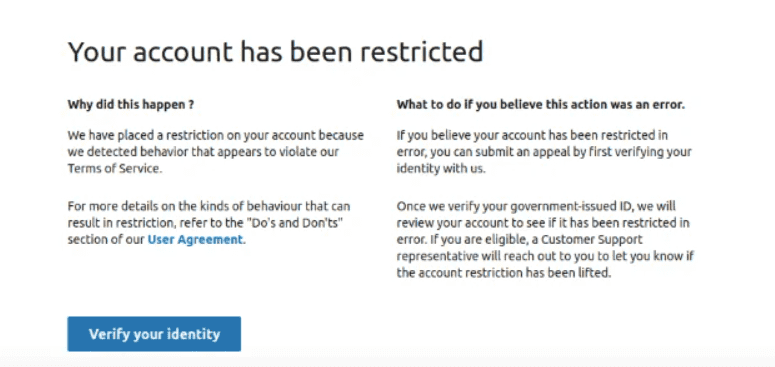
Don’t ignore LinkedIn’s invitation warning. Immediately stop sending requests and pause any campaign performing that action. Trying different devices, campaign types, or sending methods might seem tempting, but it won’t make the restriction go away and may even create unnecessary risk of additional actions against your account.
LinkedIn may also restrict invitation activity when a large number of requests remain pending or ignored, or are marked as spam. This is why list quality and acceptance rate are so important. Take a look at who has accepted your recent invitations before increasing volume. If the targeting is weak, sending more requests will expand the pending queue without producing useful conversations.
Expandi’s LinkedIn automation tool includes pacing and campaign controls that help users manage their outreach volume. That said, LinkedIn prohibits unauthorized automation and scraping, and staying below a chosen sending volume doesn’t make prohibited activity compliant.
When does the LinkedIn connection request limit reset?
LinkedIn doesn’t provide a precise reset clock for every account, but its help center says a restriction caused by reaching the invitation limit typically lasts one week.
Other invitation restrictions can have different waiting periods. For example, LinkedIn advises waiting up to one month when a restriction is triggered by too many outstanding invitations.
Follow any information shown in LinkedIn’s restriction notice and allow up to one week for invitation access to return. LinkedIn says most invitation restrictions are removed automatically and generally can’t be lifted early by support.
5 ways to get more from your LinkedIn invitation allowance
LinkedIn says you can’t buy or acquire additional invitations. What you can do is improve the results produced by each request and move some prospecting activity to channels that don’t require a connection invitation.
1. Optimize your LinkedIn profile
Prospects often review your LinkedIn profile before accepting a request, so make it clear who you are, what you do, and why connecting with you might be in their interest. Start with the areas people can assess quickly:
- Use a clear, professional profile picture and relevant background image.
- Write a headline that explains your role and the people you help.
- Use the About section to describe your work without turning it into a sales pitch.
- Keep your employment history, education, skills, and certifications current.
- Add recommendations that show how you’ve worked with clients or colleagues.
- Publish or share useful material related to your field.
Do note that an optimized profile doesn’t increase the allowance by itself. Its value is in clarity and being up-to-date, which helps a recipient recognize you and understand the reason for connecting.
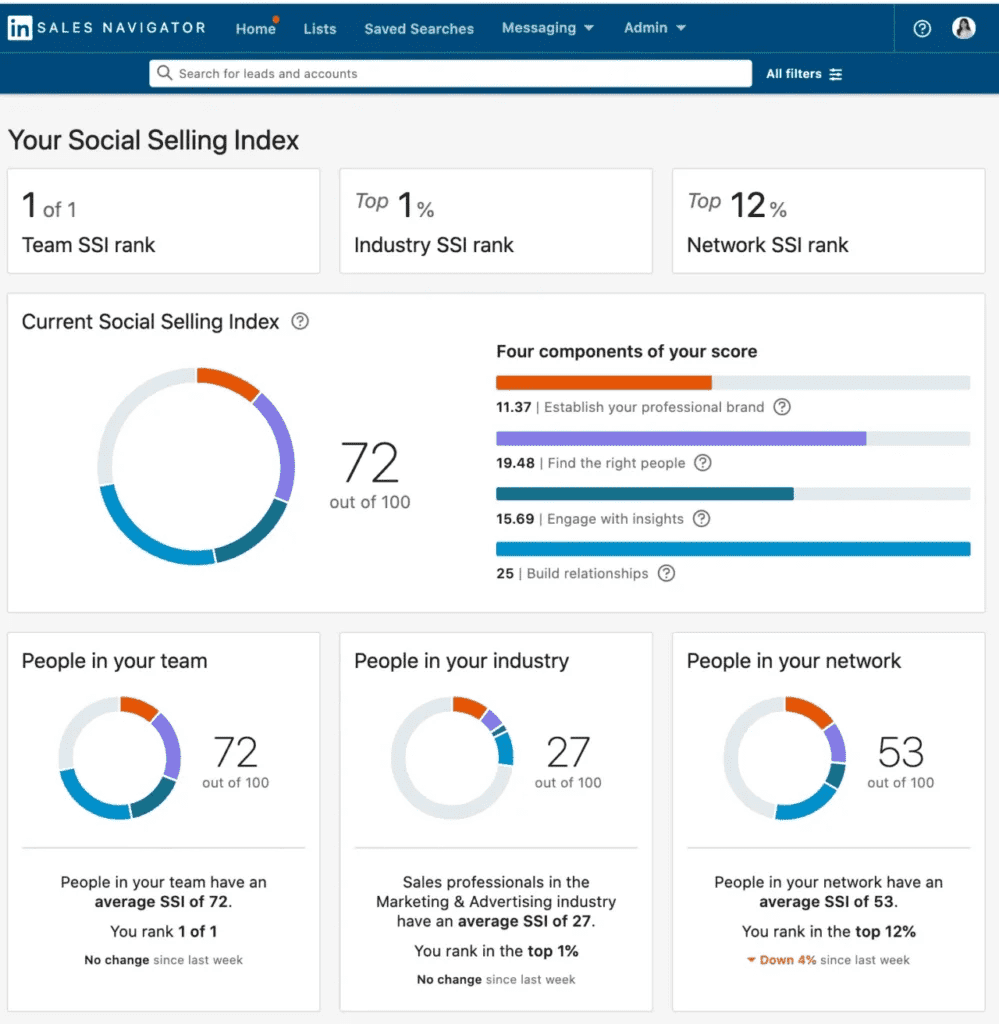
2. Improve your LinkedIn Social Selling Index (SSI)
LinkedIn’s Social Selling Index, or SSI, measures activity across four pillars: establishing a professional brand, finding the right people, engaging with insights, and building relationships.
A stronger SSI score doesn’t come with a published promise of more connection invitations, but it can still help you identify weaknesses in your LinkedIn activity.
To strengthen your activity:
- Complete the main sections of your profile.
- Use LinkedIn search or Sales Navigator to narrow your audience.
- Engage with relevant posts before sending a request where appropriate.
- Publish useful material instead of keeping the account active only through outbound messages.
- Follow up with accepted connections without immediately forcing a sales pitch.
You can check your LinkedIn SSI score and use it as a diagnostic tool. Don’t treat it as proof that LinkedIn will raise your invitation limit.
3. Warm up new or inactive accounts
Don’t take a new or long-dormant account from no activity to dozens of daily invitations overnight. Review your audience and recent responses before increasing activity. Start with a small number of relevant requests and slowly increase as you monitor acceptance and warning messages.
Expandi’s Account Warm-Up settings let users grow campaign activity over time instead of starting at the full configured volume. In the dashboard, go to your profile’s settings and scroll down to the account warm-up section. Then, turn on the feature, and set the starting and ending parameters for the campaign.
Warm-up controls can reduce sudden activity spikes, but they can’t override LinkedIn’s limits or promise protection from restrictions. Keep the account’s general activity credible. This includes maintaining the profile, engaging with the network, and sending requests to people with a reasonable connection to your work.
4. Use Sales Navigator to find better-fit leads
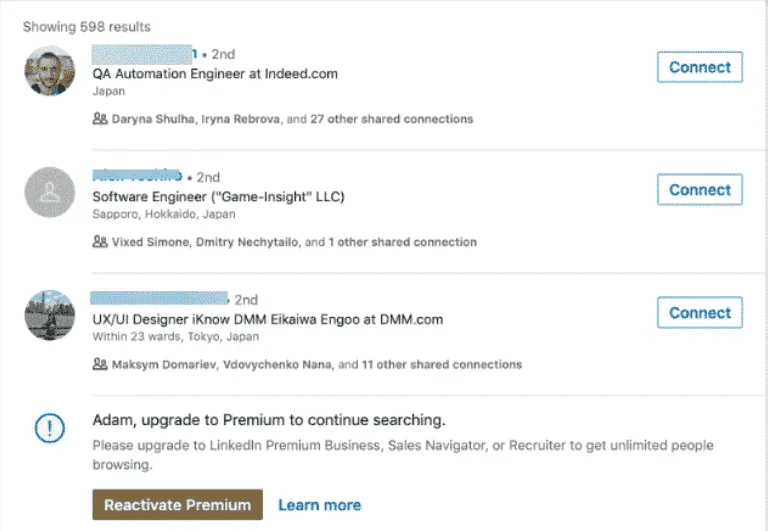
LinkedIn Sales Navigator helps you tighten a prospect list with detailed lead and account filters. Alongside other AI sales tools, its filtering and recommendation features can help you identify better-fit prospects before spending an invitation.
LinkedIn currently allows users to view up to 2,500 lead results across 100 pages or 1,000 account results across 40 pages on a Sales Navigator results page.
This search allowance isn’t an invitation allowance, as Sales Navigator doesn’t remove LinkedIn’s connection request limits. Its advantage is better targeting and access to other contact options, including InMail.
A simple workflow looks like this:
- Define your ideal customer profile.
- Use lead and account filters to narrow the search.
- Save suitable prospects to custom lead lists.
- Separate people who need a connection request from those you can contact through InMail or another channel.
- Track replies and follow-ups in your existing CRM or a dedicated LinkedIn CRM tool.
5. Monitor acceptance and pending invitations
LinkedIn confirms that ignored, pending, and spam-reported invitations can contribute to restrictions, something we refer to as the fuse limit, though it’s not a named mechanism documented by LinkedIn. With this limit in mind, review campaign performance before deciding whether to increase the sending pace.
Useful signals include:
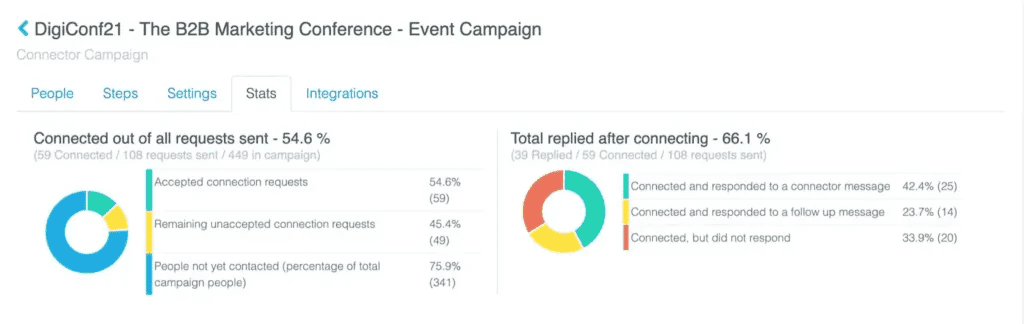
- The proportion of invitations accepted
- How many accepted connections reply to the follow-up
- Whether requests are accumulating without a response
- Whether you’ve received warnings or additional verification requirements.
If the acceptance rate declines, check the audience and message before sending more. When appropriate, remove stale pending invitations selectively, but remember that withdrawing an invitation won’t restore the weekly allowance. LinkedIn also prevents you from reinviting the same person for up to three weeks after withdrawal.
How to reach more prospects after hitting the weekly limit
Reaching the invitation limit doesn’t mean an end to all prospecting. It simply means you need to use contact methods that don’t require another connection request, including InMail, email, and paid campaigns. Mobile Connector, also covered below, still sends invitations and shouldn’t be treated as a workaround for an active restriction.
A wider LinkedIn lead generation system can combine these channels and keep each within its own rules. For example, you might use LinkedIn to research a prospect and send a selective invitation, then use email for the follow-up where suitable. Expandi’s smart outreach sequence can coordinate actions based on whether a prospect has connected or replied.
Avoid repeating the same generic pitch through every available channel. Adjust the message to its context and use cold email personalization to explain why the prospect was selected.
1. Contact eligible prospects through InMail
InMail allows Premium users to message some LinkedIn members without connecting first. Sales Navigator currently provides 50 new InMail credits per month per user, and unused credits can accumulate up to the limit specified by LinkedIn (at the moment, you can accumulate 150 total InMail credits, and unused transferred credits must be used within 90 days).
Any LinkedIn member can message a Premium member who has enabled Open Profile for free, even when they’re not connected. Availability depends on the recipient’s settings, so don’t assume monthly volume of free Open Profile messages.
In Expandi, you can filter eligible prospects and place them in an InMail campaign instead of spending connection invitations on them. Make sure the message is relevant and specific. If you’re using AI to draft first lines, always double-check them before sending so incorrect or forced personalization doesn’t reach the prospect.
2. Use a Mobile Connector Campaign within your limits
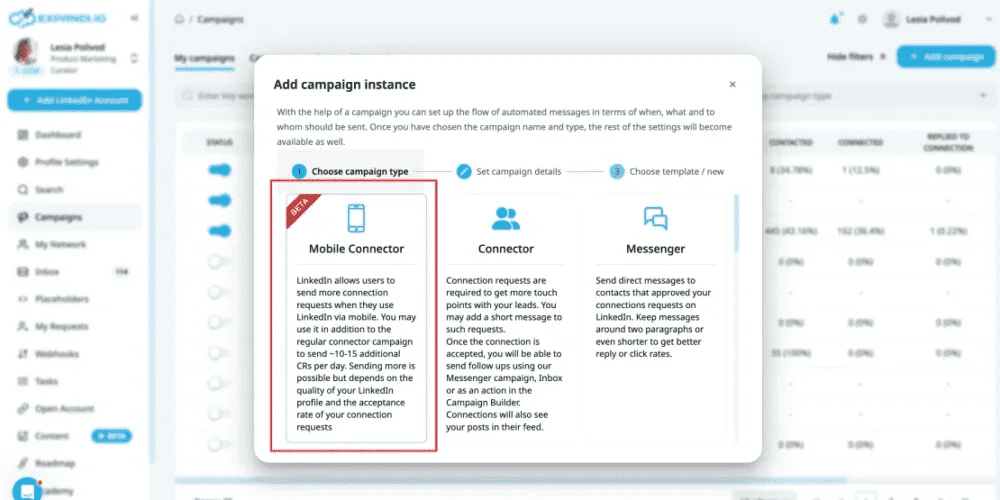
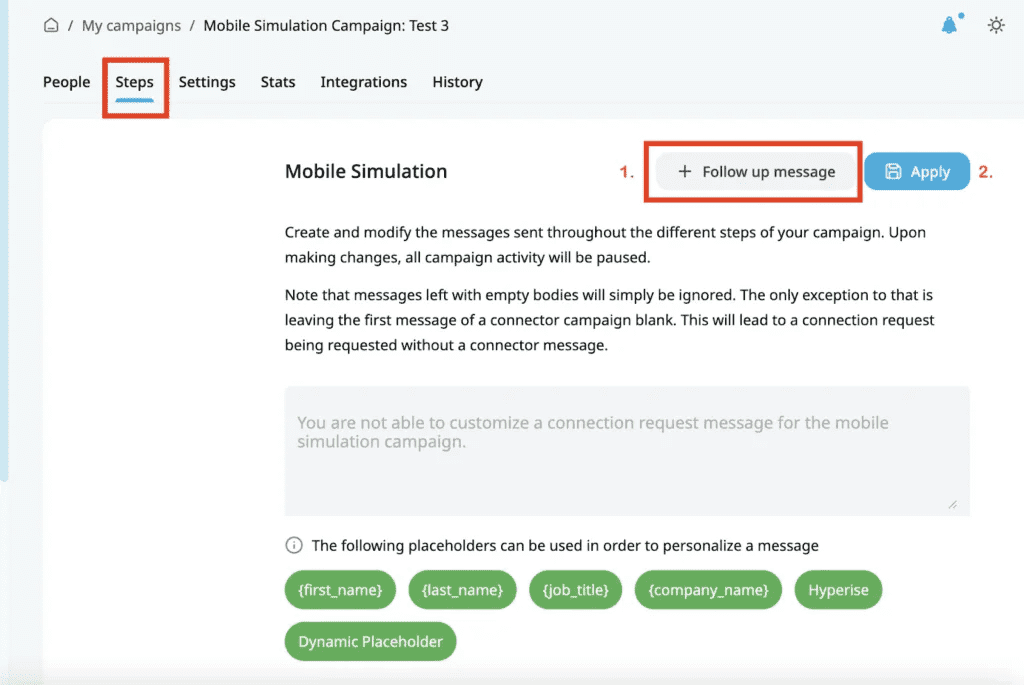
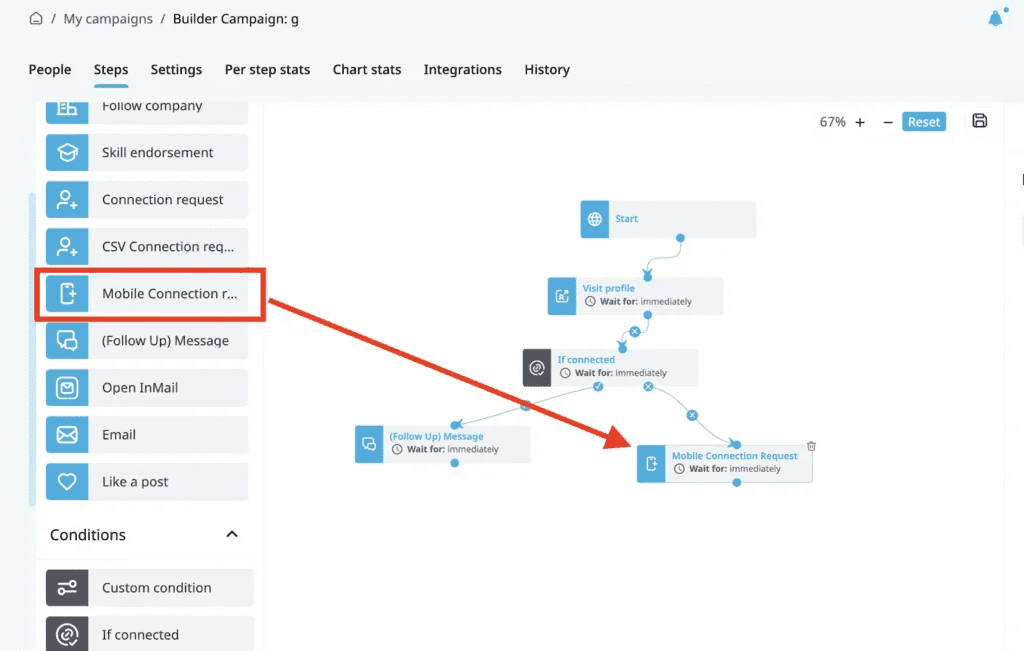
Expandi’s Mobile Connector Campaign lets users configure mobile-style connection requests from the desktop dashboard. You can create the campaign, add eligible second- and third-degree prospects, and prepare follow-up messages for people who accept.
To set one up:
- Select Add Campaign in the Expandi interface and choose Mobile Connector.
- Name the campaign and create the follow-up message.
- Open the People tab and add eligible prospects with a Searched or Imported status.
Mobile connection requests remain connection requests. Don’t rely on this campaign type as a way to bypass LinkedIn’s account-level invitation limit or think that it can send more than 100 invitations per week. Configure it within the same conservative pacing used for other invitation campaigns.
You can find the current setup instructions in Expandi’s Mobile Connector Campaign guide.
3. Build a LinkedIn Ads audience
Paid advertising adds another touchpoint without using connection invitations. Expandi can export selected audience data for use in LinkedIn Campaign Manager, which is subject to LinkedIn’s audience requirements and applicable data-protection rules.
A basic workflow is:
- Create and review the audience in Expandi.
- Export the required data as a CSV file.
- Upload the audience through LinkedIn Campaign Manager and map the fields correctly.
- Allow LinkedIn to process and match the audience.
- Build an eligible campaign using the matched audience or a currently supported growth option like Predictive Audiences or Audience Expansion.
LinkedIn ads can support lead generation by keeping the company visible as connection and email campaigns run. They should be measured as a separate channel and not counted as extra connection requests.
Get more from each linkedIn invitation
LinkedIn officially caps first-degree networks at 30,000 connections, but it doesn’t publish one numeric daily or weekly invitation allowance. Around 100 invitations per week currently remains the most useful working recommendation for campaign planning, though your account may still be restricted sooner.
To make the best of this strategy, spread requests across the week, watch acceptance and warning signals, and stop when LinkedIn restricts the account. Premium and Sales Navigator provide additional search and messaging options, but neither comes with a definite guarantee of a higher connection-request limit.
Expandi helps teams manage LinkedIn and email actions through one campaign workflow, with controls for pacing and account warm-up. Start a free Expandi trial to build your first sequence.
Frequently asked questions
LinkedIn doesn’t publish a fixed weekly number. Around 100 connection requests per week is the most commonly recommended allowance for a typical account, but individual accounts may encounter a lower or higher limit.
Similar to its weekly limits, LinkedIn doesn’t publicly share an official daily connection request number. If you’re planning around approximately 100 weekly invitations, sending around 15-20 across each of five working days is conservative pacing. Stop sooner if LinkedIn hits you with a warning or restriction.
In addition to not posting its weekly or daily limits on connection requests, LinkedIn doesn’t reveal an exact universal reset time either. Its help center only says a restriction for reaching the invitation limit typically lasts one week. Follow any timing shown in your account notice and allow up to seven days for sending access to return.
You shouldn’t try to evade an active LinkedIn restriction. Instead, continue prospecting through channels that don’t require another connection request, such as eligible InMail or Open Profile messages, email, and LinkedIn ads. These methods expand your outreach without increasing the account’s connection-request allowance.



You’ve made it all the way down here, take the final step