Email Subject Lines for Sales: 50+ Examples for Cold Outreach, Follow-Ups, and B2B (2026)

Key Takeaways
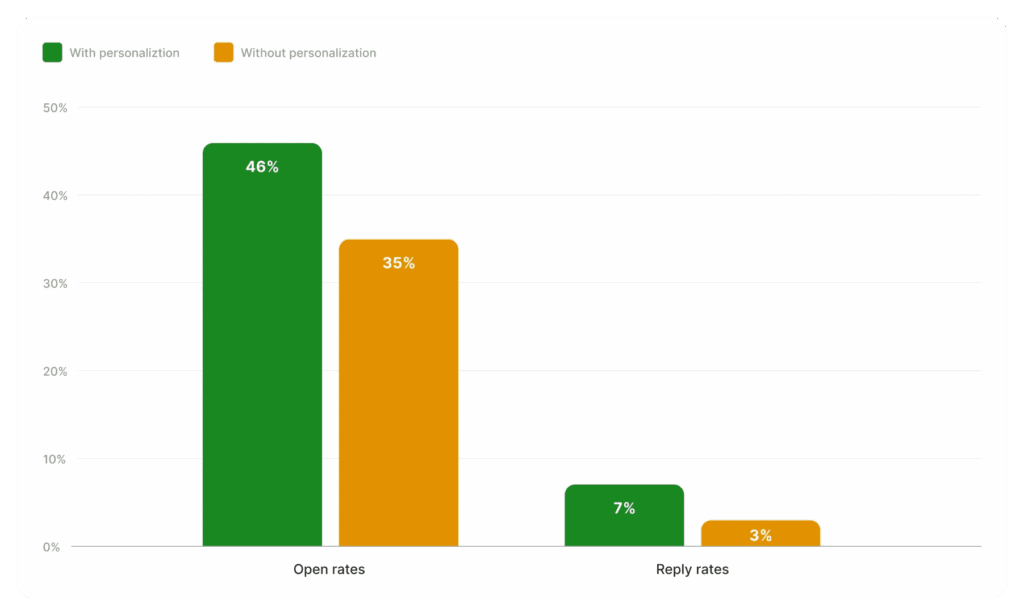
- Personalized subject lines opened at 46% versus 35% for generic ones, and replies jumped from 3% to 7%, per Belkins’ 2025 study of 5.5 million cold emails.
- Two-to-four-word subject lines pull the highest open rates (46%), with performance sliding steadily past seven words.
- Cold outreach, B2B prospecting, follow-ups, and introductions each need a different kind of subject line — the 51 examples below are grouped by scenario.
- Apple’s Mail Privacy Protection inflates open rates, so judge subject line tests by replies and meetings booked instead.
Email Subject Lines for Sales: 50+ Examples for Cold Outreach, Follow-Ups, and B2B (2026)

Email subject lines for sales do more work per word than anything else an SDR writes: four or five words decide whether the pitch underneath ever gets read.
We pulled the email steps from the highest-reply outreach sequences running on Expandi to see what their subject lines share, and the pattern is consistent. Short, specific, and written the way a colleague would write them.
Here’s what this guide covers:
- 51 sales email subject line examples, grouped by scenario: cold outreach, B2B prospecting, follow-ups, and introductions.
- What a study of 5.5 million cold emails found about personalization, length, and casing.
- Why replies beat opens as the metric your subject line tests should answer to.
- Straight calls on length, capitalization, emojis, and A/B testing.
- The subject line habits that quietly feed the spam folder.
What makes a good sales email subject line?
A good sales email subject line is short (two to four words where possible), specific to the recipient, and written the way a real colleague writes: sentence case or lowercase, plain vocabulary, and a clear hint at why you’re emailing this person now.
It earns the open. The email body has to pay the promise off.
Prospects triage their inbox in a half-second scan of three elements: sender name, subject line, and preview text. The subject line’s only job is to survive that scan.
Winning a reply is the body’s job, which is why a subject line should promise exactly what the first sentence delivers.
Preview text is part of the same unit.
The first line of your email shows next to the subject line in the inbox, so write the two as a pair: the subject names the reason, the opening line proves it.
What the data says about email subject lines for sales in 2026
The current data on b2b sales email subject lines points one direction: personalization, brevity, and plain language win opens, and replies are the number worth optimizing.
The largest recent dataset is Belkins’ 2025 study of 5.5 million cold emails, sent across full-year 2024.
Subject lines with personalization (the recipient’s name, company, location, or a relevant event) opened at 46% versus 35% without, a 31% lift. The reply-rate gap was wider still: 7% with personalization against 3% without, a 133% jump.
The same study ranked subject line formats.
Question-framed subject lines topped the table at a 46% average open rate, call-to-action phrasing reached 44.6%, while marketing jargon, urgency phrases like “ASAP,” and generic greetings like “Hello, friend” all dropped engagement below 36%.
Length shows a clear sweet spot. Here is how open rates moved with subject line word count across the Belkins dataset:
| Subject line length | Average open rate |
|---|---|
| 1 word | 38% |
| 2-4 words | 46% |
| 7 words | 39% |
| 9 words | 35% |
| 10 words | 34% |
Two findings cut against common advice.
- Numbers in subject lines performed slightly worse (27%) than subject lines without them (28%), so a number only earns its place when it carries obvious, immediate value.
- Casing barely matters: every style landed in a 25-30% band, a spread of a few points.
One more shift frames all of this: open rates themselves have become a soft metric.
Apple clients account for 64.66% of email opens per Litmus’ May 2026 email client market share report, and Apple’s Mail Privacy Protection downloads remote content in the background when a message arrives, registering opens the recipient never made.
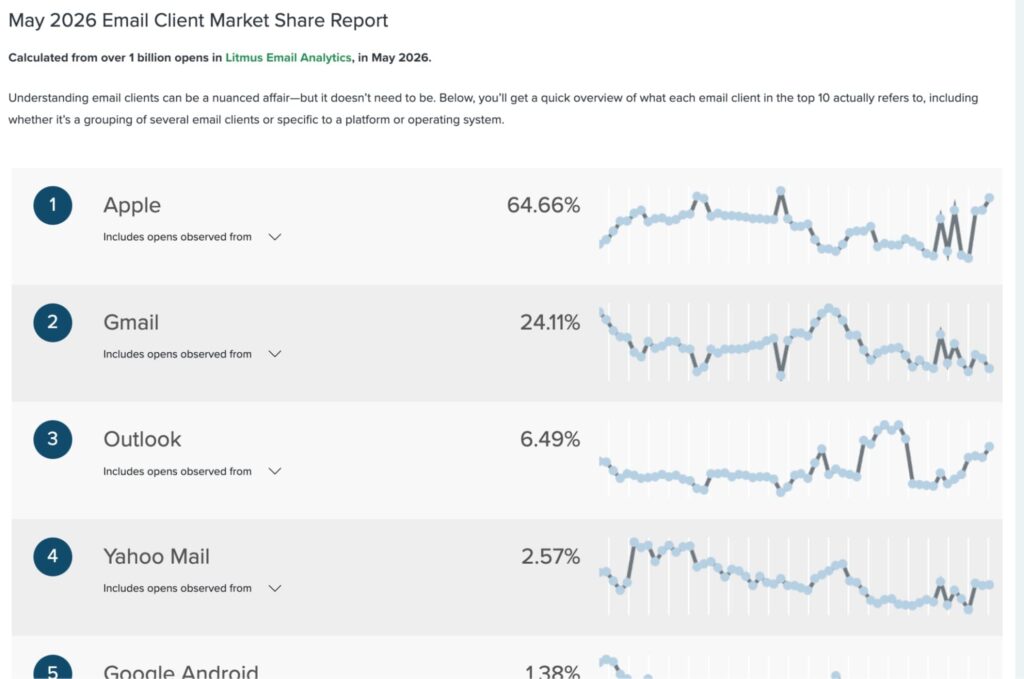
A subject line test that only tracks opens is reading noise. Track replies and booked meetings against each variant.
17 cold email subject lines
A cold email subject line has one job: prove relevance to a stranger in under five words. Everything below assumes the body pays the promise off.
For that part, see our guide on how to write cold emails that get replies.
1. First-touch subject lines
Five first-touch subject lines that read like a one-to-one email:
- {First name} — idea for {company}’s outbound
- {Your company} + {company}?
- About {company}’s {quarter} pipeline goal
- Saw {company}’s new pricing page
- Worth a look before {quarter} planning
Each line names the prospect’s company plus a live priority, which signals research in the two seconds a prospect gives it. Send them with a body that opens on the same specifics — a sample email to approach a new client shows how the pairing works in full.
2. Curiosity and pattern-interrupt subject lines
Four curiosity subject lines that break the inbox scanning autopilot:
- wrong person?
- before you renew {tool category}
- a number {first name} should see
- this felt worth 40 seconds
The interrupt comes from the words, since casing alone moves opens by a point or two at best.
A curiosity line buys you one sentence of goodwill: resolve the tease in the first line of the body or the email reads as clickbait and burns the address for future sends.
3. Personalized and reference-based subject lines
Four personalized subject lines built on something the prospect did:
- your post on {topic}
- your talk at {event}
- {competitor} started doing this
- your comment on {podcast episode}
This is the personalization tier that drives the 46%-versus-35% gap in the Belkins data.
A first-name merge token is table stakes. Referencing work the prospect put into the world is what registers as a human email, because a bulk sender has no way to fake it at scale.
4. Question-based subject lines
Question-framed subject lines topped Belkins’ format rankings at a 46% average open rate. Four that fit cold outreach:
- still handling {process} manually?
- is {metric} on your radar this quarter?
- who owns outbound at {company}?
- open to seeing {industry} reply benchmarks?
A question presumes a conversation is already underway. The “who owns X” variant does double duty: even a redirect to the right person is a warm referral you can name in the next email.
12 effective b2b email subject lines examples
B2B sales email subject lines earn their open with evidence of research: a signal, a shared connection, or an outcome a peer company got.
That starts with reaching the right inbox — worth pairing with our guide to finding someone on LinkedIn with email when you’re building the list.
1. Subject lines that lead with a trigger event
Three trigger-event subject lines for funding, hiring, and promotion signals:
- congrats on the Series B — one thought
- {company}’s six open SDR roles
- your first 90 days at {company}
A trigger event answers “why now,” the hardest question in cold outreach.
A funding round means fresh budget, a hiring spree points to growing pains, and a new leader is shopping for early wins. Signal-based outreach starts from these moments and works backward to the message.
2. Subject lines that lead with a shared connection
Three mutual-connection subject lines for prospecting:
- {mutual connection} said we should talk
- we both know {name}
- fellow {community} member
Borrowed trust is the strongest opener in B2B.
The rule: the connection must be real and recent enough that the prospect can verify it with one message. A stretched or invented mutual contact gets checked, and the reply you get back closes the door for good.
3. Subject lines that lead with ROI or outcome
Three outcome-led subject lines for prospecting:
- {X} meetings a month for {peer company}
- cutting {company}’s cost per meeting
- how {peer company} hit {metric}
Outcome lines work when the number is real and the peer company is recognizable to the prospect.
Keep the claim exactly as strong as the proof behind it — a figure from one campaign stays scoped to that campaign, and the body should name where it came from.
4. Short B2B subject lines, 7 words or fewer
Three ultra-short B2B subject lines, from one to three words:
- pipeline math
- {company} question
- worth testing?
Two-to-four words is the highest-performing length band in the Belkins data at 46%, and lines this short survive mobile truncation intact.
Skip the single-word version, though: one-word subject lines dropped to a 38% open rate because they read as automated. Two words with one specific token is the floor.
10 follow-up email subject lines
The best follow-up email subject line is no new subject line at all: reply in the original thread so the earned “Re:” carries your history with it.
When the thread has gone stale or you’re switching angles, start fresh with one of the lines below — and space them inside a planned cadence like the ones in our cold email sequences guide.
Persistence pays, but the lift arrives later than you’d expect.
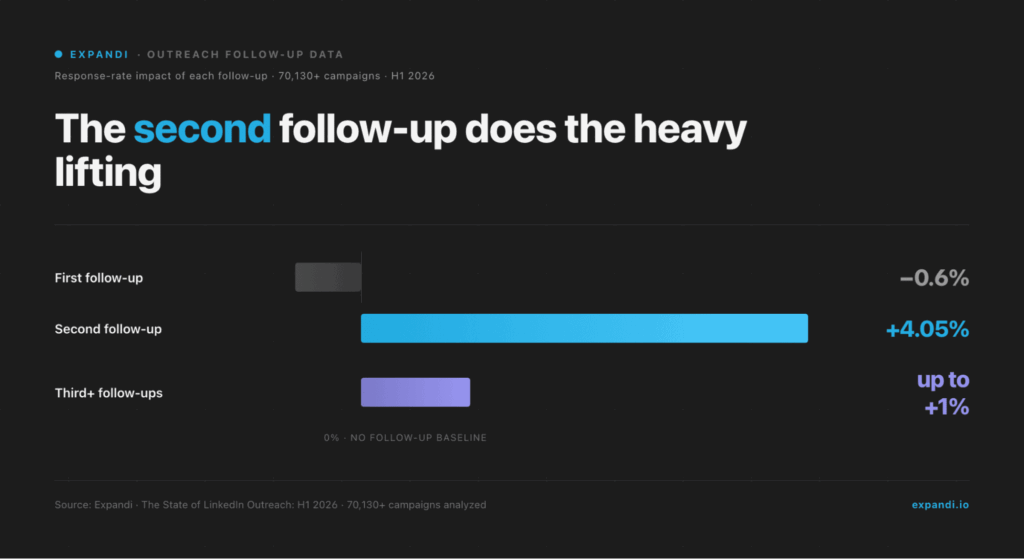
Across the 70,130+ campaigns analyzed in our State of LinkedIn Outreach H1 2026 report, the first follow-up drew 0.6% fewer responses than sending no follow-up at all — prospects who saw the first email and stayed silent rarely move on a quick nudge.
Adding a second follow-up flips the math, producing 4.05% more responses.
From the third follow-up onward, returns diminish, topping out around a 1% boost. The practical read: build every sequence with at least two follow-ups, and spend your best value-add on touch two.
1. First follow-up subject lines
Four first follow-up subject lines for a new thread:
- any thoughts, {first name}?
- one more data point for {initiative}
- since my last note — {new development}
- following up on {topic}
A first follow-up works when it adds something: a new number, a new development, a sharper question. Restating the original ask with “just checking in” gives the prospect the same decision they already declined to make.
2. Break-up and final follow-up subject lines
Three break-up subject lines for the last touch in a sequence:
- closing the loop on {topic}
- last one from me
- should I stop reaching out?
Break-up emails convert because they hand control back to the prospect. The subject line should telegraph that this is the end of the sequence, which is exactly what makes fence-sitters reply before the door shuts.
3. Value-add follow-up subject lines
Three value-add follow-up subject lines:
- the {topic} benchmark I mentioned
- a teardown of {company}’s {asset}
- saw this and thought of {company}
Value-add follow-ups reset the relationship from “seller chasing” to “peer sharing.”
The asset has to be genuinely useful on its own — a benchmark, a teardown, a relevant article — with the pitch demoted to a P.S.
8 subject lines for networking and introductions
Networking subject lines carry lower stakes than sales outreach, and that’s their advantage: a no-pitch introduction today is a warm reply when you do have an ask.
Name the human context and keep the line under five words where possible.
1. Mutual-connection subject lines
Four mutual-connection subject lines for introductions:
- {name} said you’re the person to ask
- intro via {name}
- {name} suggested I say hello
- following up on {name}’s intro
Name the mutual contact in the subject line itself, since the name is the single highest-trust token you have. Save the reason for connecting for the body.
2. Cold introduction subject lines
Four cold introduction subject lines:
- hello from a fellow {role}
- met your team at {event}
- introducing myself before {event}
- {topic} — wanted to introduce myself
Cold introductions ride on shared context: a role, an event, a topic you both work on. Declare the introduction openly.
Honest “I’m introducing myself” framing outperforms a disguised pitch, because the prospect’s guard drops when your intent is legible.
Can I use my email subject lines for LinkedIn outreach?
Partly. Standard LinkedIn messages and connection requests have no subject line, so on LinkedIn the skill transfers to your first sentence, which does the same triage-surviving job.
InMails are the exception: they carry a subject line, and our guide to writing a subject line for LinkedIn messages covers the format in depth.
Four email subject lines that convert cleanly into InMail subject lines:
- your post on {topic}
- question about {company}’s {initiative}
- {mutual connection} recommended you
- worth 30 seconds, {first name}
The channels reward the same instincts, and the returns compound when you run them together.
Per our 2026 data, LinkedIn DMs average a 10.3% reply rate against 5.1% for cold email, so a sequence that opens on LinkedIn and follows up over email gives your subject lines a warmer inbox to land in.
Sales email subject line best practices
Subject lines sit inside a larger system: deliverability, list quality, and offer decide whether a great line ever gets seen.
The cold email outreach best practices guide covers that system end to end. Within it, these are the calls that matter for the subject line itself.
1. Length and word count
Write two to four words when you can, and stay under seven. That band opened at 46% in the Belkins data, with rates sliding to 34% by ten words.
Mobile clients truncate subject lines at roughly 35-50 characters, so front-load the specific token — the company name, the trigger, the number — where it survives the cut.
2. Capitalization
Casing is a style call, and the data confirms it: every casing style in the Belkins study landed within a 25-30% open-rate band.
- ALL CAPS technically edged the table at 30%, and you should still skip it, because caps invite spam complaints that cost far more than a marginal open.
- Sentence case or lowercase reads most like a colleague’s email, which is the register cold outreach wants.
3. Emojis — when they help and when they hurt
Skip emojis in sales subject lines.
Nielsen Norman Group’s emoji study (2020, run on marketing emails) found subject line emojis increased negative sentiment toward the email by 26% and produced no increase in the likelihood of it being opened.
Emojis did attract attention in a mixed inbox, and that is precisely the problem for sellers: they attract it as marketing.
The narrow help case: an existing relationship with an established casual register, deep in a warm thread. On a first touch to a B2B buyer, an emoji files your email under “campaign” before a word gets read.
4. How to A/B test your subject lines
To A/B test sales email subject lines properly:
- Change one variable per test: length, personalization token, question versus statement.
- Split the same list segment evenly between the two variants.
- Let the full sequence run — a losing subject line sometimes wins on reply quality downstream.
- Judge by replies, positive-reply rate, and meetings booked. Opens are inflated and unreliable post-MPP.
- Log every winner with its scenario, and retire champions the moment a challenger beats them.
Expandi has A/B testing built in: create two versions of the same campaign, identical except for the subject line on the email step, then assign your lead list to both. Expandi splits the leads evenly and at random between the two versions, and campaign analytics show replies per version — the comparison that matters.
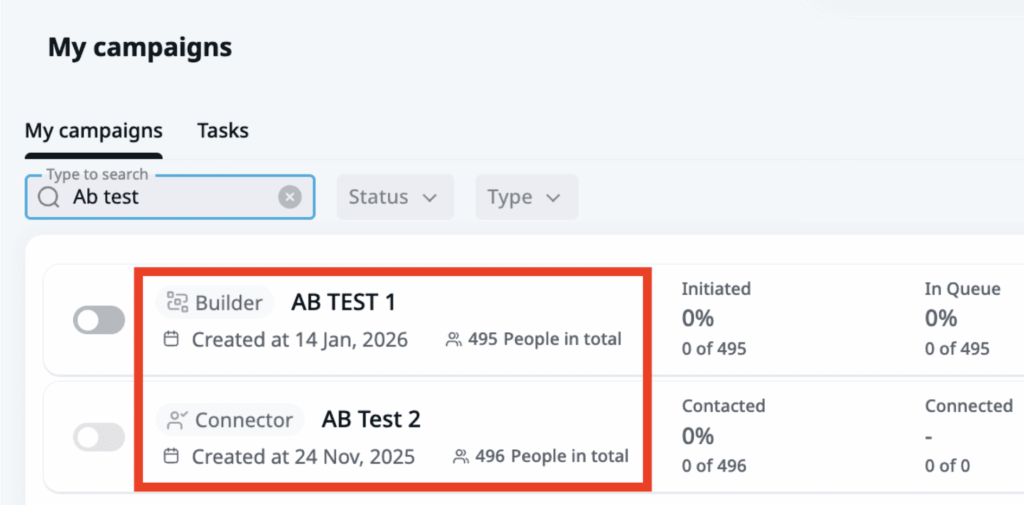
The AI Analyzer drafts the variants themselves, matched to the goal you set for the campaign, which turns test ideation from a blank page into an editing job.
Email subject lines for sales to avoid
- Faking a thread with “Re:” or “Fwd:” on a first touch.
- Spam-trigger vocabulary: free, guarantee, act now, limited time.
- ALL CAPS words or stacked punctuation.
- Teasing something the body never delivers.
- Merge-token personalization with zero research behind it (“{First name}, an offer for {company}!”).
Putting your cold email subject lines to work
Strong email subject lines for sales come down to scenario fit: a cold line proves relevance to a stranger, a follow-up earns its place by adding something new, and a prospecting line names the signal that made you reach out.
All of them stay short, specific, and human. Test them against replies, keep the winners, and treat the subject line as the first step of a sequence.
Expandi runs those sequences across LinkedIn and email in one campaign, with A/B testing and reply tracking built in — start your 7-day free trial and put the 51 lines above to work.
Frequently asked questions
State the specific reason you’re emailing this prospect in two to four plain words: their company, a trigger event, a shared connection, or an outcome a peer got.
Write it in sentence case or lowercase, and make sure the first line of the email delivers on it. If the subject line could be sent to a thousand people unchanged, rewrite it.
Two to four words. That length band pulled the highest open rate (46%) in Belkins’ 2025 study of 5.5 million cold emails, with performance declining steadily past seven words and bottoming out at ten.
Short lines also survive mobile truncation, which cuts subject lines at roughly 35-50 characters.
Use sentence case or all lowercase. Casing styles differed by only a few points in Belkins’ 2025 data (a 25-30% open-rate band), so capitalization is a register choice rather than a performance lever.
Lowercase reads like a quick note from a colleague, and ALL CAPS invites spam complaints regardless of its marginal open-rate edge.
They hurt. Nielsen Norman Group’s research found emojis in subject lines increased negative sentiment toward the email by 26% and produced no lift in the likelihood of the email being opened.
In B2B cold outreach, an emoji signals bulk marketing, which is the exact opposite of the one-to-one register a sales email needs.
Split one list segment evenly across two variants that differ by a single variable, such as a question versus a statement. Let the full sequence run, then compare replies, positive-reply rate, and meetings booked per variant.
Skip open rate as the deciding metric: Apple’s Mail Privacy Protection registers opens the recipient never made, so opens overcount.
A cold subject line has to prove relevance to a stranger, so it leads with research: a company name, a trigger event, or a mutual connection.
A follow-up subject line builds on an existing thread, so it either stays in that thread as a reply or adds something new, like a data point or resource. Reusing a cold-style line on a follow-up wastes the context you already earned.
Yes, for drafting and variant generation. Expandi’s AI Analyzer generates campaign messages and follow-ups matched to the goal you set, which gives you subject line variants to test without starting from a blank page.
General tools like ChatGPT work as a brainstorming layer. Either way, a human should add the prospect-specific token — the trigger, the connection, the number — because that specificity is what the data rewards.


You’ve made it all the way down here, take the final step