15 Cold Email Outreach Best Practices To Implement in 2026

Key Takeaways
- Authenticate your domain and warm it up gradually — deliverability comes before copy.
- Keep spam complaints under 0.3%; a narrow, verified list protects it.
- Track reply rate, not opens — Apple’s privacy changes made opens unreliable.
- Pair email with LinkedIn: email carries the ask, LinkedIn carries the credibility.
- Follow up three to four times; most replies come after the first email.
What are the cold email outreach best practices to follow in 2026?

Cold email outreach best practices in 2026 start with whether your email reaches an inbox at all, and end with whether the person reading it has a reason to answer today.
The 15 cold email outreach best practices that work in 2026:
- Authenticate your sending domain before anything else.
- Send from a dedicated outreach domain.
- Warm new inboxes up gradually.
- Define a narrow, specific ICP.
- Prioritize list quality over list size.
- Time outreach to a real trigger.
- Build an offer worth replying to.
- Write a subject line that survives a scan.
- Write the way you would actually speak.
- Keep it short with a single ask.
- Follow up three to four times.
- Wrap LinkedIn touchpoints around the email.
- Give people an easy way out.
- Measure replies, positive replies, and booked calls.
- Run outreach as a continuous system.
We pulled the highest-replying email-and-LinkedIn sequences running on Expandi and worked backwards through what they share: clean sending infrastructure, a list narrow enough to write to honestly, and a trigger that explains the timing.
Here’s what we’ll cover:
- What changed in cold email between 2024 and 2026, and which old habits now cost you the inbox.
- Whether to open with email, LinkedIn, or the phone, with reply data for all three.
- The three calls that decide whether your outreach survives being scaled.
Does cold email outreach still work for b2b sales in 2026?
Yes! Cold email outreach still works in 2026, but only when the campaign has been set up properly. This looks like:
- The sending setup passes inbox-provider checks
- The list is narrow enough to write to specifically
- The message arrives with a reason attached
Volume stopped being the lever once providers started scoring engagement. The campaigns that scale in 2026 safely earn replies at small volumes first.
Let’s look at some other things that have shifted in recent months:
1. Cold email outreach is no longer a single-channel game
Your prospect checks several places before deciding whether to answer you.
McKinsey’s 2026 Global B2B Pulse Survey, drawing on nearly 4,000 decision-makers across 13 countries, found that buyers now use an average of ten channels across a purchase.
Your email is one of the ten. Each channel does a different job in that mix:
- Email carries the ask, the detail, and the calendar link.
- LinkedIn carries the evidence that you are a real person worth answering.
An SDR who exists only in the inbox is competing on subject lines alone. The same message, sent by someone whose profile the prospect has already seen, is a different message.
2. Relevance is the deliverability lever
Spam filters read behavior, so who you email is now a technical setting.
Since February 1, 2024, Google’s sender guidelines require every sender to Gmail personal accounts to keep spam complaints below 0.3% in Postmaster Tools, alongside authentication and a valid reverse DNS record.
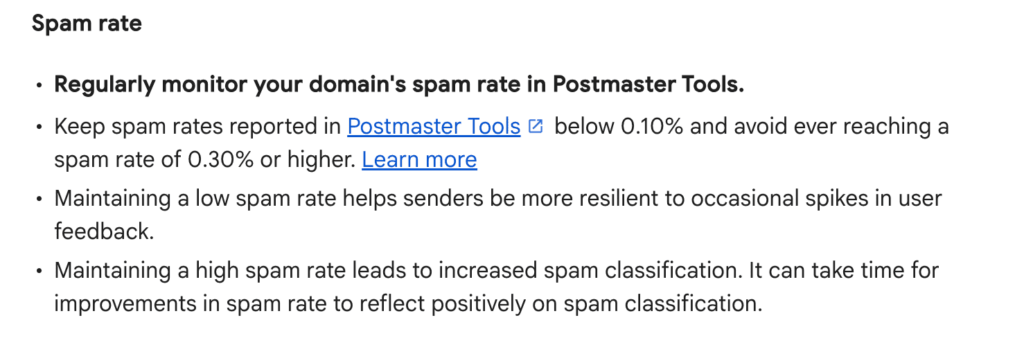
Complaint rate is a function of who receives the email, which puts targeting inside your deliverability stack.
Cold email that holds up over months tends to run on:
- A written ICP with one named problem attached.
- Lists small enough to defend contact by contact.
- A message that answers why this person, and why this week.
For a founder sending from a single domain, one careless list is the entire sending reputation. Agency operators carry the same risk on a client’s domain, which is harder to explain afterwards.
3. Systems beat tools, including AI tools
AI made sending cheap and standing out expensive.
AI writing tools, AI email marketing tools and AI sales tools draft faster, personalize at speed, and summarize what happened. What they leave to you is who to email, what that person owns, and whether this week is the moment to raise it.
We’re not saying don’t use AI tools as part of our outreach tech stack – we’re saying it’s important to have your outreach channel, ICP and timing right before you generate a single draft. That’s why we’ve integrated signal-based outreach into Expandi, you can scale your conversion rate by 8.6x and 4x your reply rates, with only 1-3 touchpoint needed to convert a lead.
Cold email outreach vs LinkedIn outreach vs cold calling: which should you lead with in 2026?
- Lead with LinkedIn when your ICP is active there and the deal starts with trust.
- Lead with email when you need volume, attachments, or coverage of several stakeholders at one account.
- Cold calling earns its place against a live signal.
In our 2026 data, LinkedIn DMs reply at roughly double the rate of cold email.
| Channel | What the data shows | Where it wins | What it costs at scale |
|---|---|---|---|
| Cold email | 5.1% average reply rate in our 2026 data, against a 3.43% average across a wider 2026 cold email benchmark | Volume, attachments, calendar links, several stakeholders at one account | Domain and inbox reputation, which is slow and expensive to rebuild |
| LinkedIn DM | 10.3% average reply rate across 70,000+ campaigns, and 28.5% connection acceptance across a separate set of 13.2 million requests | First touch, senior buyers, credibility before the ask | A hard weekly ceiling on connection requests, plus account restriction risk |
| Cold call | 9.9% connect rate per dial and 24.5% per prospect across 175,000+ dials, working out at roughly one meeting per 370 dials | Live objection handling, late-stage account pushes | Rep hours, and it is the least leveraged channel per hour spent |
The email and LinkedIn figures come from:
- Our State of LinkedIn Outreach H1 2026 report (70,000+ campaigns).
- Our 2026 LinkedIn outreach benchmarks (13.2 million connection requests).
- The wider cold email average comes from Instantly’s 2026 cold email benchmark report.
- The cold calling figures come from Belkins’ 2026 cold calling study of 175,000+ dials logged through 2025.
Read the table as three different bottlenecks.
- LinkedIn has no spam folder, so the message arrives. The ceiling is how many people you are allowed to reach in a week.
- Email has no gatekeeper on volume. You can reach 500 people this week, and inbox providers will score you on how those 500 react.
- Cold calling converts well per conversation and poorly per hour, which makes it a channel to aim at signals instead of lists.
There is also a sequencing argument, which is what buyers describe when you ask them. Michel Lieben, founder of ColdIQ, an outbound sales consultancy, described it in a GTM Society interview:
“If I send you an outreach campaign… the first thing you’re gonna do is gonna look at my LinkedIn profile.” — Michel Lieben, ColdIQ
Which is the argument for running both channels in one sequence.
The 15 practices below assume email is doing real work in yours, whether or not it opens the conversation.
15 cold email outreach best practices
These 15 cold email outreach best practices run in order of operations:
- Infrastructure.
- Targeting and offer.
- The writing.
- Sequencing and measurement.
The order matters because each stage compounds the next. A perfect subject line sent from an unauthenticated domain never gets read.
1. Get deliverability right before you send anything
Deliverability comes first because nothing downstream matters without it. If inbox providers distrust your domain, your copy never gets a vote.
Google’s sender guidelines set a floor that took effect on February 1, 2024.
Every sender to Gmail personal accounts needs SPF or DKIM authentication, a valid reverse DNS record, a TLS connection, and a spam complaint rate under 0.3%.
Anyone sending more than 5,000 messages a day to Gmail needs SPF, DKIM, and DMARC together, plus one-click unsubscribe on marketing messages.
Set up all three regardless of your volume. In plain terms:
- SPF tells inbox providers which servers are allowed to send email for your domain.
- DKIM verifies your emails weren’t altered in transit.
- DMARC tells providers what to do when those checks fail.
Misconfigured authentication is the fastest route to the spam folder, and it is the one problem that rewriting the email never fixes.
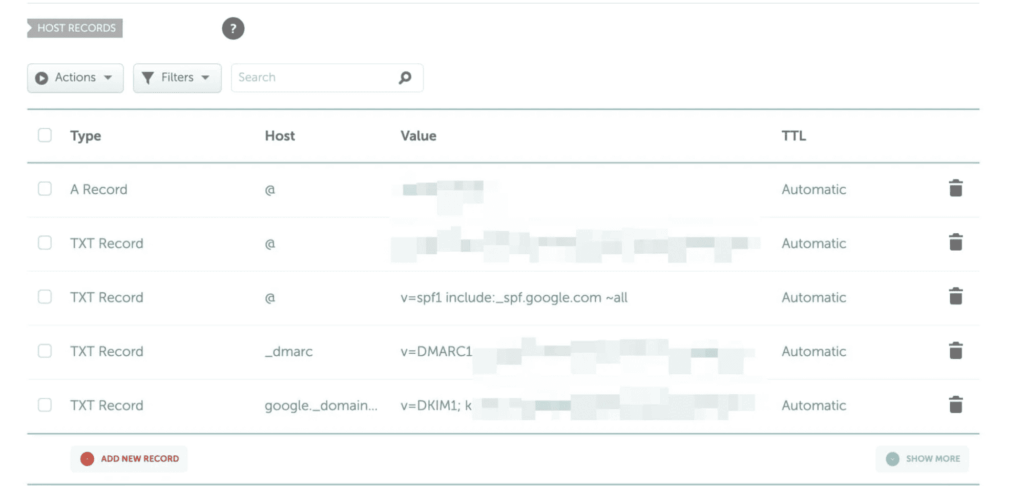
The exact steps depend on your domain host, and your DNS provider will have documentation for adding each record.
2. Use dedicated domains and inboxes for cold outreach
Send cold email from a separate domain, always.
If your primary domain is yourcompany.com, run outreach from a related domain such as tryyourcompany.com or yourcompanyhq.com.
That way, a campaign that underperforms or gets flagged takes the outreach domain with it, and your core brand keeps sending invoices, support replies, and product emails as normal.
The basic setup looks like this:
- Main domain: yourcompany.com
- Outreach domain: tryyourcompany.com
- Outreach inboxes: [email protected], [email protected]
Redirect the outreach domain to your main website so anyone who clicks through lands somewhere real.
A domain that resolves to nothing reads as throwaway, to prospects and to filters.
3. Warm up gradually and send like a human
New inboxes fail when they send too much, too fast, whatever the domain setup looks like.
A safe warm-up ramp looks like this:
- Start at 5-10 emails per inbox per day.
- Increase volume every few days, in small steps.
- Keep daily sending consistent, with no spikes.
How you send matters as much as how much. Inbox providers look for human patterns:
- Reasonable gaps between individual sends.
- Varied send times across the working day.
- Real replies and engagement mixed into the activity.
An inbox that fires forty emails in an hour and receives nothing back is a pattern filters recognize. The goal during warm-up is stability, and volume only becomes safe to raise once the inbox shows consistent engagement.
For the full ramp schedule and the tools that automate it, see our guide to email warm up.
4. Start with a narrow, well-defined ICP
Broad targeting is what makes cold email generic, and generic is what makes it get deleted — b2b cold email best practices start with narrowing this before anything else.
A usable ICP definition goes past job title. It names:
- Industry or niche.
- Company size or revenue range.
- Role and decision authority.
- One specific problem you actually solve.
Here’s the difference:
- “Founders at B2B SaaS companies with 10-50 employees struggling to build outbound without hiring an SDR” gives you something to write.
- “SaaS founders” gives you a merge tag.
Narrower targeting produces higher reply quality, better engagement signals for your domain, and safer headroom as volume grows.
Michael Kamleitner, CEO of Walls.io, a user-generated content social media aggregator, put it this way in a GTM Society interview:
“We don’t do like a blind mass outreach… We really do care a lot about filtering down to our ICP to really whom we want to talk to… Otherwise you get crap traffic on your booth and that’s not worth the time.” — Michael Kamleitner, Walls.io
Pressure-test the definition in LinkedIn Sales Navigator before you send anything.
Layer industry, company size, seniority, and role, then watch the result count move as you narrow. Tens of thousands of results means the ICP is too broad. Too few to run a campaign means it is too narrow or built on the wrong filters.
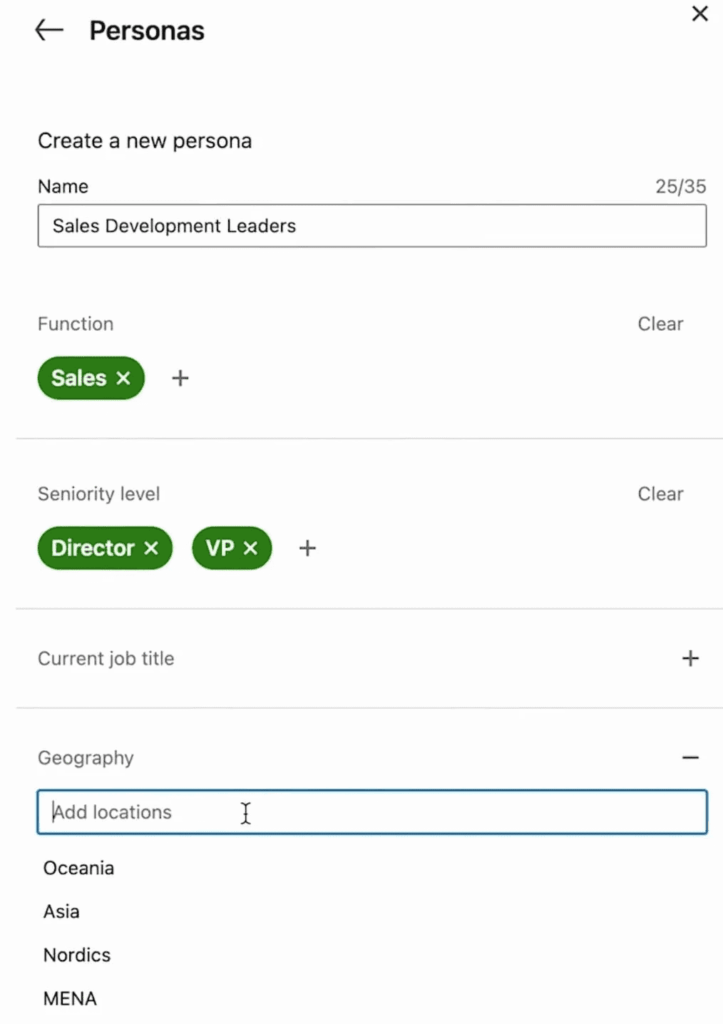
For the filter combinations worth building around, see our guide to LinkedIn Sales Navigator filters.
5. Prioritize list quality over list size
Who you email moves results further than how many people you reach.
Large generic lists produce low engagement, fast deletes, and weak reply quality, and all three degrade deliverability over time. Smaller curated lists generate replies, which is the signal inbox providers reward.
List quality means three things:
- Verified, current contact data with a low bounce risk.
- People who genuinely match the ICP.
- Roles with real buying influence or budget context.
Between 10,000 loosely relevant contacts and 500 well-qualified ones, the smaller list wins on replies and costs you nothing in domain reputation.
Getting there means sourcing addresses properly and verifying them before they enter a sequence. Our guides on how to find someone’s email address and building a prospect list cover the sourcing and verification side.
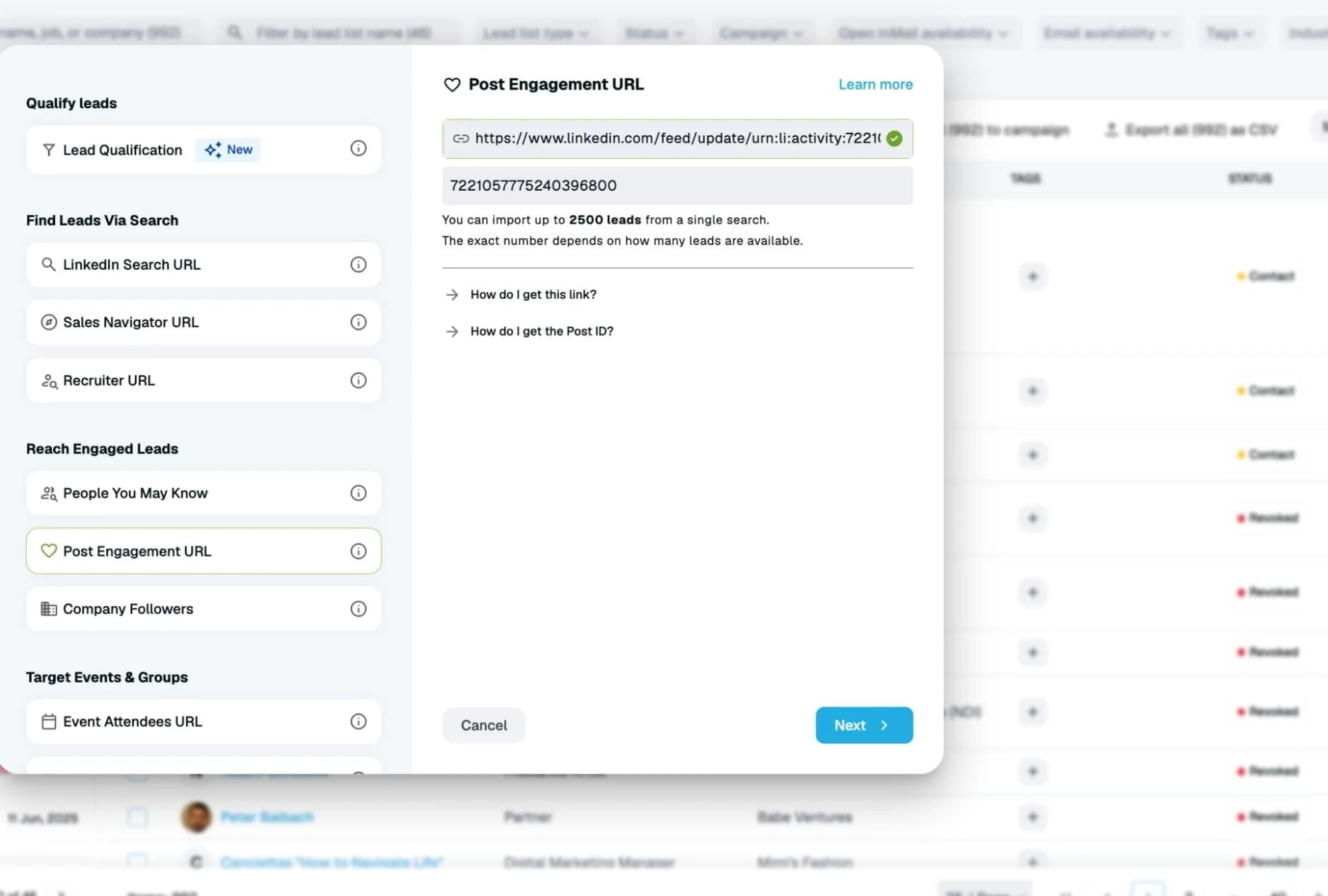
Expandi builds the list from LinkedIn search results, event attendees, group members, or a Sales Navigator search, then exports to CSV or runs the outreach from the same place.
6. Use timing and context to create relevance
Relevance in cold email is when and why, more than what.
An email that arrives with a reason attached reads as intentional. One that arrives with no reason reads as a list purchase, however well written it is.
A handful of context signals work reliably as triggers:
- Recent job changes or promotions.
- Hiring signals that imply a new problem.
- Funding rounds or announced expansion.
- Engagement with your content or profile on LinkedIn.
Sales Navigator surfaces several of these directly. Its Changed Jobs spotlight flags people who updated their role in the last 90 days, and account-level filters cover company growth and recent funding or leadership news.
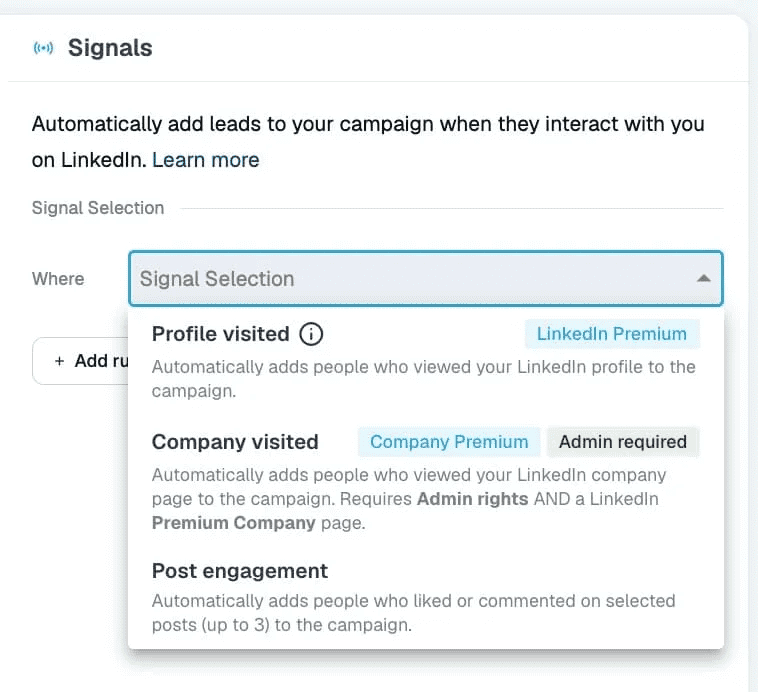
Expandi’s Signals step adds people to the campaign automatically when they like or comment on one of up to three selected posts, and on profile or company-page views if you have LinkedIn Premium.
Timing relevance does not require deep personalization or a reference to something they posted two weeks ago. A single line explaining why you are writing this week does the work.
Alex Delivet, founder of Collect, a customer onboarding platform, described what happens when the timing is wrong in a GTM Society interview:
“If it’s too salesy and I would say not the right moment, then you will end up in, I would say, not in spam, but being ignored.” — Alex Delivet, Collect
7. Build an offer people want to reply to
Clever copy cannot rescue a weak offer.
The offer decides more of the outcome than the phrasing does. A message that could plausibly have been sent to anyone gets treated as though it was.
A strong cold outreach offer is:
- Specific to the ICP you defined.
- Framed around a problem, ahead of any feature.
- Clear about the outcome, and about who carries the risk.
“Helping B2B SaaS founders book 10 qualified demos a month without hiring an SDR” does work that “we help companies grow faster with outbound” cannot.
For worked examples of offers framed this way, see our sample email to approach a new client.
8. Write a subject line that survives a two-second scan
The subject line decides whether the offer gets read, and it is the one line the recipient sees before deciding.
Belkins analyzed 5.5 million B2B emails sent through 2024 and found that personalizing the subject line moved reply rate from 3% to 7%. Open rate is a soft signal since Apple’s privacy changes, so the reply figure is the one worth acting on.
The same study found three patterns in what performs:
- Subject lines of 2-4 words pulled the highest open rates at 46%, with performance dropping past 7 words.
- Questions outperformed every other subject line type, also at 46%.
- Marketing hype, urgency words like “ASAP”, and generic greetings all landed below 36%.
The practical version: write the subject line last, pull it from the one specific thing the email is about, and keep it to something a colleague could plausibly have typed.
For example:
- “your new RevOps hire”
- “question about the Series A”
One legal constraint applies here as well: the subject line has to describe what is actually in the email. Find inspiration in our guide of 50+ email subject lines for sales outreach. For the body copy that follows it, see our guide to how to write cold emails.
9. Write emails that sound human
Over-optimized emails are easy to spot and easy to delete.
Buzzwords, obvious templates, and forced personalization all register as pattern within a line or two. The reader recognizes the shape and stops reading.
Emails that get replies tend to:
- Use conversational language a person would say out loud.
- Reach the point inside the first two sentences.
- Read like one-to-one writing.
For example:
- “Saw you’re hiring two more SDRs, so I’ll keep this short.”
- “I hope this email finds you well. I’m reaching out because I believe our automation solution could drive revenue for your organization.”
Conversational is a different thing from sloppy. Write the way you would if you were sending to one person you respected, then cut whatever you added to sound professional.
Need a starting point? Here’s a sample email to approach a new client and templates for collaboration emails you can adapt to your own outreach
10. Keep cold emails short and focused
Attention is the bottleneck. Prospects scan cold emails in seconds, and length gives them more places to stop.
The best-performing campaigns in Instantly’s 2026 benchmark keep emails under 80 words.
High-performing cold emails share three habits:
- Carry a single idea.
- Explain the value in a few sentences.
- End with one low-friction ask.
A single ask means one link, one question, or one calendar reference. Two asks split the reader’s attention and neither gets answered.
Cut the company boilerplate as well. The prospect can work out who you are after they reply.
If the email needs scrolling on a phone, it is too long. The goal of the first email is a conversation, and everything else can wait until you have earned it.
11. Use follow-ups to create familiarity
Follow-ups carry a large share of the replies a campaign produces.
Instantly’s 2026 cold email benchmark found 58% of replies come from the first email, which leaves 42% arriving only because someone followed up. Stopping after one send costs you that 42%.
Strong follow-ups do three things:
- Add a piece of context the first email didn’t carry.
- Reference the original message without repeating it.
- Stay neutral in tone, with no pressure attached.
Skip “just bumping this” and countdown language. Both read as automated, which is the impression the sequence exists to avoid.
Give the reader something new each time: a relevant case study, a short guide, a two-minute Loom. For sequence structure and timing between touches, see our breakdown of cold email sequences that get replies.
12. Support cold email with LinkedIn touchpoints
Cold email performs better when it arrives with some recognition behind it.
A profile view or a connection request before the email lands makes your name recognizable at the moment the subject line is being judged. Seeing a name twice, in two contexts, changes how the second one reads.
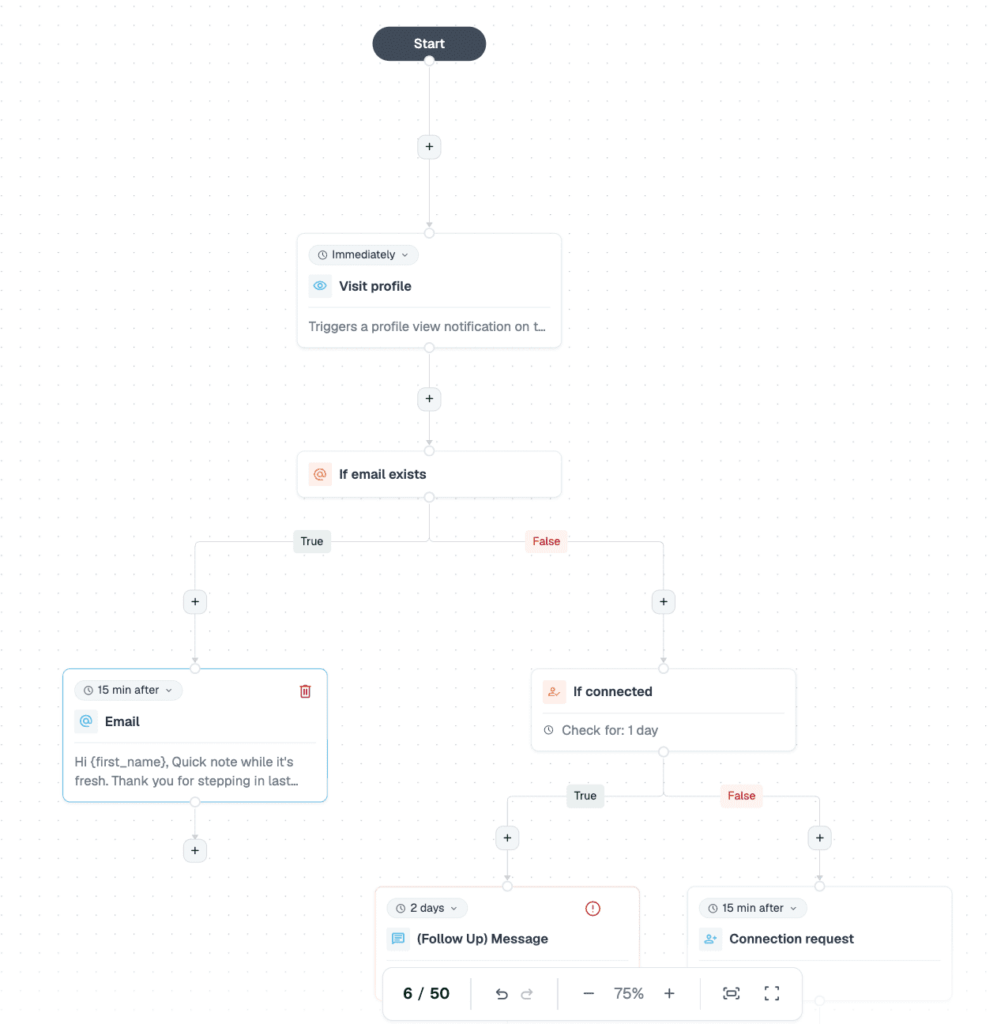
The sequencing is straightforward: LinkedIn establishes that you exist, email carries the ask. Running both from one platform keeps the timing right without a rep tracking it manually, which is what LinkedIn outreach automation is for.
A working order for the two channels looks like this:
- View the prospect’s LinkedIn profile.
- Send the first email two days later.
- Send a connection request if no reply lands.
- Follow up by email once the request is accepted.
Pro tip: in Expandi, a lead is paused automatically the moment they reply, so the LinkedIn touch and the follow-up email only reach people still sitting in the sequence. Anyone who already answered drops out without you building a branch for it.
13. Give people an easy way out and get the legal part right
An unsubscribe link protects your domain and your legal position at the same time.
In the US, the CAN-SPAM Act covers all commercial email, and the FTC states plainly that the law makes no exception for business-to-business email. Each violating email carries penalties of up to $53,088.
The FTC requires six things on every commercial email:
- Accurate From, To, Reply-To, and routing information.
- A subject line that reflects what is in the message.
- Clear disclosure that the message is an advertisement.
- A valid physical postal address.
- A clear opt-out mechanism, live for at least 30 days.
- Opt-out requests honored within 10 business days.
In the UK and EU, the picture depends on who you are writing to.
The ICO’s guidance on business-to-business marketing explains that PECR’s electronic-mail rule does not apply to corporate subscribers, meaning limited companies and LLPs.
Sole traders and other partnership types are classed as individual subscribers, with the same protection as consumers.
A practical read for an SDR: your list of limited-company contacts is workable in the UK, your list of freelancers and sole traders is not. UK GDPR applies to the personal data either way, and everyone on it can object at any time.
Build the suppression list before you need it.
14. Make reply rate your primary cold email metric
Open rate stopped being a usable number, so optimizing around it walks teams in the wrong direction.
Apple accounted for 64.66% of tracked email opens in Litmus’ May 2026 email client market share data, calculated from over a billion opens, and Apple’s Mail Privacy Protection now affects roughly 55-60% of all opens by preloading images whether or not anyone read the message.
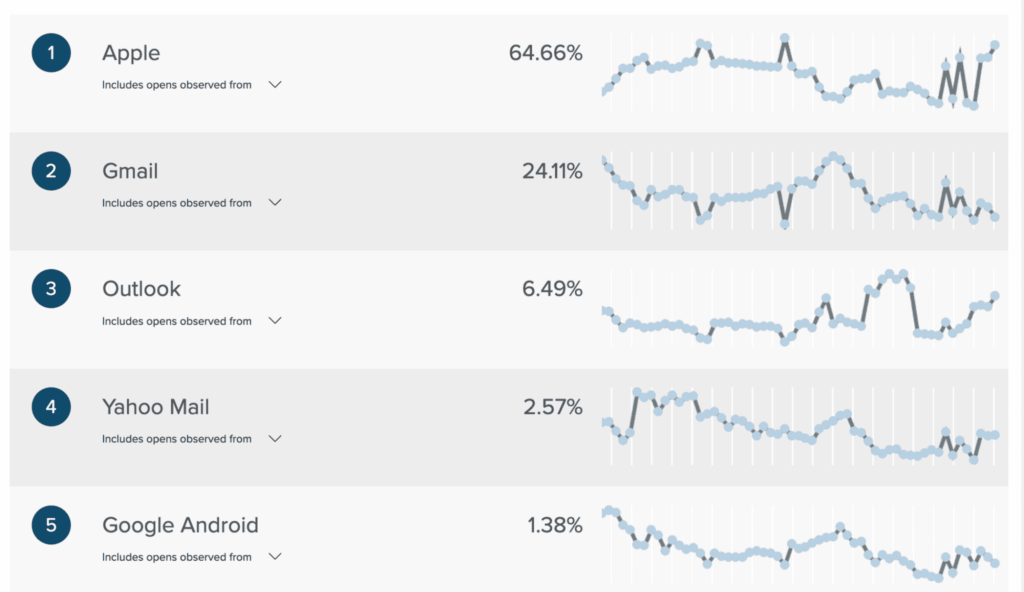
A campaign can post a 60% open rate and have generated nothing.
Three cold email metrics carry the real signal:
- Reply rate, which shows whether the message landed at all.
- Positive reply rate, which shows whether it landed with the right people.
- Conversions: calls booked, demos held, opportunities created.
Treat opens as a directional signal and make decisions on conversations started.
15. Run cold outreach as a system with realistic timelines
Cold outreach best practices treat this as a system, not a launch — that’s where it breaks when teams get it wrong.
One campaign, one list, one sequence, then a verdict, leaves you with a result and no idea which part produced it.
Teams that compound results do four things continuously:
- Run outreach in continuous weekly cycles.
- Change one variable at a time so the result is readable.
- Track reply quality alongside reply rate.
- Feed what they learn from real conversations back into targeting and offer.
Set expectations to match.
- Domains need 3-4 weeks to warm.
- Inboxes need engagement history.
- Messaging needs real replies before it converts predictably.
- Reply quality improves before volume does, and compounding shows up after that.
The system question is also where teams weigh running outreach in-house against hiring it out.
- Doing it yourself is slower and teaches you your market.
- Buying it from a lead generation company makes sense once your ICP and offer are settled and you want consistency without building the infrastructure.
Either way, understand deliverability, targeting, and measurement well enough to spot when something is going wrong.
Campaigns killed in week two and campaigns scaled in week two fail for the same reason: the system hadn’t run long enough to say anything yet.
What else to consider when scaling cold email outreach in 2026
Once the fundamentals hold, three decisions determine whether scaling strengthens the system or quietly breaks it:
- How you sequence channels.
- How far you automate personalization.
- Which tools you put underneath it.
1. Multichannel sequencing across email and LinkedIn
Each channel plays a distinct role in a single sequence. Email carries the message, LinkedIn builds recognition, and automation handles the timing between them.
A sequence that works looks like this:
- The prospect receives an email.
- Then gets a LinkedIn profile view or connection request if they don’t reply.
- Then, a soft email follow-up once the name is already familiar.
Here’s what that looks like built out in Expandi.
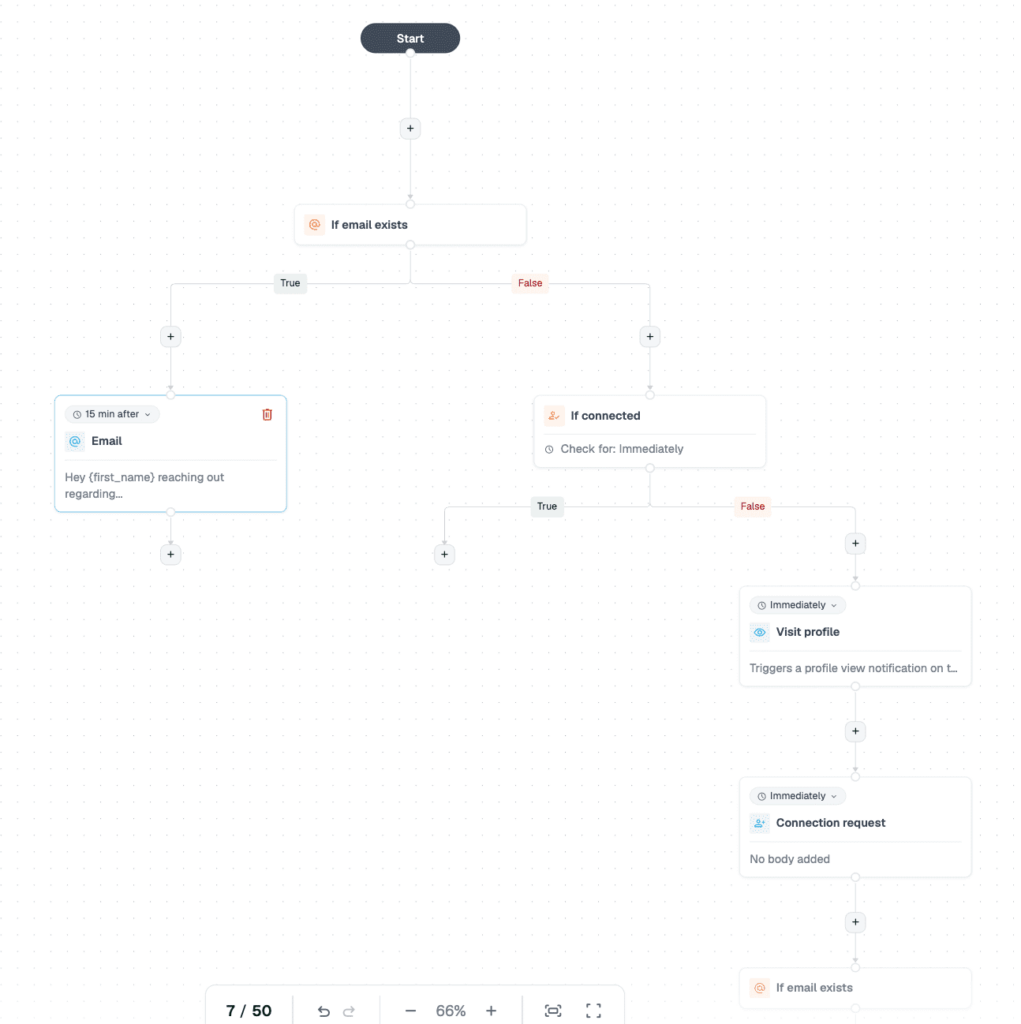
Used well, LinkedIn raises the odds your emails get read. Used carelessly, it doubles the noise you’re sending one person and annoys them twice as fast.
2. Personalization and automation tradeoffs
Inserting a first name or referencing a random profile detail is easy to automate and just as easy to ignore.
What drives replies is personalization built around the situation the reader is in:
- A clearly defined ICP.
- A problem that role genuinely owns.
- Context: timing, company stage, team size.
- An offer that addresses that problem directly.
- “Saw you’re Head of RevOps at a Series B SaaS company” tells the reader you found their LinkedIn headline.
- “Teams your size hit a routing problem once the AE count passes twelve” tells them you understand their week.
Personalizing the problem scales, because problems repeat across a segment.
Personalizing the person breaks down around contact 200, when the research time catches up with you.
3. Your cold email outreach tool stack
A working cold outreach stack covers four jobs: find leads, enrich and verify, set up sending infrastructure, then sequence and manage replies.
A core 2026 cold email stack could look like this:
- Finding leads – building a targeted list that matches your ICP before anything else touches it. LinkedIn Sales Navigator does the filtering on role, industry, headcount, and seniority. Expandi pulls the resulting search, event, group, or post-engagement audience straight into a campaign.
- Enrichment and verification – turning a name into a deliverable address, then dropping the ones that will bounce. Clay and Hunter.io cover the finding side, and a verification pass through Mailgun or a dedicated validator keeps your bounce rate down before it costs you domain reputation.
- Sending infrastructure – the domains, mailboxes, and warm-up that decide whether any of it lands. This is where the dedicated outreach domain and the warm-up ramp from earlier actually live, and it is the job teams skip most expensively.
- Sequencing and replies – running the cadence and getting responses into one place. Expandi runs email and LinkedIn in a single sequence with signal-based triggers and conditional steps. Smartlead handles high-volume sending spread across many mailboxes.
Each covers one part of the workflow. For a wider category breakdown across outbound, lifecycle, and deliverability tooling, see our roundup of AI email marketing tools.
Getting best practices for cold email outreach right in 2026
The best practices for cold email outreach in 2026 come down to sequence:
- Get the sending setup clean.
- Narrow the list until every contact has a reason to hear from you.
- Scale deliberately once replies prove the message works.
Tools and automation amplify a strategy that already exists, and make the absence of one obvious. The compounding starts when email and LinkedIn run together, with email carrying the ask and LinkedIn carrying the recognition that makes it land.
To run that as one sequence with the timing handled for you, start your free 7-day Expandi trial.
Frequently asked questions
Yes, when it follows current cold email best practices. Cold email still generates replies and meetings for teams that authenticate their domains, target narrowly, and follow up thoughtfully.
Generic templates, high-volume blasting, and unverified lists stopped working once inbox providers began scoring engagement.
Three to four touches after the initial email is a workable range for B2B outreach. Space them three to five days apart, and give each one a new reason to exist: a case study, a different angle on the problem, a short question.
Stop when the sequence runs out of new things to say, since a touch with no fresh reason attached is what generates complaints.
Cold email outreach targets people who have no prior relationship with you, sent one-to-one from a personal mailbox with a single ask. Email marketing goes to a list that opted in, sent from a shared marketing platform with templates and tracking.
The rules differ too: cold outreach lives or dies on sender reputation, since there is no prior engagement holding it up.
Thirty to fifty a day is a safe working ceiling for an established outreach inbox. New inboxes start at 5-10 a day and ramp over several weeks. Scale by adding inboxes, since volume per mailbox is what triggers filtering.
AI-written email works when a person supplies the targeting, the offer, and the reason for writing. Fully generated messages tend to read as generic because the model has nothing specific to work from.
Use AI to draft and vary copy at speed, and keep the judgment about who to contact and why with the human.
The answer depends on time, experience, and risk tolerance. Running it in-house works when you are early and want to learn your market, though it takes time and mistakes are paid in domain reputation.
Outsourcing makes sense once your ICP and offer are settled and you want consistent volume without managing infrastructure yourself.


You’ve made it all the way down here, take the final step