B2B Lead Generation in 2026: What Works and What to Avoid

Key Takeaways
- Warm signals beat cold volume: signal-triggered campaigns reply at 13.4-14.21% versus the 10.3% LinkedIn average.
- LinkedIn DMs out-reply cold email two to one, 10.3% versus 5.1%.
- Buyers make first contact 61% of the way through their journey, so content decides who they call.
- Qualify on ICP fit plus live intent, and route replies by sentiment.
- Expandi triggers LinkedIn sequences automatically off buying signals like job changes and profile visits.
B2B Lead Generation in 2026: What Works and What to Avoid

B2B lead generation in 2026 rewards teams that reach fewer, better-fit buyers with a real reason for the timing, and it prices out the volume plays.
Our own platform data shows the gap: signal-triggered LinkedIn campaigns reply at 13.4-14.21% against a 10.3% average across all DMs, while cold email sits at 5.1%.
Here’s what this guide covers:
- The four approaches driving B2B pipeline right now, with the reply-rate data behind each.
- Four habits that quietly burn domains, lists, and budgets.
- A step-by-step LinkedIn playbook, from profile warm-up to sequencing.
- How to qualify the leads you generate so sales time goes to real buyers.
What is B2B lead generation?
B2B lead generation is the process of identifying companies that fit your ideal customer profile, finding the decision-makers inside them, and opening conversations that convert interest into qualified sales pipeline. Sales teams drive it through outbound channels like LinkedIn outreach and cold email, while marketing feeds it with content, ads, and inbound capture.
4 B2B lead generation strategies that work in 2026
Four approaches are doing the heavy lifting in B2B lead generation in 2026: signal-based outreach, multichannel sequencing, personalization at scale, and content that feeds outbound.
All four depend on a tight ideal customer profile, defined before any channel work starts.
1. Signal-based and warm outreach
Signal-based outreach triggers a sequence off a buying-readiness event: a job change, a funding round, a profile visit, an event registration — so the message lands while the reason is fresh.
This answers the question every cold touch leaves hanging: why are you contacting me now?
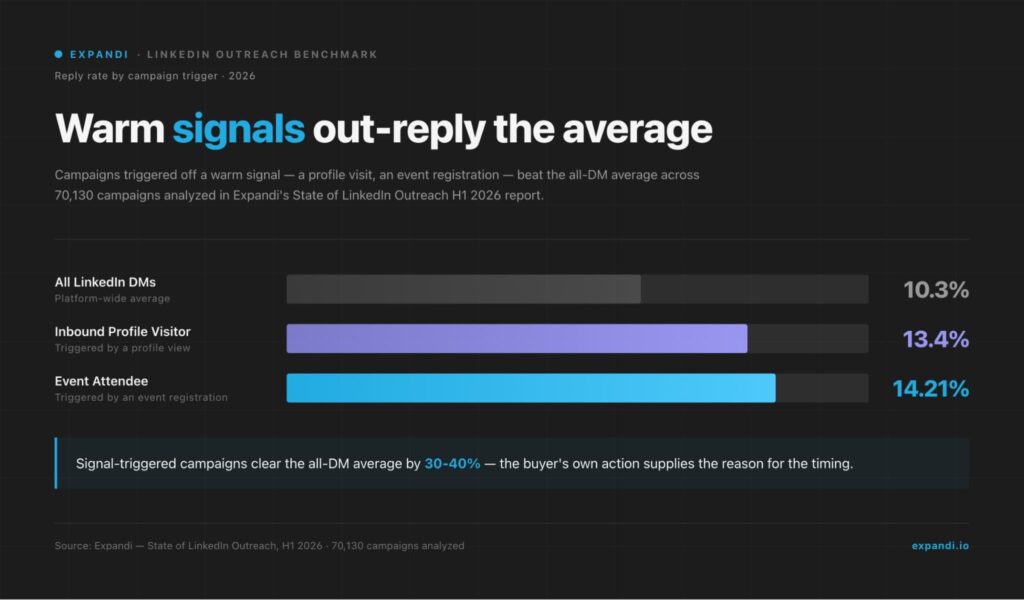
The reply-rate gap is wide. In our State of LinkedIn Outreach H1 2026 report, built on 70,000+ real campaigns, Inbound campaigns targeting profile visitors reply at 13.4% and Event Attendee campaigns at 14.21%, against 10.3% across all LinkedIn DMs.
Signals worth building campaigns around:
- Profile views and content engagement.
- Event registrations and webinar attendance.
- Job changes inside target accounts.
- Funding announcements and hiring sprees.
- Posts about a competitor or a tool switch.
Expandi’s signal-based campaign triggers fire LinkedIn sequences automatically when a lead changes jobs, engages with your content, or lands in a Sales Navigator saved search. The full setup lives in our signal-based outreach guide.
2. Multichannel sequencing across LinkedIn and email
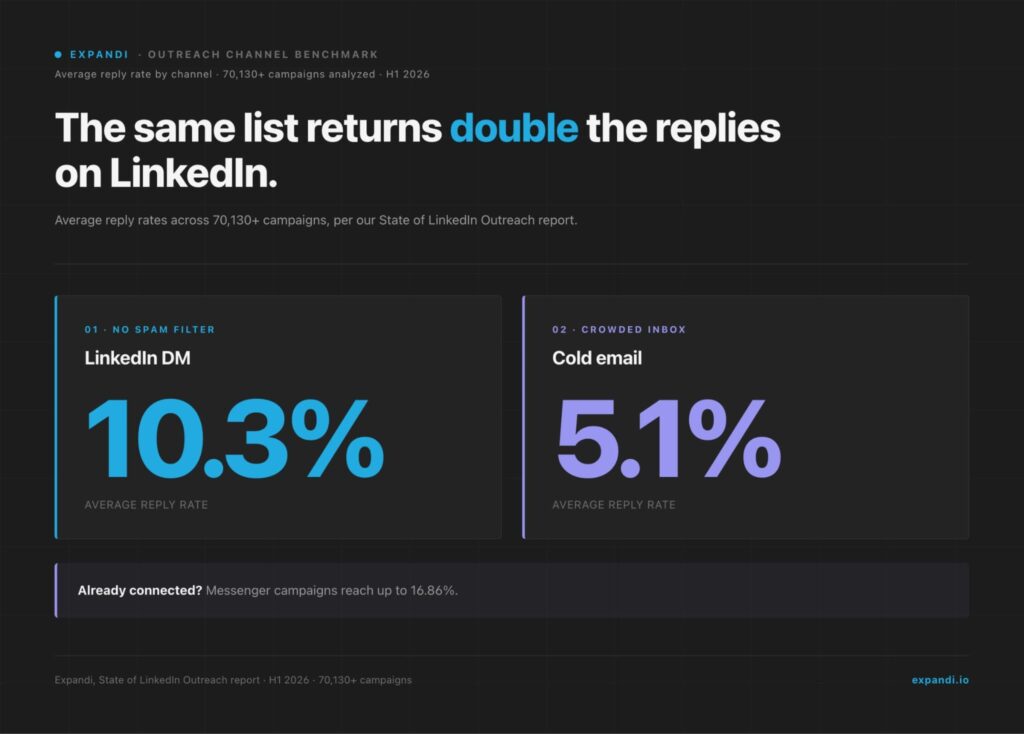
Multichannel sequencing works because each channel does a different job: LinkedIn wins the first touch, replying at 10.3% versus 5.1% for cold email in our 2026 data, while email carries the long-form context and attachments once a conversation opens.
The same data shows 90% of outbound effort still goes into email, which leaves the LinkedIn lane comparatively quiet.
A sequence that layers both channels:
- Day 1: visit the profile and follow the company.
- Day 2: send a connection request tied to a signal.
- Day 4: once accepted, open with a short, specific DM.
- Day 7: follow up by email with a case study or benchmark.
- Day 10: engage with a recent post.
- Day 12: make the direct meeting ask.
Follow-ups earn replies the first message didn’t: a second follow-up alone adds 4.05% more responses per our 2026 data. The channel-by-channel logic is in our multi-channel marketing guide.
3. Personalization at scale
Connection notes are pulling fewer replies every year: across the 13.2 million connection requests in our LinkedIn outreach benchmarks, reply rates to notes fell from 3.5% to 2.2% in twelve months.
A note that could have been sent to anyone gives the recipient nothing to respond to.
Personalizing across a full campaign means referencing something real without hand-writing every message:
- Open with the trigger: the post they wrote, the event they joined, the role they just took.
- Use dynamic placeholders for name, role, and company as the baseline, then add one researched line on top.
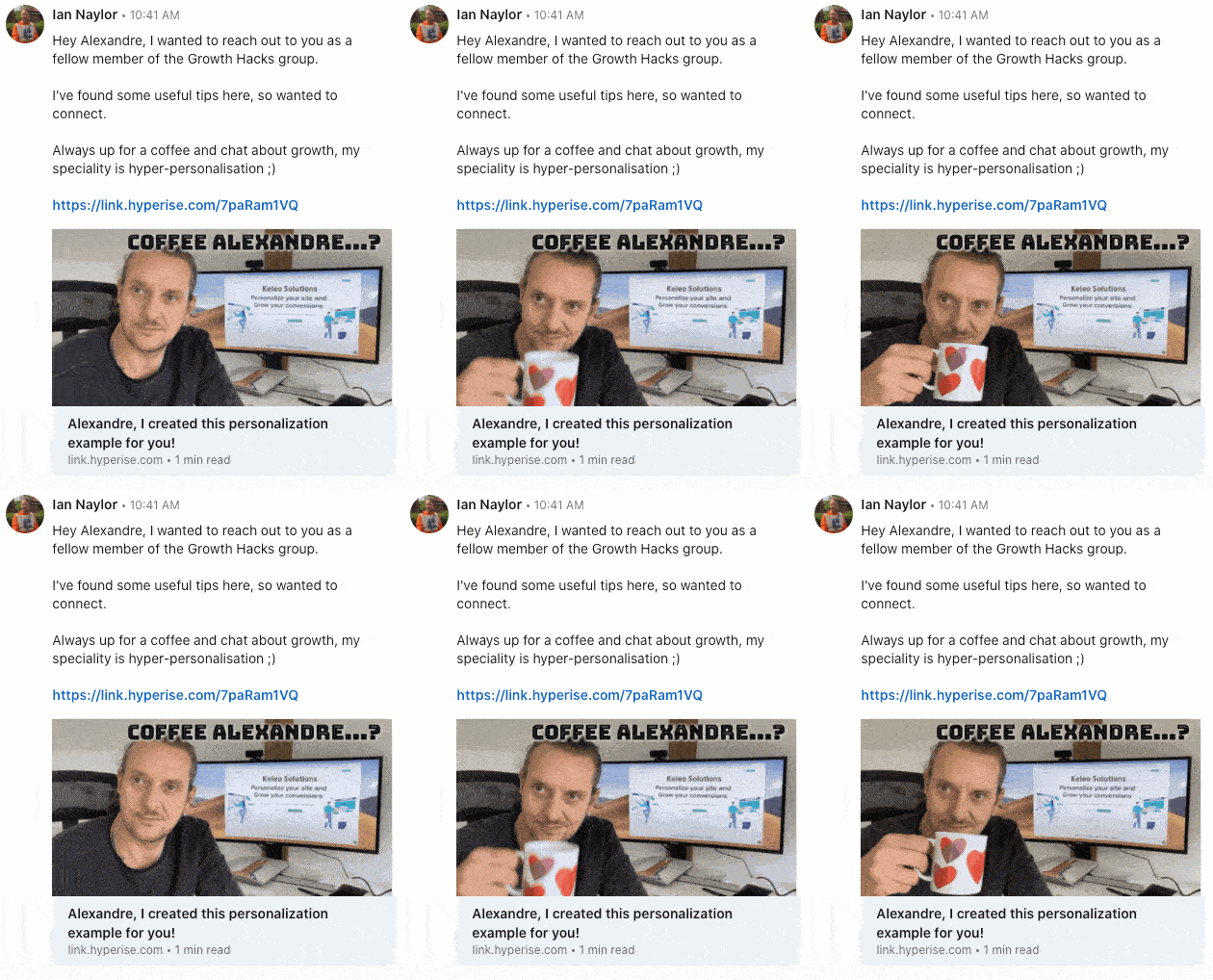
- Add a personalized image or GIF for high-value accounts.
- Let AI draft the first pass, then have a rep make it specific.
One researched sentence beats five templated paragraphs, and the reader can tell which one took effort. Inside Expandi, dynamic placeholders run this at campaign scale, with image and GIF personalization available through the Hyperise integration (separate subscription).
4. Content-led inbound that feeds outbound
The B2B buying journey starts long before the first reply.
Per 6sense’s 2025 B2B Buyer Experience Report, first contact now happens about 61% of the way through the buying journey, buyers initiate 79% of engagements, and the vendor they favored before reaching out wins four out of five deals.
Content is how you become that favorite. In the 2024 Edelman-LinkedIn B2B Thought Leadership Impact Report, 9 in 10 decision-makers and C-suite executives say they are moderately or very likely to be more receptive to outreach from a company that consistently produces high-quality thought leadership.
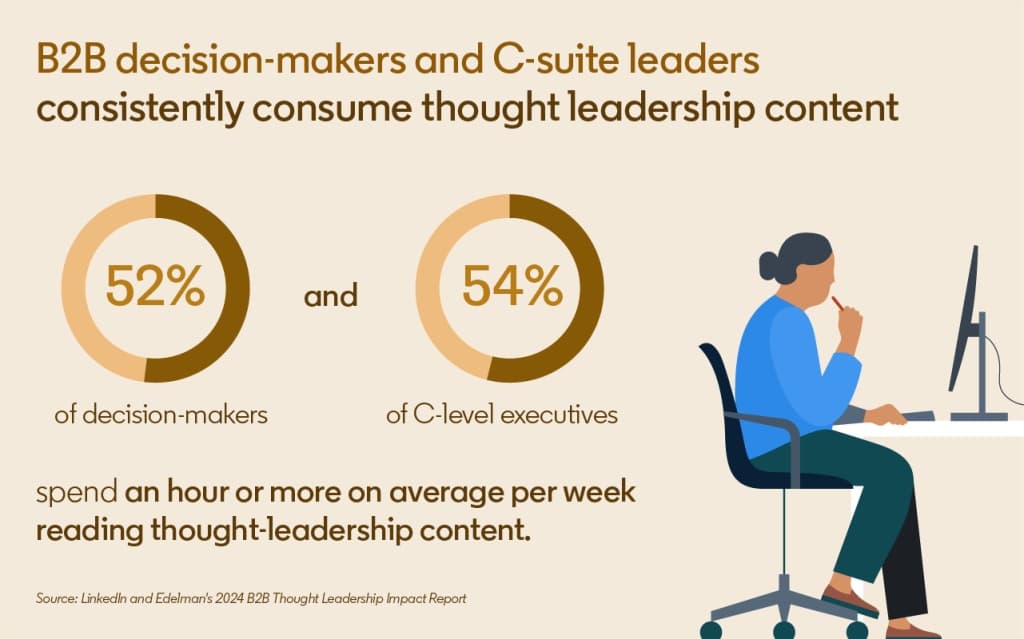
And 75% say a piece of thought leadership led them to research a product or service they were not previously considering.
Michel Lieben, founder of ColdIQ, a sales prospecting agency, described the mechanics in a GTM Society interview:
“If I send you an outreach campaign, the first thing you’re gonna do is look at my LinkedIn profile, and you’re gonna be like, who’s this guy? And so if I have a LinkedIn profile with nothing on it, you would be like, okay … I received 40 other pitches in my inbox, why would I consider this guy?” — Michel Lieben, ColdIQ
The content-to-pipeline loop runs in three moves:
- Post two to three times a week on your ICP’s problems.
- Capture everyone who engages: commenters, poll voters, event attendees.
- Feed them into outreach while the interest is fresh.
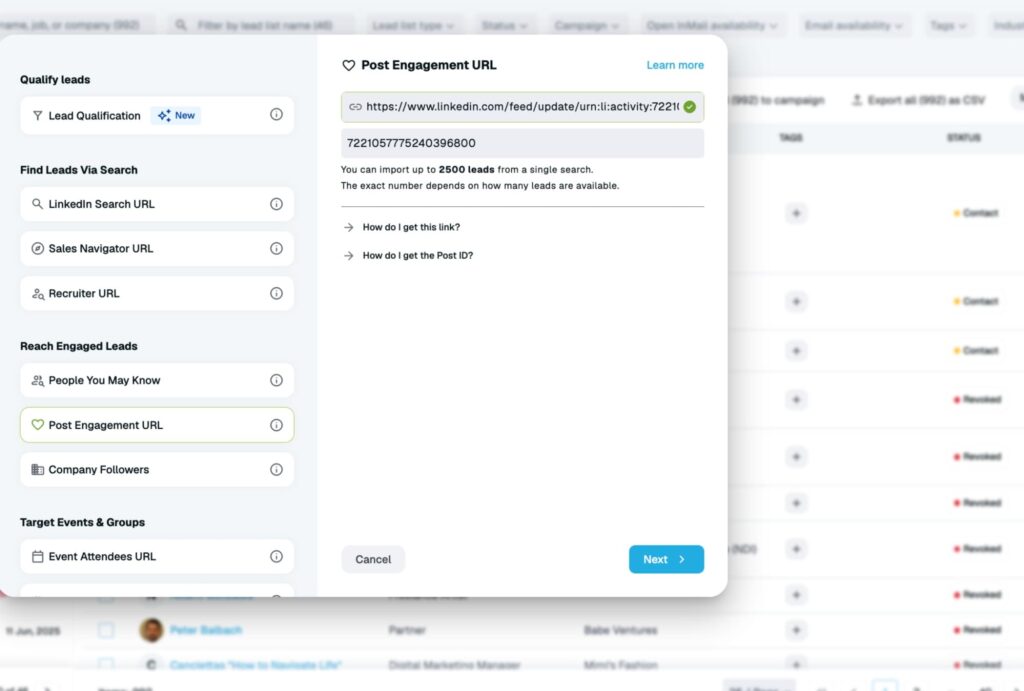
Someone who commented on a post about your category has told you something a purchased list never will. Expandi’s Post Engagement lead lists pull those leads directly from a single LinkedIn post.
4 B2B lead generation mistakes to avoid right now
Four habits cost more pipeline than any tooling gap: cold volume blasts, purchased lists, single-channel dependence, and blind outsourcing.
The cost is delayed rather than immediate: a burned domain or a restricted LinkedIn account takes months to rebuild.
1. Cold, unpersonalized volume plays
Bulk sending now runs into authentication requirements at both major inbox providers. Google’s sender guidelines require anyone sending 5,000+ messages a day to Gmail to have SPF, DKIM, and DMARC in place, plus a Postmaster Tools spam rate below 0.3%.
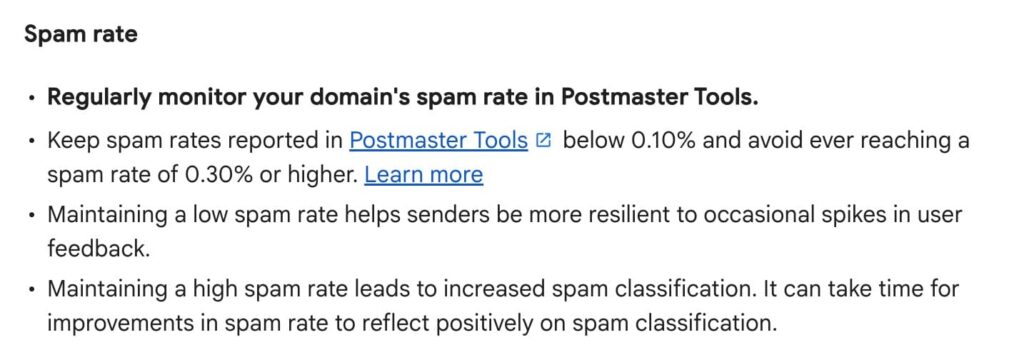
Cross that threshold and Gmail filters your whole domain, including the messages buyers wanted to receive.
The fix is infrastructure before volume: warm up your email domain before scaling sends, keep lists verified, and hold daily volume inside what your domain reputation supports. Our cold email best practices cover the sending-side checklist.
2. Buying or scraping stale lead lists
A purchased list starts decaying the day it’s exported: people change roles, companies merge, and inboxes go dead, so every sequenced batch carries bounces that chip away at deliverability and sender reputation.
Scraped lists add a second problem: no engagement history, no context, and targeting so loose that reply rates collapse.
Build lists from live sources:
- Sales Navigator searches scoped to your ICP filters.
- Engagement on your posts and your market’s conversations.
- Event and webinar attendee lists.
- Job-change alerts inside saved accounts.
Verify emails at send time, and let acceptance data grade the list.
In our 2026 benchmarks, connection acceptance ranges from 19.9% to 36.5% purely on industry targeting: the list decides the ceiling before the first message goes out.
3. Relying on a single channel
Single-channel dependence turns any platform change into a pipeline stop.
Gmail tightens filtering, or LinkedIn adjusts its weekly connection limits (around 100 requests per week is the working assumption), and the quarter’s motion stalls with it.
Teams that keep replying spread the risk across LinkedIn, email, and phone, so no single policy change owns their pipeline.
Layering also raises the odds on the direct ask, because the buyer has already seen you on two channels before it arrives.
4. Outsourcing to an agency with no visibility into method
Hiring a lead generation agency can work — the failure mode is buying appointments without seeing how they’re sourced.
If the agency runs volume plays on domains or LinkedIn accounts tied to your brand, you carry the reputation risk long after the contract ends.
Before signing, get answers in writing:
- Which channels they run and at what daily volumes.
- Whose domains and LinkedIn accounts carry the outreach.
- Where the contact data comes from and how it’s verified.
- What reporting you see, and how often.
- Who owns the lead data when the contract ends.
Our guide to choosing lead generation companies breaks down the pricing models and the questions to ask per model.
How to use LinkedIn for B2B lead generation
LinkedIn is the strongest first-touch channel in our data, and the playbook fits in seven steps: optimize the profile, warm up the account, build signal-based lists, personalize connection requests, sequence the follow-ups, keep posting, and route replies fast.
To use LinkedIn for B2B lead generation:
- Optimize the profile you prospect from.
- Warm up the account before scaling activity.
- Build lead lists from Sales Navigator and signals.
- Personalize every connection request.
- Sequence DMs, InMails, and email follow-ups.
- Post consistently so the profile converts visitors.
- Track and route replies by sentiment.
Your profile is what a prospect lands on once your request arrives. The headline, banner, and Featured section are what’s visible without scrolling, so write them for your ICP rather than your resume.
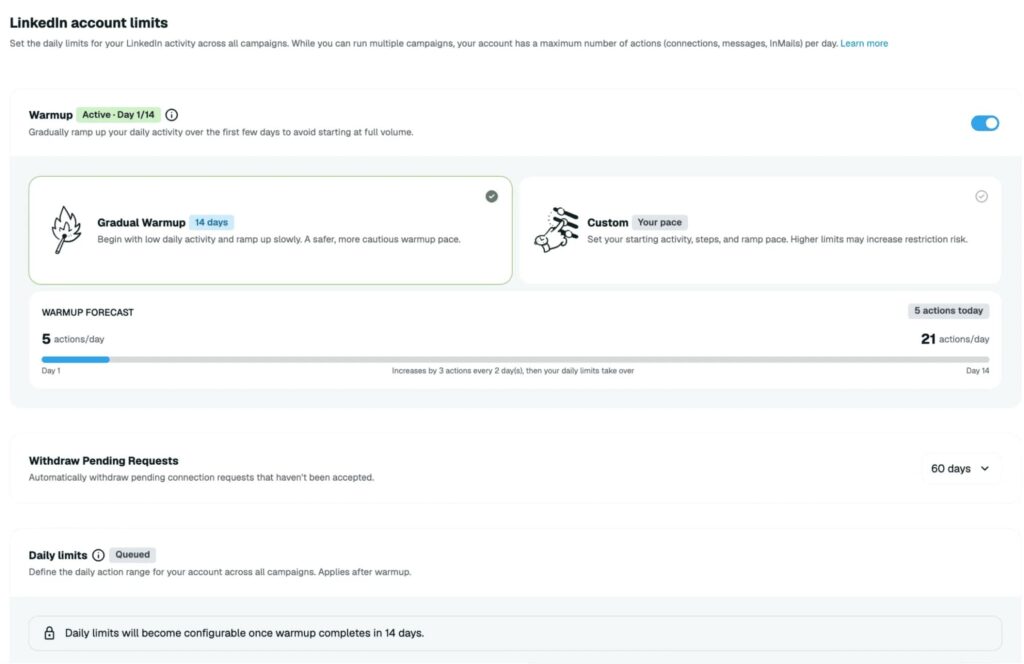
New or quiet accounts need ramp: start at 5-15 actions a day and build toward safe operating limits, which protects both acceptance rates and account health. The full routine is in our LinkedIn warm-up sequence.
For targeting, LinkedIn Sales Navigator remains the deepest filter set on the platform: saved searches double as evergreen lead sources, and job-change alerts on saved leads hand you the highest-intent signal available.
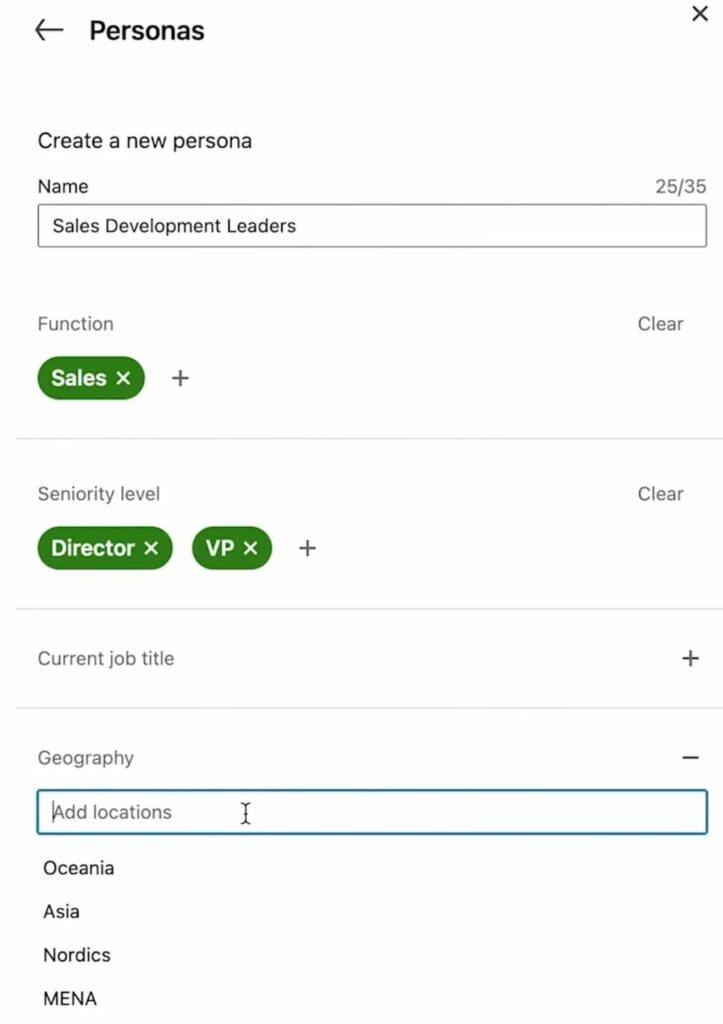
Keep connection requests inside the weekly limit and spend them where acceptance odds are highest. Average acceptance sits at 28.5% in our 2026 benchmarks, and tight targeting is what pushes campaigns above it.
A connection request, a value DM, a follow-up, and a post interaction each give the next touch more to work with.
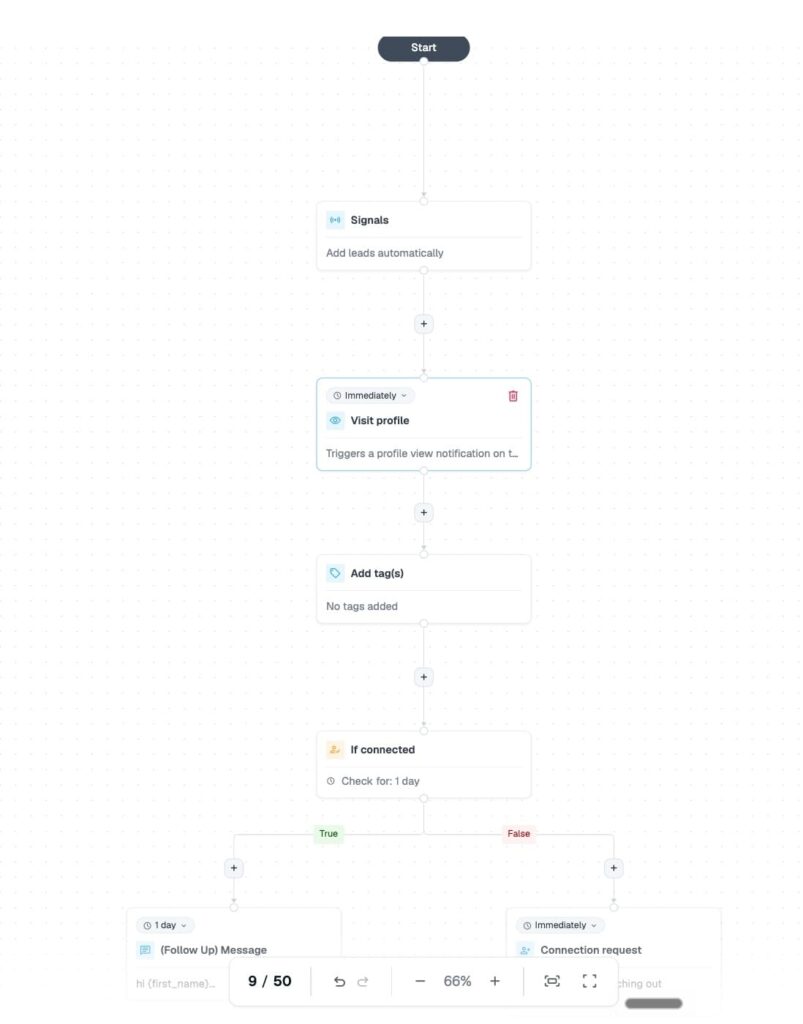
Inside Expandi, Builder campaigns chain multiple actions and conditions with if-then logic, so a sequence branches on what the prospect actually does: “if connected, send the DM,” “if no reply after four days, send an InMail.”
The model scales.
Provoke Agency, a LinkedIn lead generation agency, went from $0 to $1.8M ARR in under two years running white-labeled LinkedIn campaigns on Expandi, and today serves 50+ recurring clients a month. The full breakdown is in the Provoke Agency case study.
“The problem is that there’s a ton of Linkedin automation software. And an early agency owner simply has no idea which one to choose. But when you understand what you’re getting with Expandi — which is reliability and safety first and foremost — combined with the personal approach the owner himself took with me, the final decision was easy to make” — Richard Mechaly
How to qualify B2B leads in 2026
Qualification decides whether generated leads become pipeline or wasted sales time.
In 2026, that means grading leads on ICP fit plus live intent signals, and agreeing on the marketing-to-sales handoff in writing before the first campaign runs.
The classic split still structures the marketing-to-sales handoff:
- Marketing qualified lead (MQL): fits the target criteria and engaged with marketing, like a report download or webinar registration.
- Sales qualified lead (SQL): showed direct buying intent, like a demo request, a pricing question, or a booked call.
The labels matter less than the agreed criteria behind them. Write the MQL-to-SQL threshold down before the first campaign runs, and the argument over “bad leads” has a document to settle it.
Static frameworks alone miss timing in 2026. BANT still asks useful questions — budget, authority, need, timeline. But a checklist scored once goes stale while the deal forms: buying groups now average 10+ members per 6sense’s 2025 report, and the composition shifts as the deal matures.
David Neuhaus, co-founder of SocialHub, a social media management platform, put the priority this way in a GTM Society interview:
“The best practice you can do is actually thinking about who, not how many people you want to reach … who’s your ICP, who’s the ideal customer profile and how you can actually add value to them. Whatever you do around is like the next step. But if you haven’t done the first step, the second doesn’t count.” — David Neuhaus, SocialHub
Score every lead on three layers:
- Fit: role, seniority, company size, and industry against your ICP.
- Intent: profile visits, content engagement, event registrations, job changes.
- Recency: a signal from this week outranks a download from last quarter.
Reply handling is the last mile of qualification.
Expandi’s AI Analyzer sorts incoming replies into Interested, Maybe Interested, and Not Interested, so reps open the right conversations first and the “not now” pool cycles into nurture rather than dying in the inbox.
Where to focus your B2B lead generation next
B2B lead generation in 2026 comes down to sequencing the right work: define the ICP first, pick the signals that reveal timing, then qualify on fit plus intent before sales time gets spent.
The teams beating the 10.3% reply average treat warm signals as the trigger for everything else. If you want the signal-based side running without manual chase-work, start your 7-day Expandi free trial and launch your first campaign this week.
FAQ
B2B lead generation targets companies and the buying groups inside them, with longer sales cycles, higher deal values, and purchase decisions made by a group rather than one person.
B2C targets individual consumers making fast, personal purchase decisions. The channels differ accordingly: B2B runs on LinkedIn, email, and events, while B2C leans on paid social, search, and retail placement.
A B2B lead generation funnel moves through four stages: attracting attention from companies that fit your ICP, capturing interest as an identifiable lead, qualifying that lead on fit and intent, and handing qualified leads to sales for conversion.
Each stage needs its own metric: reach and traffic at the top, MQL-to-SQL conversion and meetings booked at the bottom.
Outbound channels produce the first replies within days of launching and a steady meeting flow within the first month or two, as sequences complete and follow-ups land.
Inbound and content-led motions build over quarters, since trust accumulates post by post. Plan on outbound carrying pipeline while content compounds in the background.
Costs split across three buckets: data and enrichment tools, outreach and automation software, and the people running the motion. In-house teams pay per SDR seat plus tooling, while agencies price per appointment or on monthly retainers.
The comparison metric that keeps you honest is cost per qualified meeting, tracked over a full quarter rather than a single campaign.
A sales development representative (SDR) owns the top of the outbound motion: building and cleaning lead lists, sending outreach across LinkedIn and email, following up, qualifying replies, and booking meetings for account executives.
On teams running automation, the SDR shifts from sending messages manually to managing campaigns, reviewing AI-drafted copy, and working the replies.
Yes. List building, sequencing, follow-ups, and reply triage all automate well, and cloud-based tools run them inside platform safety limits. The parts that stay human are strategy and conversations: choosing the ICP, setting the core message angles, and taking over the thread once a real reply arrives.
Automation buys back the hours, and reps spend them on the conversations that close.


You’ve made it all the way down here, take the final step